
Stop Overcomplicating Your Gains: The Ultimate Simple Diet Guide
Why Most Men Overcomplicate Their Muscle-Building Diet
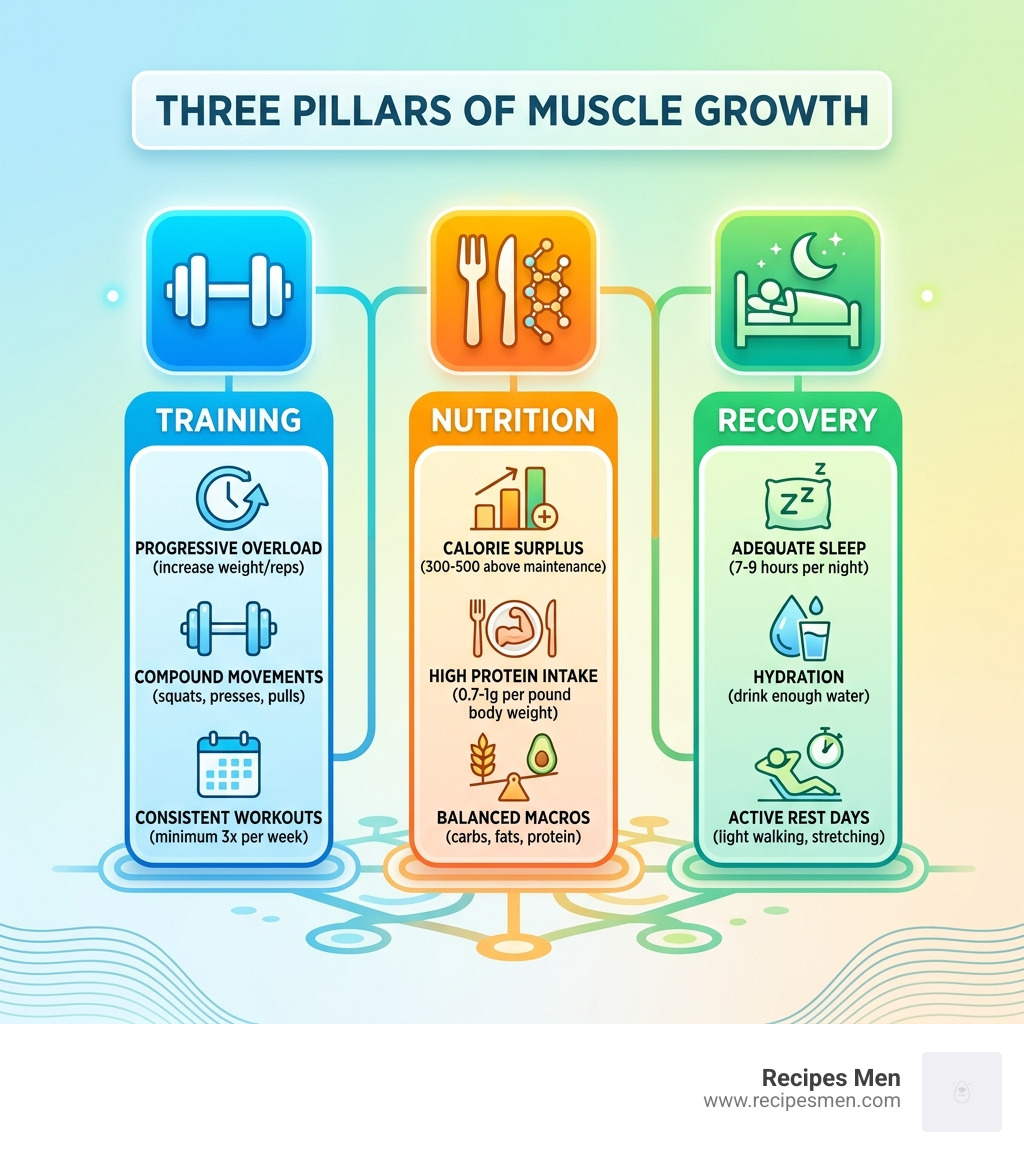
A simple diet for gaining muscle comes down to three things: eat enough calories, hit your protein target, and train consistently. That’s it.
Here’s the quick answer if you need it right now:
| What You Need | The Simple Target |
|---|---|
| Extra daily calories | 300–500 above your maintenance level |
| Daily protein | 0.7–1g per pound of body weight |
| Macro split | ~25% protein / 50% carbs / 25% fat |
| Meal frequency | Every 2–4 hours (3 meals + 2–4 snacks) |
| Protein per meal | 25–40g per sitting |
| Training requirement | Resistance training, minimum 3x per week |
You don’t need a complicated plan. You don’t need expensive supplements. You don’t need to eat perfectly every day.
What you do need is consistency — and a diet you can actually stick to.
Here’s the problem most guys run into: they either eat too little (no muscle growth), eat too much of the wrong stuff (fat gain, not muscle gain), or they follow some extreme plan for two weeks and quit. Sound familiar?
Muscle growth happens in the kitchen just as much as it does in the gym. Strength training breaks your muscle tissue down. Food rebuilds it stronger. Skip the nutrition side of the equation, and you’re leaving serious gains on the table — no matter how hard you train.
This guide cuts through the noise. No bro-science. No 47-step protocols. Just straightforward, practical nutrition that fits a busy schedule.
The Science of Growth: Calories and Protein
To build a house, you need two things: the raw materials (bricks) and the energy to pay the builders. A simple diet for gaining muscle provides protein as the bricks and a calorie surplus as the energy.
The Calorie Surplus: Your Growth Engine
If you only eat enough to maintain your current weight, your body doesn’t have the “extra” resources to build new tissue. We recommend a “lean bulk” approach. This means eating roughly 300–500 calories above your maintenance level. This is enough to fuel muscle protein synthesis without causing significant fat accumulation.
As of April 2026, research consistently shows that pushing into a massive surplus (the “eat everything in sight” method) doesn’t actually speed up muscle growth; it just makes you gain body fat faster. By staying in that 300–500 calorie sweet spot, you ensure your body is in an anabolic state (building up) rather than a catabolic one (breaking down).
Protein: The Building Blocks
Muscle tissue is made of protein, which is comprised of amino acids. To repair the micro-tears caused by resistance training, you need a steady supply of these amino acids.
- The Golden Rule: Aim for 0.7–1g of protein per pound of body weight daily.
- The Metric Rule: If you prefer kilograms, aim for roughly 2g of protein per kg of bodyweight.
Specifically, we want to look for “complete proteins” that contain all nine essential amino acids. One amino acid in particular, leucine, acts as a “trigger” for muscle growth. When we maintain a positive nitrogen balance through consistent protein intake, our body stays in “repair mode” around the clock.
Building Your Simple Diet for Gaining Muscle

A successful diet isn’t just about the numbers; it’s about the quality of the fuel. We believe in high nutrient density. This means choosing foods that offer a lot of vitamins, minerals, and fiber alongside their calories.
The Power of Whole Foods
While it’s tempting to grab a processed protein bar, whole foods should be your foundation. They keep you fuller longer (satiety) and provide the micronutrients needed for hormone production and energy levels.
- Lean Proteins: Chicken breast, turkey, lean beef, fish, eggs, and Greek yogurt.
- Complex Carbohydrates: Oats, brown rice, quinoa, sweet potatoes, and whole-grain bread. These provide the glycogen your muscles need to perform in the gym.
- Healthy Fats: Avocados, nuts, seeds, and olive oil. These are essential for keeping your testosterone levels healthy.
- Liquid Calories: If you struggle to eat enough, don’t force-feed yourself until you’re miserable. Use smoothies or shakes. Liquid calories from milk, fruit juice, or homemade protein smoothies are less filling and easier to consume than solid food.
Macronutrient Ratios for a Simple Diet for Gaining Muscle
While everyone is different, a solid starting point for a muscle-building macro split is 25% protein, 50% carbohydrates, and 25% healthy fats.
| Food Source | Protein Density (per 100g) | Primary Benefit |
|---|---|---|
| Chicken Breast | ~31g | High leucine, low fat |
| Greek Yogurt | ~10g | Probiotics + Casein protein |
| Lentils | ~9g | Fiber + Plant protein |
Carbohydrates are not the enemy; they are your primary energy source. They replenish glycogen stores and trigger an insulin response, which actually helps transport nutrients into your muscle cells. Fats, meanwhile, are energy-dense (9 calories per gram) and vital for hormone production.
Sample Daily Structure for a Simple Diet for Gaining Muscle
Consistency beats perfection. Instead of eating three massive meals that leave you bloated, we suggest spreading your intake across 3 balanced meals and 2–4 healthy snacks.
Aim to eat every 2–4 hours. This keeps a steady stream of amino acids in your bloodstream. A pro tip we always share: include a protein snack before bed. A slow-digesting protein like casein (found in cottage cheese or Greek yogurt) helps preserve muscle tissue while you sleep.
Strategic Timing: Fueling Your Workouts
When you eat can be just as important as what you eat when you’re pushing for maximum gains.
- Pre-Workout: 60–90 minutes before your session, have a mix of complex carbs and 20–30g of protein. This gives you the performance energy to lift heavy.
- Post-Workout: Within 30–60 minutes of finishing, aim for 25–40g of protein and some fast-digesting carbs. This is the “anabolic window” where your body is primed to shuttle nutrients into the muscles for recovery and glycogen storage.
- Throughout the Day: Spreading protein intake (roughly 20–40g per meal) ensures consistent muscle protein synthesis.
Strategic timing isn’t just about growth; it helps with inflammation reduction and recovery speed, meaning you can get back to the gym sooner.
A Realistic 7-Day Muscle-Building Meal Plan

The biggest hurdle to a simple diet for gaining muscle is decision fatigue. If you have to decide what to cook every night, you’ll eventually order pizza. The solution? Batch cooking.
The Sunday Workflow
Spend two hours on Sunday prepping your staples. Grill a family pack of chicken, boil a large pot of rice or quinoa, and roast a tray of sweet potatoes.
- Flavor Rotation: Use different spice profiles (Mexican, Mediterranean, BBQ) so you aren’t eating “boring” food.
- Budget Hack: You can build lean muscle on a budget of $8–$10 a day by buying in bulk, choosing frozen vegetables, and utilizing canned tuna or beans.
7-Day Overview
- Breakfast: Omelet with spinach and whole-grain toast OR protein oats with peanut butter.
- Lunch: Grilled chicken, brown rice, and broccoli (The classic for a reason!).
- Dinner: Salmon or lean beef with sweet potatoes and a large salad.
- Snacks: Greek yogurt, almonds, fruit, or a protein shake.
For a more detailed breakdown, you can check out this 7 Day Meal Plan for Muscle Gain by a Dietitian .
Avoiding Common Pitfalls and Tracking Progress
Even with a simple diet for gaining muscle, it’s easy to wander off track. Here is what to watch out for:
- Dirty Bulking: Eating fast food and sugar just to hit a calorie goal. This leads to excessive fat gain and feeling sluggish. Keep it clean.
- Over-relying on Supplements: Protein powder and creatine monohydrate are great tools, but they are supplements to a diet, not a replacement for food.
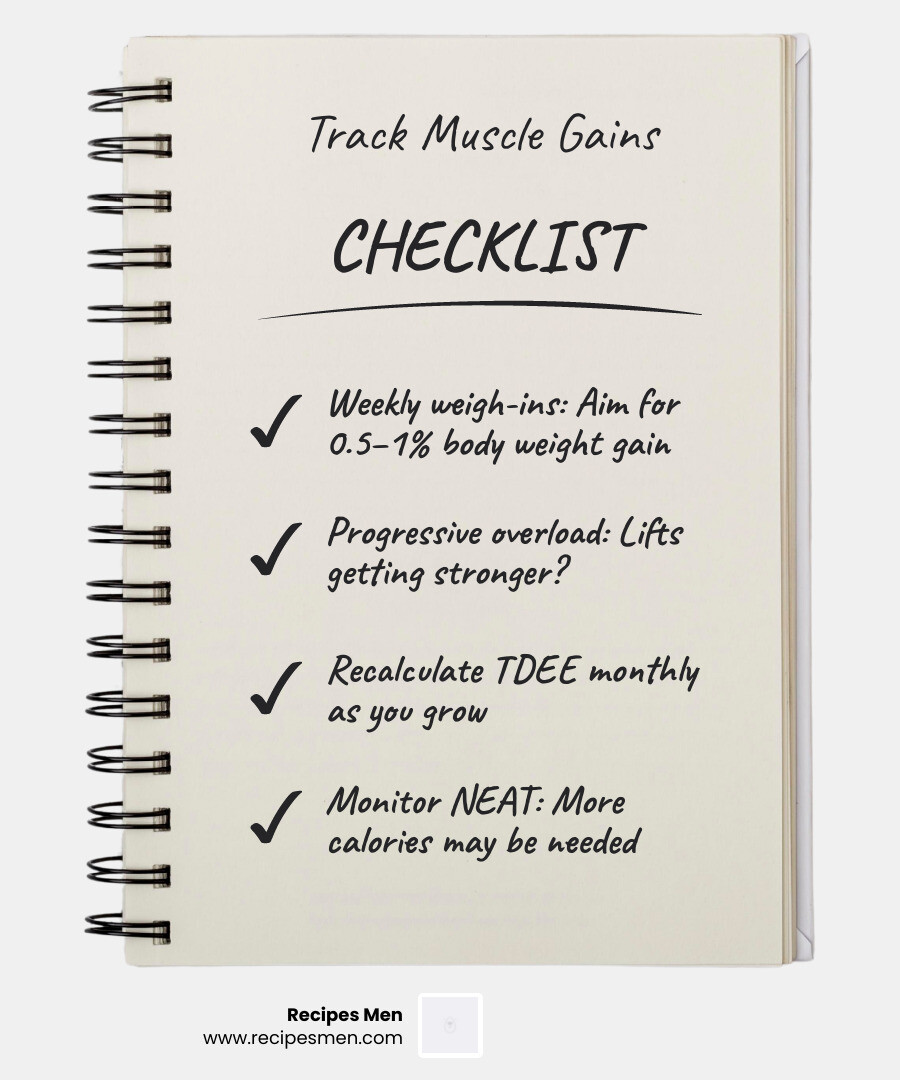
- Ignoring NEAT: Non-Exercise Activity Thermogenesis (NEAT) is the energy you burn walking, fidgeting, and moving. When you eat more, your NEAT often goes up, meaning you might need even more calories than you originally calculated.
How to Track
Don’t just look in the mirror. Use objective data:
- Weekly Weigh-ins: Aim to gain 0.5–1% of your body weight per week.
- Progressive Overload: Are your lifts going up in the gym? If you’re getting stronger, you’re likely building muscle.
- TDEE Adjustments: Re-calculate your Total Daily Energy Expenditure monthly. As you get bigger, you’ll need more fuel to keep growing.
Frequently Asked Questions about Muscle Building Diets
How many extra calories do I really need to gain muscle without getting fat?
Most men do best with a surplus of 300–500 calories. If you are a beginner, you can be on the higher end. If you are an experienced lifter, a smaller surplus (200–300 calories) is better to minimize fat gain, as muscle growth slows down the longer you’ve been training.
Is it possible to build muscle on a plant-based diet?
Absolutely. You just have to be more strategic. Since many plant proteins aren’t “complete,” you should mix sources (like rice and beans) to get a full amino acid profile. Tofu, tempeh, lentils, and seitan are excellent high-protein staples for plant-based gains.
Should I use supplements like creatine and protein powder as a beginner?
You don’t need them, but they help. Creatine monohydrate is the most researched supplement in history and helps with power output. Protein powder is simply a convenient way to hit your daily targets. Focus on whole foods first, then add these if your budget and lifestyle allow.
Conclusion
At RecipesMen, we believe that building the body you want shouldn’t feel like a second full-time job. By following a simple diet for gaining muscle, you focus on the high-impact habits that actually move the needle.
Eat in a slight surplus, prioritize your protein, and keep your meals flavorful so you don’t get bored. Muscle growth is a marathon, not a sprint. Stay consistent with your kitchen habits, and the results in the gym will follow.
Ready to start cooking? Start your muscle-building journey today and explore our collection of straightforward, high-protein recipes designed for real life.

