
Your Ultimate Guide to the Best Calorie Deficit Meals
Why the Best Meals for Calorie Deficit Actually Matter
The best meals for calorie deficit are ones that keep you full, hit your protein and fiber targets, and still taste good enough that you’ll actually eat them again tomorrow.
Here’s a quick look at the top options:
| Meal | Calories | Protein | Best For |
|---|---|---|---|
| High-protein chicken quesadilla | ~385 kcal | 36g | Lunch |
| Greek yogurt parfait with berries | ~300 kcal | 20g+ | Breakfast |
| Sweet potato & peanut curry | ~400 kcal | 15g+ | Dinner |
| Chicken & chorizo jambalaya | ~450 kcal | 35g+ | Dinner |
| Egg white frittata with veggies | ~250 kcal | 25g+ | Breakfast |
| Lemon-herb baked flounder | ~350 kcal | 30g+ | Dinner |
| Black bean chili with lime couscous | ~434 kcal | 20g | Lunch/Dinner |
Here’s the reality most diet advice skips: you don’t need to eat tiny portions or bland food to lose weight. You just need to eat smarter.
A safe calorie deficit runs between 250 and 750 calories per day — enough to lose roughly 1 to 2 pounds per week without tanking your energy or muscle mass.
The problem? Most guys in their 30s are busy. Meal planning feels like a second job. And the idea of eating steamed chicken and rice every day is enough to kill any motivation before it starts.
That’s exactly why the right meals make all the difference. When your food is filling, fast to prepare, and actually tastes good — sticking to a deficit stops feeling like a grind.
This guide breaks down the best calorie deficit meals by time of day, covers smart ingredient swaps, and gives you real strategies to make it sustainable long-term.
The Science of Weight Loss: Understanding Your Calorie Deficit
Before we dive into the kitchen, we need to understand the “why.” At its simplest, weight loss is a matter of energy balance. A calorie deficit occurs when you consume fewer calories than your body burns for energy. When this happens, your body is forced to tap into stored fat to make up the difference.
However, it isn’t just about “eating less.” To do this effectively in April 2026, we focus on a moderate, sustainable approach.
Calculating Your Needs
To find your individual needs, you first need to determine your Basal Metabolic Rate (BMR)—the calories your body burns at rest just to keep your heart beating and lungs pumping. One of the most accurate ways to do this is the Mifflin-St. Jeor equation, which takes into account your age, weight, height, and sex.
Once you have your BMR, you multiply it by an activity factor to find your Total Daily Energy Expenditure (TDEE). This is the “maintenance” number.
- Sedentary: TDEE = BMR x 1.2
- Lightly Active: TDEE = BMR x 1.375
- Moderately Active: TDEE = BMR x 1.55
To lose about one pound per week, a reduction of 500 calories per day from your TDEE is the gold standard. While some people aim for a 1,200-calorie limit, we often find this is too low for active men and can lead to muscle loss or “skinny fat” results. Instead, aiming for a moderate deficit ensures you have the energy for your workouts.
For a deeper dive into how to structure these numbers specifically for a male physique, check out The Ultimate High-Protein Meal Plan for Men | Recipes Men.
Key Ingredients for the Best Meals for Calorie Deficit
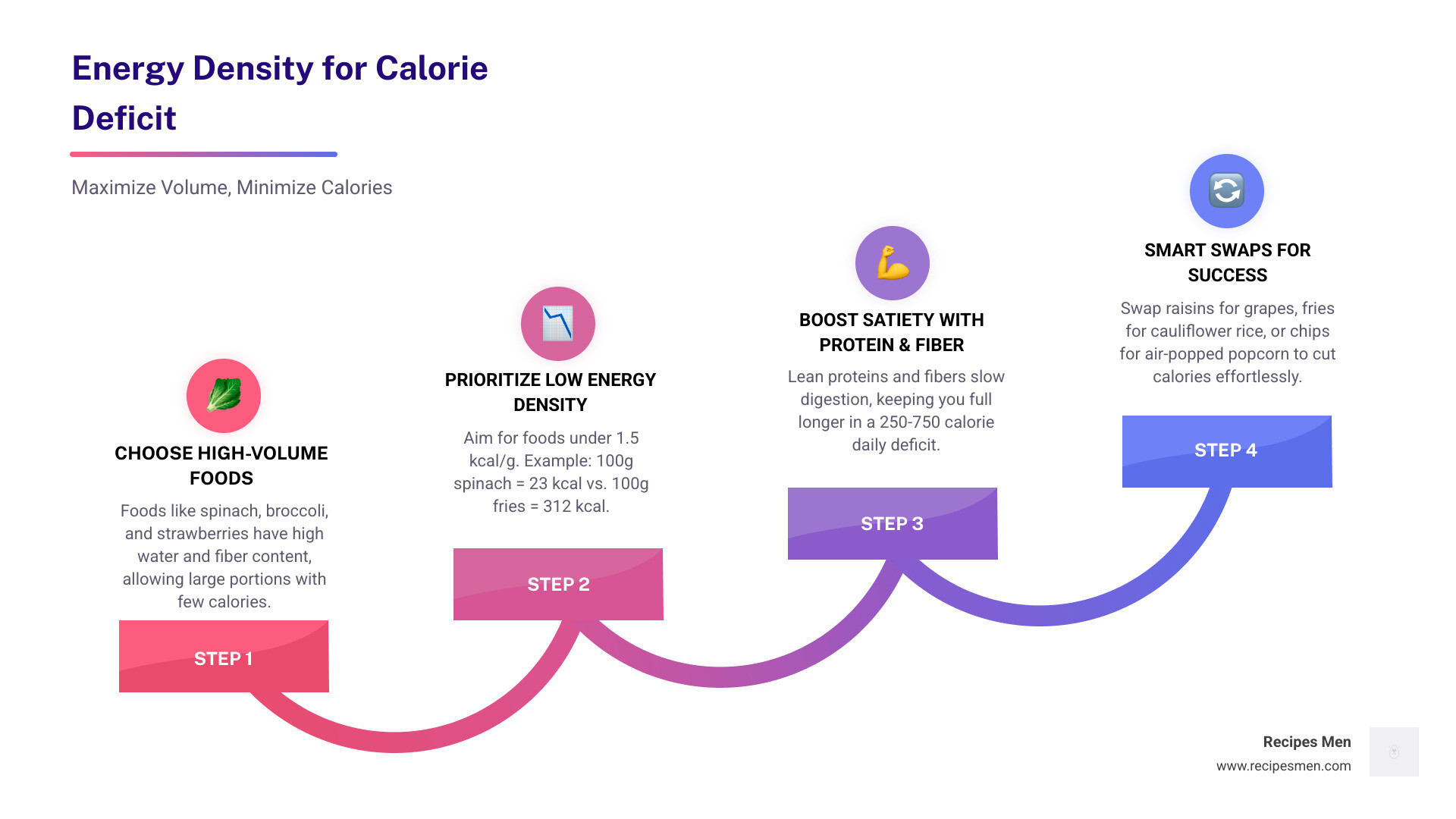
When we talk about the best meals for calorie deficit, we are really talking about Energy Density. This is the number of calories in a specific weight of food. Foods high in water and fiber have low energy density, meaning you can eat a massive portion for very few calories.

The Power of Volume Eating
Volume eating is the secret weapon for anyone who hates feeling hungry. Consider these statistics from our research:
- Grapes vs. Raisins: 1 cup of grapes is about 104 calories. 1 cup of raisins (which are just dried grapes) is about 480 calories. By choosing the water-rich fruit, you eat the same volume for a fraction of the calories.
- Fries vs. The World: A small order of French fries is roughly 250 calories. For that same caloric “cost,” you could eat 10 cups of spinach, 1.5 cups of strawberries, and a small apple.
Essential Components
- Lean Protein: Protein is the most filling macronutrient. It has a high thermic effect, meaning your body burns 25–30% of the protein calories just during digestion. We prioritize chicken breast, white fish, egg whites, and Greek yogurt.
- Dietary Fiber: Fiber slows down digestion and stabilizes blood sugar. Aim for 25 to 38 grams per day. We recommend getting 5–10g of fiber in every meal to stay full.
- High Water Content: Foods like grapefruit (90% water) and carrots (88% water) provide “bulk” in the stomach without the caloric baggage.
Smart Swaps for Satiety
You can transform high-calorie favorites into the best meals for calorie deficit using these simple trades:
- Cauliflower Rice: Swap white rice for cauliflower rice to save nearly 200 calories per cup.
- Greek Yogurt: Use non-fat Greek yogurt instead of sour cream or heavy cream in curries and tacos. This adds protein while slashing fat.
- Zoodles: Use zucchini noodles instead of traditional pasta to cut carbs and increase volume.
- Air-Popped Popcorn: At only 30 calories per cup, this is a high-fiber snack that beats chips every time.
Top Recipes and Best Meals for Calorie Deficit by Time of Day
Creating the best meals for calorie deficit doesn’t mean you have to skip the flavors you love. It’s about using spices like harissa, ginger, za’atar, and smoked paprika to create big flavor profiles without adding oils or sugars.

Breakfast: Best Meals for Calorie Deficit to Start Your Day
We believe breakfast should set the tone for the day. Aiming for a 30g protein target at breakfast helps prevent mid-morning crashes.
- Protein Oats: Mix oats with a scoop of whey protein and top with berries. The fiber in the oats combined with the protein keeps you full until lunch.
- Egg White Frittata: Use a base of egg whites with one or two whole eggs for flavor. Load it with spinach, mushrooms, and bell peppers. It’s high-volume and incredibly low-calorie.
- Blueberry Banana Smoothie: Use unsweetened almond milk, a frozen banana, blueberries, and Greek yogurt. It’s a quick, portable way to hit your fruit and protein goals.
- Bran Flakes with Banana: A classic high-fiber option. Fiber is essential for keeping the digestive system moving while in a deficit.
Lunch and Dinner: Best Meals for Calorie Deficit for Busy Men
For lunch and dinner, we focus on meals that are under 500 calories but feel like a full, indulgent plate.
- The Ultimate Weight Loss Chicken Quesadilla: This is a favorite. Use a high-fiber, low-carb tortilla (about 50–70 calories), lean shredded chicken, and part-skim mozzarella. The “glue trick” involves using a tablespoon of Greek yogurt mixed with salsa as a binder—it adds creaminess without the fat of extra cheese.
- Turkey and Lettuce Pita: Lean turkey breast provides high-quality protein, while a whole-wheat pita adds necessary fiber.
- Lemon-Herb Baked Flounder: White fish like flounder or cod is incredibly “protein-efficient.” You can eat a large portion for very few calories. Pair it with steamed spinach and a small baked potato.
- Sweet Potato & Peanut Curry: This vegetarian-friendly option uses silken tofu or chickpeas for protein and comes in under 400 calories.
- Chicken & Chorizo Jambalaya: Use cauliflower rice or a small portion of brown rice mixed with plenty of celery, peppers, and onions to keep the volume high.
- Sheet Pan Okonomiyaki: A Japanese-inspired savory pancake loaded with cabbage (high volume!) and topped with lean protein.
Options for Vegan, Vegetarian, and Gluten-Free Preferences
Eating in a deficit is possible regardless of your dietary restrictions.
- Plant-Based Proteins: Use legumes, tempeh, or seitan. Seitan is particularly impressive, offering nearly 21 grams of protein per 3-ounce serving.
- Silken Tofu Sauces: Blend silken tofu with lemon and herbs to create creamy, dairy-free sauces for pasta or salads.
- Black Bean Chili: A hearty, high-fiber meal that is naturally gluten-free if served with quinoa or lime-infused couscous.
- Nutritional Yeast: Use this for a “cheesy” flavor in vegan dishes. Two tablespoons provide 8 grams of protein.
- B12 Fortification: If you are following a strictly vegan plan, ensure you are using fortified plant milks or cereals, as B12 is not naturally found in plant foods.
For more structured guidance, you can view the High Protein Low Calorie Meal Plan: The Complete Guide (2026) | BasedHealth .
Practical Strategies for Long-Term Calorie Deficit Success
The most common reason men fail at a calorie deficit isn’t lack of willpower—it’s lack of preparation. When you’re tired after work, you’re going to reach for whatever is easiest.
The Art of the Sunday Prep
We recommend setting aside two hours on Sunday to prep your best meals for calorie deficit.
- Batch Cook Proteins: Grill several chicken breasts or bake a large tray of salmon.
- Pre-Chop Veggies: Having peppers, onions, and broccoli ready to go makes a 10-minute stir-fry possible on a Tuesday night.
- Storage: Most prepped meals last 3–5 days in the fridge. If you’re worried about spoilage, freeze individual portions. They can last up to two months.
Tools of the Trade
Utilize kitchen tech to make things easier. An air fryer can get chicken wings or potatoes crispy without the need for deep frying in oil. An Instant Pot is perfect for making large batches of low-calorie soups or stews like our favorite cream of vegetable soup.
Mindful Habits
- Hydration: Thirst is often mistaken for hunger. Drink at least 8–10 glasses of water a day.
- Resistance Training: To ensure the weight you lose is fat and not muscle, aim for 2–3 days of strength training per week.
- Mindful Eating: Sit down, use a plate, and turn off the TV. This helps you recognize your body’s “fullness” signals.
Frequently Asked Questions about Calorie Deficit Meals
Is a 1,200-calorie diet safe for everyone?
Generally, 1,200 calories is considered the absolute minimum safe intake for most adults. However, for many men, this is far too low. It can lead to fatigue, nutrient deficiencies, and a metabolic slowdown. We recommend starting with a more moderate 1,500 to 1,800-calorie target and adjusting based on your energy levels and progress.
How do I prevent muscle loss while in a deficit?
Muscle loss is a risk whenever you are eating fewer calories than you burn. To prevent this, you must:
- Prioritize Protein: Aim for 0.7 to 1g of protein per pound of body weight.
- Lift Weights: Resistance training tells your body to keep the muscle and burn the fat.
- Sleep: Aim for 7–9 hours to support recovery.
What should I do if I feel hungry on a calorie deficit plan?
If you’re constantly hungry, you likely need more “volume.” Add more non-starchy vegetables like broccoli, cauliflower, or leafy greens to your meals. These add bulk to your stomach for almost no calories. Also, ensure you are getting enough fiber (25g+) and staying hydrated.
Conclusion
Sustainable weight loss isn’t about “quick fixes” or starving yourself. It’s about creating balanced habits that fit your lifestyle. By focusing on the best meals for calorie deficit—those high in protein, fiber, and volume—you can lose fat without the misery of tiny portions.
Consistency is the secret sauce. Whether it’s a high-protein quesadilla for lunch or a sheet pan chicken fajita for dinner, the goal is to eat food you actually enjoy.
Ready to start cooking? See the full recipe index at RecipesMen for more straightforward, flavorful meals designed to help you hit your goals.

