
The Broke Man’s Guide to Clean Bulking
You Don’t Have to Go Broke to Bulk Up
Budget friendly bulking meals are easier to pull off than most people think. Here’s the short answer:
The cheapest, most effective foods for bulking:
| Food | Why It Works | Approx. Cost |
|---|---|---|
| Eggs | High protein, healthy fats | ~$2.50/dozen |
| Chicken thighs | 150g protein per 3 lbs | ~$5.00/3 lbs |
| White rice | Cheap, calorie-dense carbs | ~$3.50/5 lbs |
| Rolled oats | Slow-release energy | ~$3.00/42 oz |
| Whole milk | Protein + calories in one | ~$3.50/gallon |
| Peanut butter | Calorie-dense healthy fats | ~$3.00/jar |
| Canned tuna | Lean protein on the cheap | ~$1.00/can |
You can hit 3,000 calories and 180g of protein for as little as $60 a week. No fancy supplements. No grass-fed beef. No $15 meal-prep delivery boxes.
A lot of guys in their 30s hit the same wall. They start lifting consistently, see real progress, then hear they need to “eat big to get big” — and suddenly assume their grocery bill needs to double. It doesn’t.
The truth is, protein is the most expensive macronutrient per calorie. So the smartest move is to get just enough of it — around 1g per pound of bodyweight — and fill the rest of your calories with cheap, energy-dense carbs and fats like rice, oats, potatoes, and peanut butter.
One example: a full 5,000-calorie day using bulk rice, eggs, chicken, and pasta can cost as little as $8.72 total. That’s not dirty bulking on junk food — that’s just smart shopping.
Below, you’ll find everything you need: the core principles, the best cheap foods, sample grocery lists at three budget levels, and five real recipes you can start cooking this week.
Core Principles of Bulking on a Budget
At Recipes Men, we believe that building muscle shouldn’t require a second mortgage. To succeed in April 2026, you need to master a few core principles that separate the “gainers” from those just wasting money.
First, you must maintain a calorie surplus. This means consuming more energy than your body burns. However, consistency is the real secret sauce. Eating 4,000 calories one day and 2,000 the next won’t build the physique you want. You need a steady stream of nutrients to fuel muscle protein synthesis and progressive overload in the gym.
Second, let’s talk about macro tracking. While some people swear by “intuitive eating,” we find that most “hard-gainers” actually under-eat when they don’t track. Scientific research consistently shows that for muscle building, aiming for 1g of protein per pound of bodyweight is the sweet spot. Anything more is usually just expensive “egg farts” and a higher grocery bill.
Finally, home cooking is non-negotiable. Dining out isn’t just a budget killer; it’s a progress killer. When you cook at home, you control the macros and the quality. If you want to learn more about our philosophy on simple, effective nutrition, check out our Sobre Nós page.
Calculating Your Caloric Needs Without Expensive Tools
You don’t need a high-tech lab to find your numbers. Start by estimating your Total Daily Energy Expenditure (TDEE). A simple baseline for a 180lb active male is often around 2,500 to 2,700 calories. To bulk, we add a modest surplus of 250–500 calories, bringing the daily target to roughly 3,000 calories.
The math is simple:
- Protein: 1g per lb (180g = 720 calories)
- Fats: 0.5g per lb (90g = 810 calories)
- Carbs: The remainder (Approx 365g = 1,460 calories)
Your goal should be to gain about 1lb per week. If the scale isn’t moving after two weeks, add another 200 calories of cheap carbs (like an extra cup of rice). If you’re gaining 3lbs a week, you’re mostly gaining fat—back it off.
Avoiding the “Dirty Bulk” Trap
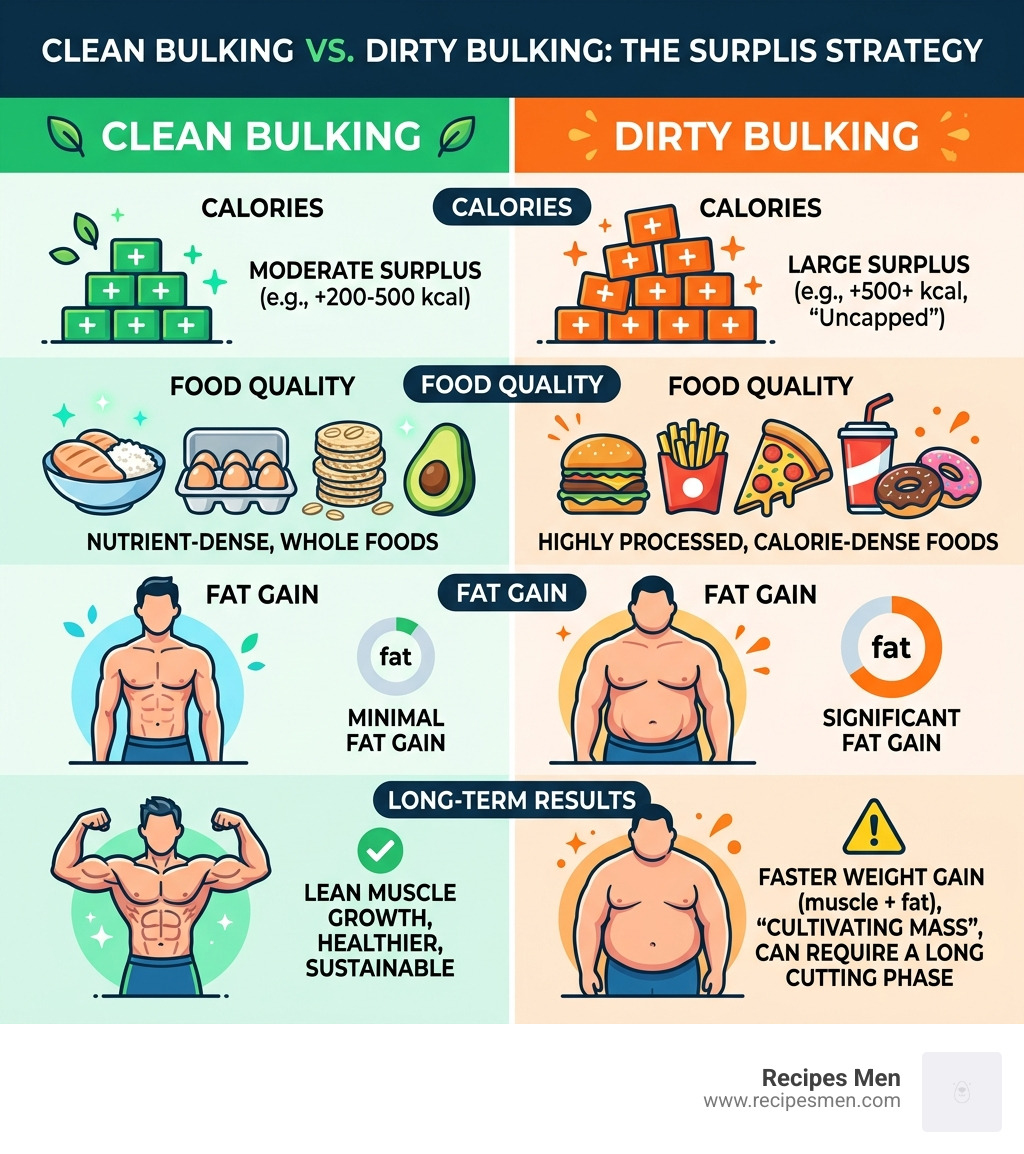
It’s tempting to hit your 3,000-calorie goal by eating pizza and donuts. This is the “dirty bulk,” and it’s a trap. While you’ll gain weight quickly, a huge percentage of it will be body fat, which leads to sluggishness and a much harder “cut” phase later.
Prioritizing nutrient density means choosing whole foods that provide vitamins and minerals alongside calories. Cheap staples like potatoes and beans provide fiber and micronutrients that keep your digestion on track and your energy levels stable. A “clean bulk” ensures that the weight you put on is high-quality muscle, not just a spare tire around your waist.
The Best Affordable Foods for Muscle Gain
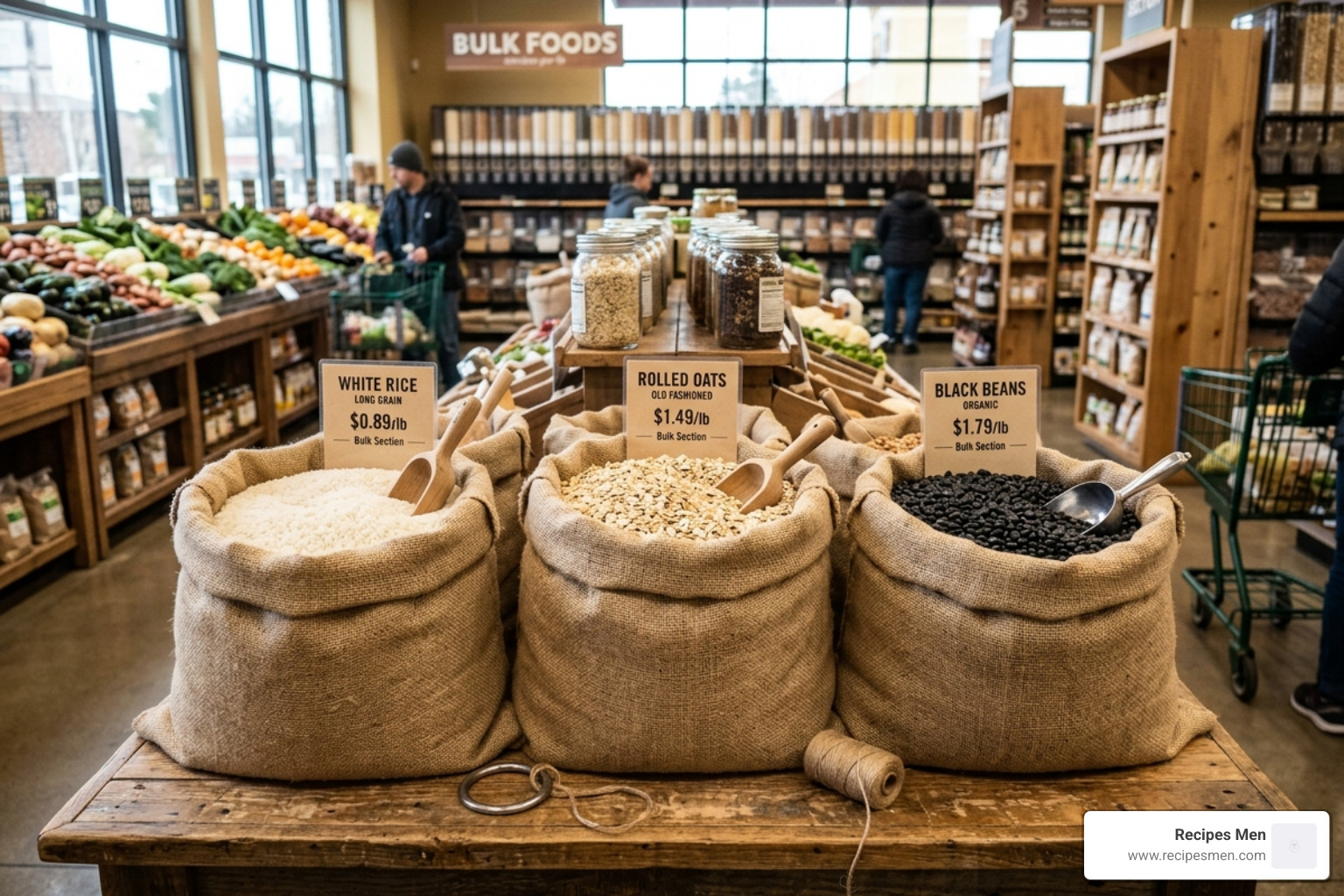
When shopping for budget friendly bulking meals, you want to maximize the “calories per dollar” without sacrificing health. In April 2026, inflation has made some items pricier, but staples remain the backbone of any lifter’s pantry.
Chicken thighs are a budget lifter’s best friend. They are often 30-50% cheaper than chicken breasts and contain more calories per ounce, which is actually an advantage when you’re trying to hit a surplus. Eggs remain the gold standard for high-value protein, providing essential fats and vitamins. For those who can tolerate dairy, whole milk is a liquid “cheat code” for adding calories without feeling overly full.
Affordable Staples for Budget Friendly Bulking Meals
To keep your costs down, your cart should be heavy on these items:
- White Rice: The ultimate cheap carb. A 5lb bag provides over 8,000 calories for just a few dollars.
- Rolled Oats: Perfect for breakfast or blending into high-calorie shakes.
- Potatoes: Extremely versatile and rich in potassium for muscle function.
- Bananas: The cheapest fruit available, perfect for pre-workout energy.
- Frozen Spinach: Much cheaper than fresh and packs a massive nutrient punch.
- Canned Tuna: Great for a quick, portable protein hit (aim for light tuna to manage mercury).
- Greek Yogurt: Look for store brands to get high protein and probiotics.
Vegetarian and Vegan Substitutions for Gains
Bulking without meat is entirely possible and often even cheaper. Lentils and chickpeas are nutritional powerhouses, offering both protein and complex carbs. Tofu and tempeh are complete proteins that can be bought in bulk at ethnic markets for a fraction of the price at “health food” stores.
Don’t overlook nutritional yeast for a cheesy flavor and B-vitamins, or bulk dry beans, which are significantly cheaper than canned versions if you have the time to soak them. Quinoa is a bit pricier but offers a complete amino acid profile, making it a great occasional swap for rice.
Sample Weekly Grocery Lists and 3000-Calorie Meal Plans
We’ve broken down how to structure your week based on three different financial tiers. These prices are based on April 2026 USDA averages for a single adult male aiming for 3,000 calories a day.
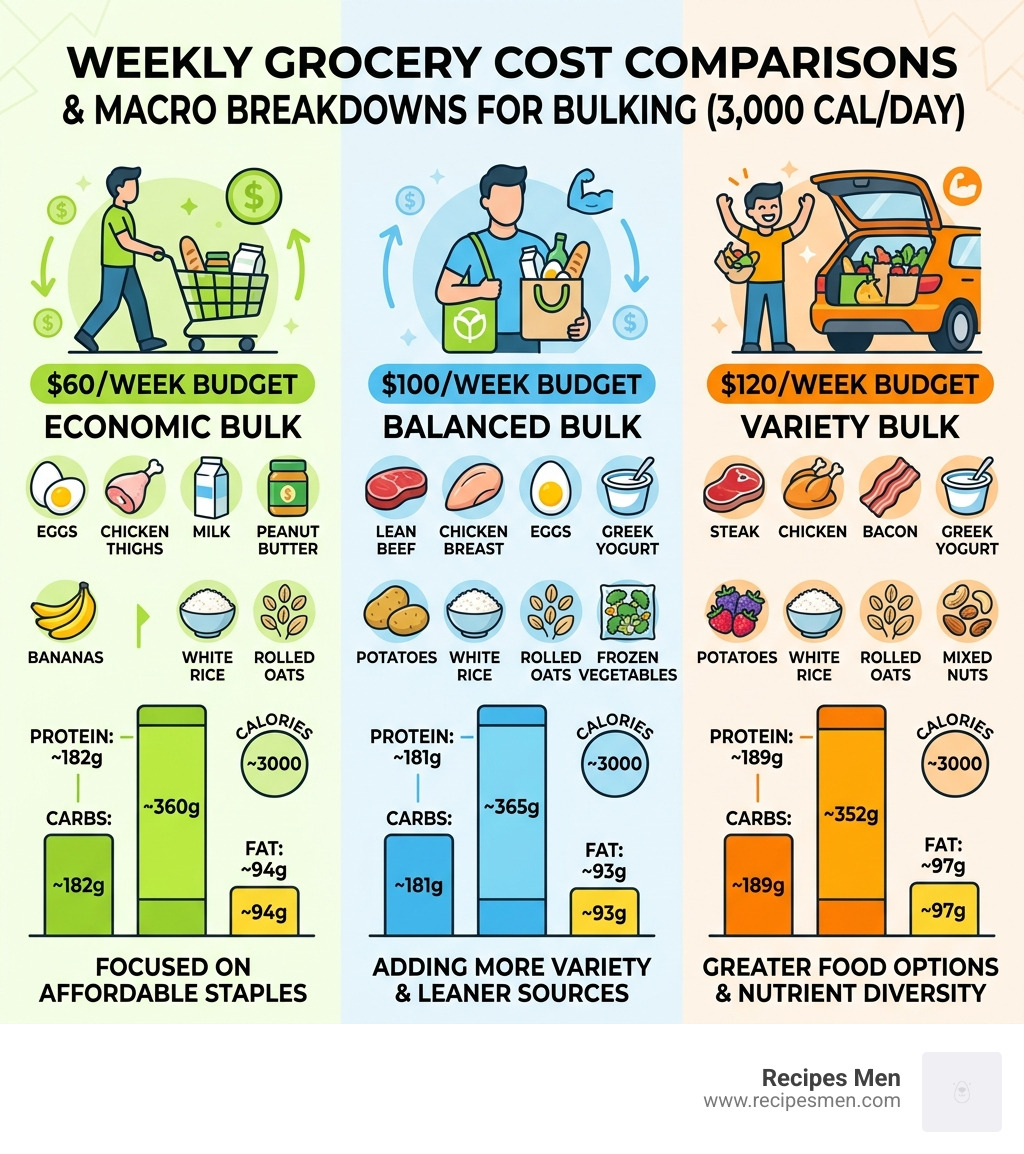
| Budget | Protein Target | Carb Target | Fat Target | Primary Protein Sources |
|---|---|---|---|---|
| $60/week | 182g | 360g | 94g | Eggs, Chicken Thighs, Milk, PB |
| $100/week | 181g | 365g | 93g | Lean Beef, Chicken, Eggs, Greek Yogurt |
| $120/week | 189g | 352g | 97g | Steak, Chicken, Bacon, Greek Yogurt, Berries |
The $60 “Barebones” Bulking Plan
This plan is for the student or the guy just starting out. It relies on high-volume staples.
- Breakfast: 4 scrambled eggs with 1 cup of oats (cooked).
- Lunch: 6oz chicken thighs with 1.5 cups of white rice and frozen broccoli.
- Snack: 2 tbsp peanut butter on a banana or with a glass of whole milk.
- Dinner: “Human Kibble” (rice, beans, and eggs mixed—see recipe below).
- Pre-Bed: A large glass of whole milk.
The $100 and $120 “Variety” Plans
With a bit more wiggle room, you can introduce lean beef and sweet potatoes to prevent palate fatigue. The $120 plan allows for “luxury” items like fresh berries and olive oil, which is a fantastic way to add 120 calories per tablespoon to any meal. You can also swap some chicken for whole wheat pasta and canned black beans to vary your fiber sources.
5 High-Calorie Budget Friendly Bulking Meals
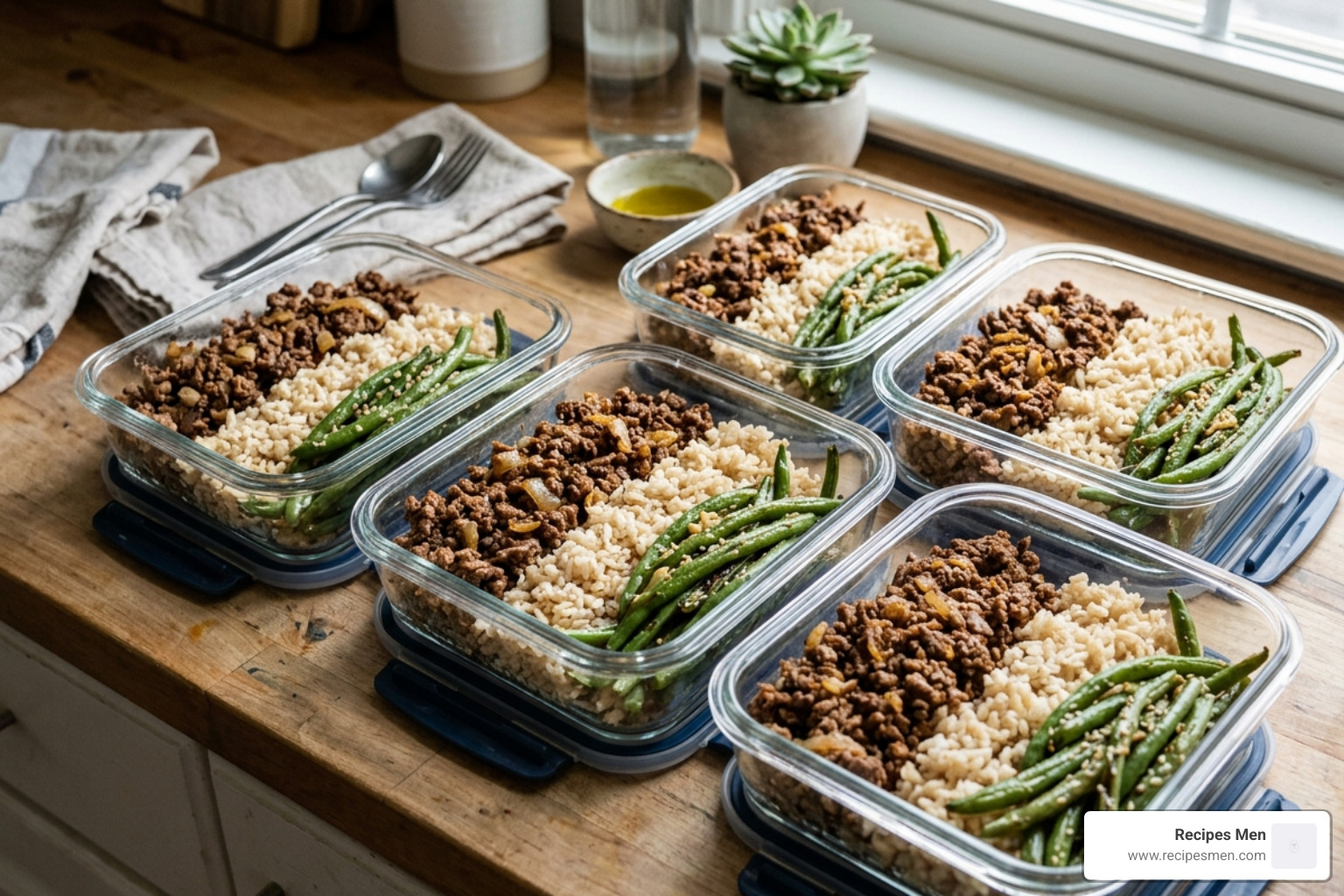
To make these gains stick, you need recipes that are easy to batch-cook. Here are five of our favorite budget friendly bulking meals that hit the calorie and protein marks every time.
- HamBULKer Helper: A homemade take on the classic. Use 2 lbs of ground beef, elbow pasta, and plenty of cheddar cheese. Add diced potatoes into the mix to skyrocket the calorie count. One serving can easily hit 1,000 calories and 60g of protein.
- Beef and Rice Power Bowls: Use 90% lean ground beef (drain the fat to keep it clean) and mix with large portions of white or brown rice. Season with soy sauce and ginger for a “dirty rice” feel that is actually very clean.
- $2 Homemade Burritos: Skip the $15 restaurant burrito. Make your own using flour tortillas, seasoned chicken thighs, black beans, and lime rice. These are incredibly freezer-friendly.
- Human Kibble: Don’t let the name fool you—it’s functional. Mix cooked rice, lentils, scrambled eggs, and finely chopped sautéed veggies. It’s a nutrient-dense, high-protein base that stays good in the fridge for up to 7 days.
- Peanut Butter Chicken Rice: A Thai-inspired dish. Sauté chicken thighs and mix in a sauce made of peanut butter, soy sauce, and a little hot water. Serve over a massive bed of rice for easy calories and healthy fats.
Batch Cooking and Meal Prep Strategies
The key to budget friendly bulking meals is the “Sunday Session.” Spend 90 minutes on Sunday cooking your staples in bulk.
- Rice: Cook a massive pot (5+ cups dry).
- Proteins: Bake all your chicken thighs on one large tray and brown your ground beef in a single skillet.
- Veggies: Roast frozen vegetables directly from the bag with a little oil and salt.
Storage Tip: Invest in glass containers. They last forever, don’t leach chemicals when microwaved, and keep food tasting fresher than plastic. Frozen vegetables are a lifter’s secret—scientific research shows they retain nearly identical nutrient profiles to fresh produce because they are flash-frozen at peak ripeness.
Using Spices and Condiments to Beat Boredom
Eating the same chicken and rice every day is the fastest way to quit your bulk. Use bulk spices to change the “theme” of your meals without adding cost.
- Mexican: Cumin, garlic powder, and chili powder.
- Italian: Dried oregano, basil, and red pepper flakes.
- Smoky: Smoked paprika (this is a game-changer for ground beef).
- Condiments: Keep hot sauce, mustard, and soy sauce on hand. They add massive flavor for almost zero cost and very few calories.
Frequently Asked Questions about Budget Friendly Bulking Meals
Do I need expensive supplements like whey protein to bulk?
No. While whey is convenient, it is often more expensive per gram of protein than eggs or chicken thighs. Whole foods also provide more satiety and micronutrients. Use supplements only if you struggle to hit your protein goals through solid food.
Is organic and grass-fed meat necessary for muscle growth?
In a word: No. While grass-fed beef has a slightly better Omega-3 profile, the difference in muscle-building potential is negligible. When you’re on a budget, prioritize total protein and total calories over organic labels.
How can I add 500 calories to my day for under $1?
Add three tablespoons of peanut butter to your daily intake. It costs roughly $0.40 and provides about 280 calories. Combine that with two large glasses of whole milk (approx. $0.50), and you’ve added over 500 calories for less than a dollar.
Conclusion
At Recipes Men, we want you to achieve your physical goals without sacrificing your financial freedom. Bulking is a marathon, not a sprint. By focusing on budget friendly bulking meals like eggs, rice, chicken thighs, and oats, you can build a world-class physique on a working-man’s salary.
Stop making excuses about the cost of healthy eating. Buy in bulk, prep your meals on Sundays, and stay consistent with your training. Your future self—with bigger sleeves and a fatter bank account—will thank you. For more straightforward recipes and nutrition tips, head back to our Home page and start planning your next meal prep session.

