
Mastering Quick and Healthy Stir Fry Recipes
Why Stir Fry is the Ultimate Weeknight Meal
Stir fry quick recipes are one of the fastest, most flexible meals you can make — most come together in 20 to 30 minutes using whatever protein and vegetables you already have on hand.
Here’s what makes stir fry the perfect quick weeknight meal:
- Fast — Most recipes are ready in 20-30 minutes, start to finish
- One pan — Less cleanup, less stress
- Flexible — Works with almost any protein, vegetable, or sauce
- Budget-friendly — A full meal can cost under $2.50 per serving
- Healthy — High protein, loaded with vegetables, easy to adapt for weight loss or muscle gain
Think about it: you get home tired, open the fridge, and see a bell pepper, some leftover chicken, and half a head of broccoli. That’s a stir fry. No grocery run needed.
The core idea is simple. High heat + small cuts + a quick sauce = a meal that tastes like takeout but costs a fraction of the price.
Whether you’re eating to lose weight, build muscle, or just get something decent on the table after a long day — stir fry checks every box.
This guide covers everything: the right technique, the best proteins and vegetables, sauce variations, and specific recipes you can make tonight.
Essential Components of Stir Fry Quick Recipes
To master the art of the quick stir fry, we need to understand the architecture of the dish. It isn’t just throwing stuff in a pan; it’s about the harmony of aromatics, a balanced sauce, and the right cooking order.

The foundation of every great stir fry starts with the “Holy Trinity” of aromatics: garlic, ginger, and scallions. In April 2026, we’re seeing a massive trend toward “functional flavor”—using ingredients that boost immunity and metabolism while tasting incredible.
The Sauce: Your Secret Weapon
A basic stir-fry sauce doesn’t need to be complicated. We recommend keeping these staples in your pantry:
- Low-Sodium Soy Sauce: This provides the salty, umami base without making the dish a salt bomb.
- Toasted Sesame Oil: A little goes a long way. It adds a nutty, roasted depth.
- Rice Vinegar: This provides the necessary acidity to cut through the richness of the oil and protein.
- Honey or Brown Sugar: A touch of sweetness balances the salty soy and acidic vinegar.
- Cornstarch Slurry: A mix of cornstarch and water is what gives the sauce that glossy, restaurant-quality “cling” to your veggies.
Recipes Men Signature Veggie Stir Fry Base: Combine 1/4 cup low-sodium soy sauce, 1 tablespoon honey, 1 teaspoon toasted sesame oil, 1 teaspoon rice vinegar, and 1 teaspoon cornstarch. Whisk it together, and you have a base that works for almost anything.
Choosing and Preparing Your Protein
The key to stir fry quick recipes is ensuring the protein cooks at the same speed as the vegetables. This means uniform cuts are your best friend.
- Chicken Breast or Thighs: Slicing chicken into thin, bite-sized strips ensures it cooks through in about 5 to 8 minutes. Thighs are more forgiving and stay juicy, while breasts are leaner for weight loss goals.
- Flank Steak or Sirloin: For beef, always slice against the grain. This breaks up the muscle fibers, making even tougher cuts like flank steak melt-in-your-mouth tender. Pro tip: Freeze your steak for 15 minutes before slicing to get those paper-thin strips.
- Shrimp: These are the ultimate “emergency” protein. They cook in 3 to 4 minutes. Just make sure to pat them dry before they hit the pan so they sear instead of steam.
- Firm Tofu: For our plant-based brothers, press your tofu for at least 15 minutes to remove excess water. This allows it to get golden and crispy rather than soggy and bland.
The “Velveting” Technique: If you want that silky, tender texture found in Chinese restaurants, toss your raw protein in a little cornstarch and a splash of soy sauce before cooking. It creates a protective barrier that keeps the meat moist under high heat.
Selecting the Best Vegetables
The goal is “crisp-tender”—meaning the vegetables have a bright color and a slight snap when you bite them.
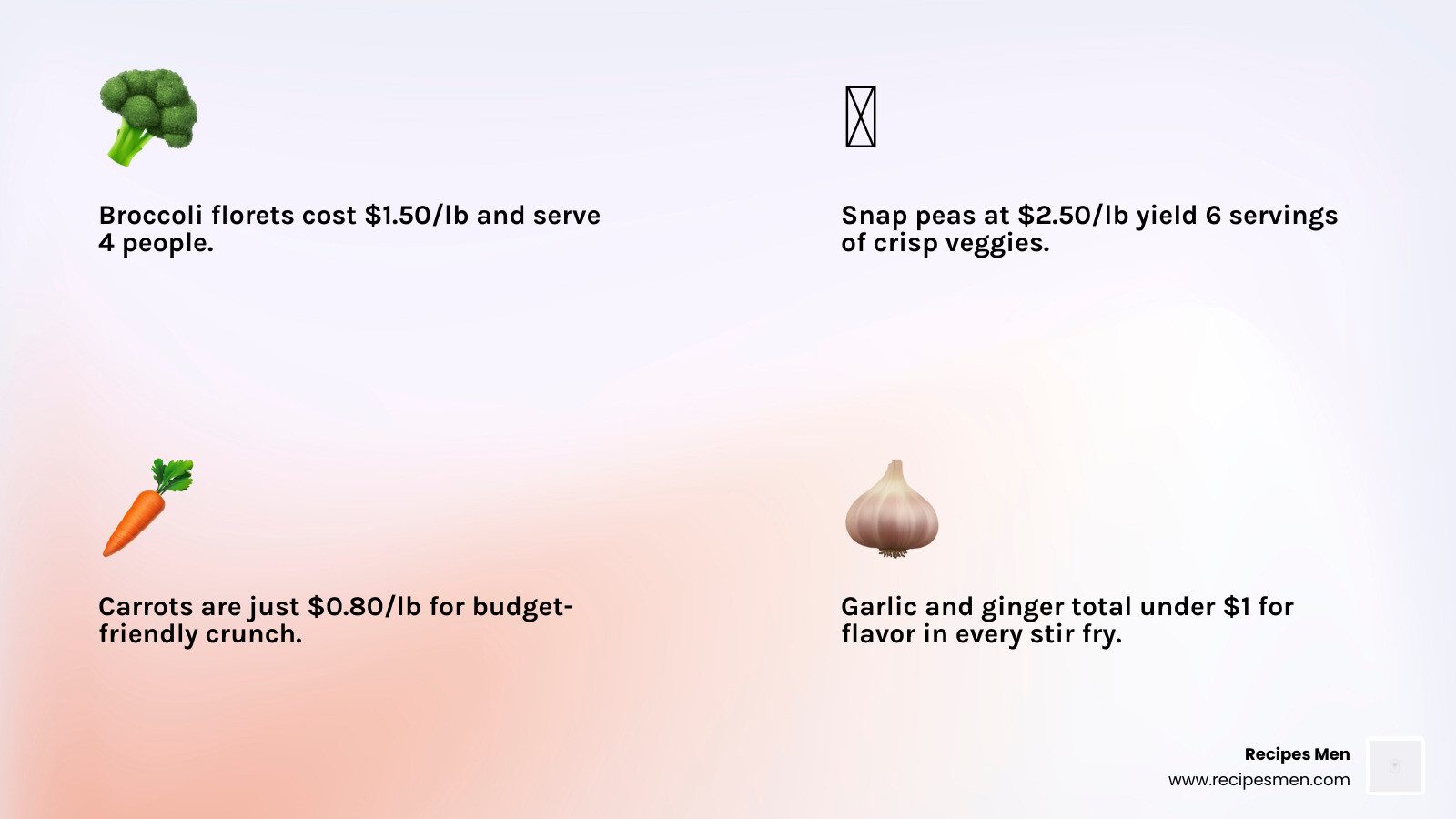
- Hard Vegetables (Cook First): Carrots, broccoli florets, and cauliflower take the longest. Slice carrots into thin coins or matchsticks to speed things up.
- Medium Vegetables: Bell peppers, snap peas, and celery should go in once the hard veggies have a head start.
- Soft/Leafy Vegetables (Cook Last): Bok choy, spinach, and green onions only need a minute or two of heat.
The 30-Minute Method: A Step-by-Step Guide
The biggest mistake people make with stir fry quick recipes is starting to cook before they finish prepping. In a wok, things move fast. If you’re still chopping carrots while the garlic is burning, you’ve already lost.
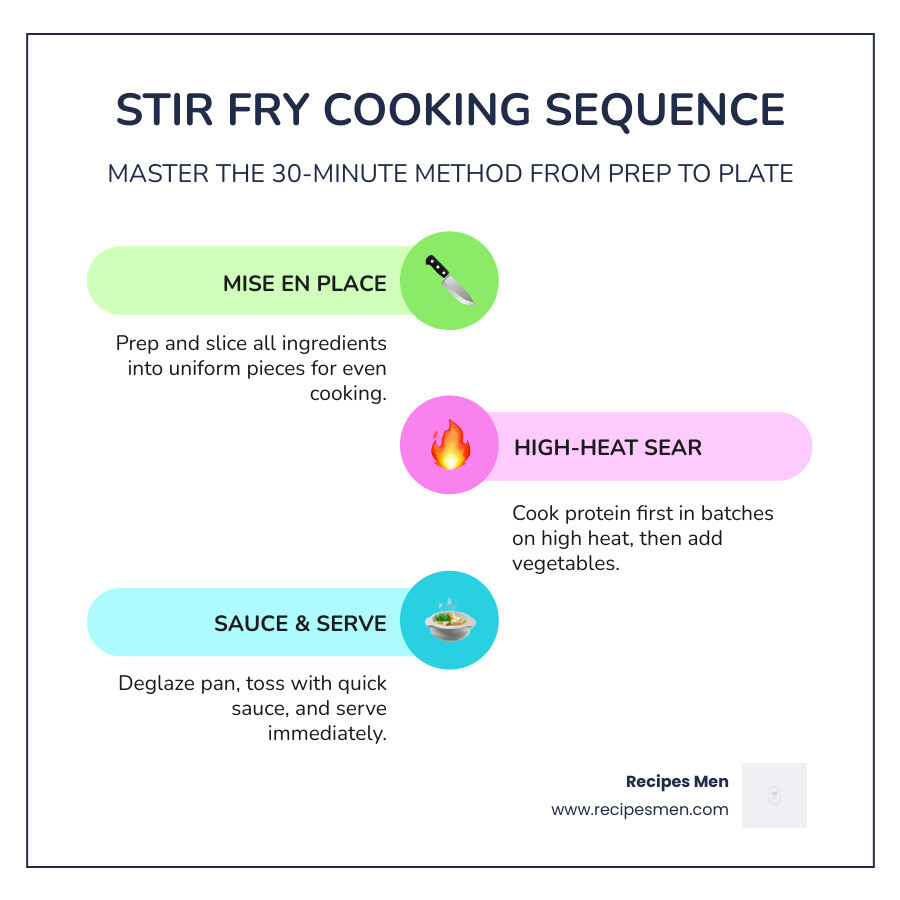
Step 1: Mise en Place (Everything in its Place)
Chop all your veggies, slice your protein, and whisk your sauce. Have them lined up next to the stove. Once the heat is on, you won’t have time to look for the ginger.
Step 2: High Heat and Searing Protein
Get your pan screaming hot. Add a high-smoke-point oil (like canola or peanut oil). Add your protein in a single layer. Let it sit for 60 seconds to get a nice brown crust—this is where the flavor lives. Stir-fry until just cooked through, then remove it from the pan. This prevents the meat from becoming chewy while the veggies cook.
Step 3: The Veggie Shuffle
Add a bit more oil if needed. Toss in your harder veggies first. If the pan looks dry, add a tablespoon of water to create steam—this helps “par-cook” dense vegetables like broccoli without burning them.
Step 4: Deglazing and Finishing
Add your aromatics (garlic and ginger) for the last 30 seconds of veggie cooking so they don’t burn. Return the protein to the pan. Give your sauce one last whisk (cornstarch settles at the bottom!) and pour it in.
Step 5: The Simmer
Let the sauce bubble and thicken for 1 to 2 minutes. It should coat everything in a glossy sheen. If it’s too thick, add a splash of water or broth. If too thin, let it simmer a bit longer.

Customizing Your Stir Fry Quick Recipes
Once you have the method down, you can swap flavors like a pro.
- Teriyaki Style: Increase the honey and add a splash of mirin or pineapple juice.
- Peanut Sauce: Whisk in a tablespoon of creamy peanut butter and a squeeze of lime to your base sauce.
- Sriracha Heat: Add a teaspoon (or three) of Sriracha or chili crisp for a “swicy” (sweet and spicy) kick.
- Crunch Factor: Top your finished dish with toasted cashews, peanuts, or sesame seeds for texture.
Storing and Reheating Stir Fry Quick Recipes
Stir fries are elite meal-prep options. Most will stay fresh in an airtight container for up to 5 days.
- Reheating: Avoid the microwave if you can. A quick toss in a hot skillet with a teaspoon of water will revive the texture of the veggies and keep the protein from getting rubbery.
- Rice Tip: If reheating rice, add a splash of water and cover it. This steams the grains so they aren’t hard and dry.
Pro Techniques for Restaurant-Quality Results
To take your stir fry quick recipes from “home cook” to “chef level,” you need to understand heat management.
| Feature | Wok | Skillet |
|---|---|---|
| Heat Distribution | Concentrated at the bottom, cooler sides | Even across the flat surface |
| Cooking Speed | Extremely fast | Fast |
| Oil Required | Minimal | Slightly more |
| Best For | Tossing and “Wok Hei” flavor | Searing flat proteins (like shrimp) |
Wok Hei: This literally translates to “breath of the wok.” It’s that smoky, charred flavor you get from high-heat cooking. You can replicate this at home by not overcrowding your pan. If you put too much in at once, the temperature drops, and your food steams instead of searing. Cook in batches if you have to!
Oil Selection: Do not use extra virgin olive oil or butter for the main cooking. They have low smoke points and will burn, leaving a bitter taste. Stick to canola, peanut, or safflower oil. Save the toasted sesame oil for the sauce or as a finishing garnish.
Healthy Variations and Dietary Adaptations
We know many of you are watching your macros or following specific dietary plans. The beauty of the stir fry is its inherent healthiness.
- Low-Carb / Keto: Swap the rice for cauliflower rice or use shirataki noodles (also known as “miracle noodles”). These are made from konjac yam and are nearly calorie-free.
- Muscle Recovery: Focus on a 2:1 ratio of veggies to protein. A shrimp stir fry provides high-quality protein with very low fat, perfect for a post-workout meal.
- Gluten-Free: Simply swap soy sauce for Tamari or coconut aminos. Ensure your cornstarch is certified gluten-free.
- Vegan: Tofu and tempeh are excellent, but don’t sleep on chickpeas or edamame. Stir-fried chickpeas get a great “pop” and soak up the sauce beautifully.
Easy Veggie Stir Fry Recipe – Love and Lemons is a fantastic resource if you want to see how a vegetable-forward dish can be just as filling as a meat-heavy one.
Specific Quick Stir Fry Recipes to Try
Based on our research and kitchen testing, here are some of the top-performing recipes for your rotation:
- 30-Minute Chicken Stir Fry: Using chicken breast, broccoli, and bell peppers. This is a classic “swicy” dish that hits about 282 calories per serving. 30 Minute Chicken Stir Fry – Tastes of Lizzy T
- Quick Beef Stir Fry: Using flank steak and a ginger-soy base. This is a protein powerhouse with 23g of protein and only 268 calories per serving.
- 15-Minute Shrimp Shirataki Noodle Stir Fry: The ultimate weight-loss meal. High volume, low calorie, and ready faster than you can order delivery.
- Spicy Coconut Vegetable Stir Fry: A budget-friendly vegan option that uses coconut milk for a creamy, Thai-inspired twist.
Frequently Asked Questions about Stir Fry Quick Recipes
What is the best oil for stir-frying?
We recommend canola or peanut oil. They have high smoke points (above 400°F), meaning they won’t break down or smoke when you’re searing your beef or chicken. Peanut oil adds a very subtle nutty flavor that complements Asian cuisine perfectly.
How do I keep my vegetables from getting soggy?
Sogginess happens for two reasons: low heat or overcrowding. Make sure your pan is hot enough that the veggies “hiss” the moment they touch the metal. Also, ensure your vegetables are bone dry before adding them. Any water on the surface will turn to steam and soften the exterior.
Can I use frozen vegetables in a stir fry?
Yes! They are a lifesaver for stir fry quick recipes. However, frozen veggies release a lot of moisture. To prevent a watery mess, don’t thaw them first. Throw them into a screaming hot pan in small batches so the water evaporates instantly.
Conclusion
At Recipes Men, we believe that cooking shouldn’t be a chore. Mastering a few stir fry quick recipes gives you a culinary superpower: the ability to turn random fridge scraps into a nutritious, high-protein meal in less time than it takes to scroll through a streaming app.
By focusing on high heat, uniform cuts, and a balanced sauce, you’re not just making dinner; you’re fueling your body for whatever the next day brings. Whether you’re aiming for weight loss with shirataki noodles or building mass with extra beef and broccoli, the stir fry is your most versatile tool in the kitchen.
Now, grab your skillet, crank up the heat, and make it happen.
Sign up for our newsletter and new recipes sent to your inbox every week!

