
Simple Effective Diet Plans for People Who Hate Cooking
The Fastest Way to Find a Simple Effective Diet Plan That Actually Works
Simple effective diet plans are structured eating approaches that use whole foods, portion control, and repeatable meal patterns to help you lose weight, improve heart health, and build lasting habits — without complicated recipes or hours in the kitchen.
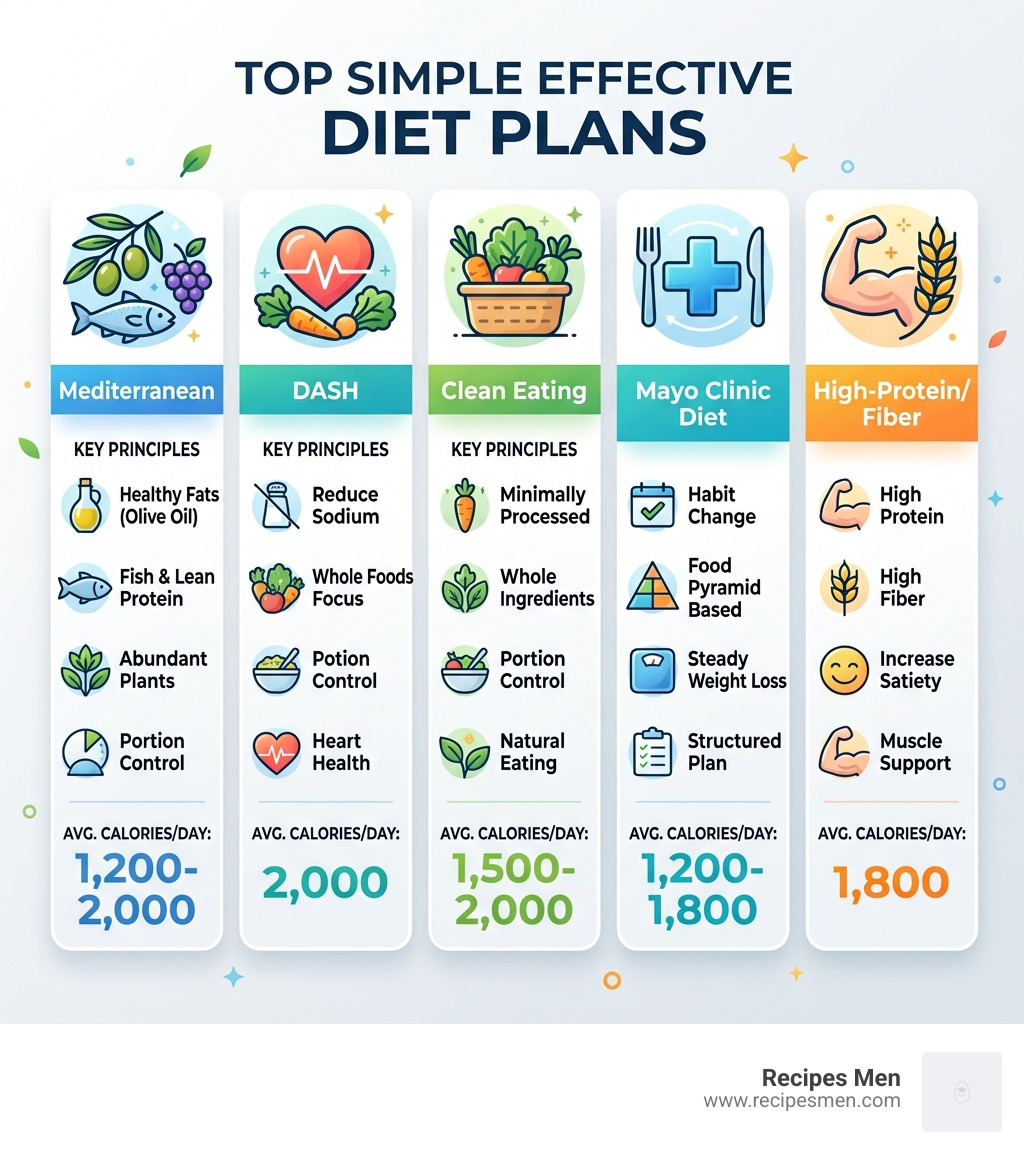
Here are the top options, ranked by simplicity and proven results:
| Diet Plan | Best For | Avg. Calories/Day | Key Focus |
|---|---|---|---|
| Mediterranean | Overall health & heart | 1,200-2,000 | Healthy fats, fish, plants |
| DASH | Blood pressure & heart | 2,000 | Low sodium, whole foods |
| Clean Eating | Beginners & weight loss | 1,500-2,000 | Minimally processed foods |
| Mayo Clinic Diet | Sustainable weight loss | 1,200-1,800 | Habit change, food pyramid |
| High-Protein/Fiber | Satiety & muscle | 1,800 | 80g+ protein, 30g+ fiber |
Most guys in their 30s don’t fail at dieting because of willpower. They fail because the plan is too complicated to stick to.
The good news? The most effective diets in the world — backed by places like the Mayo Clinic, the NIH, and Harvard Medical School — are built around surprisingly simple ideas: eat more whole foods, control your portions, and repeat.
The Mayo Clinic Diet, for example, is designed to help you lose 6 to 10 pounds in the first two weeks, then a steady 1 to 2 pounds per week after that. No calorie spreadsheets required.
This guide breaks down the best simple effective diet plans side by side — what they cost, how many calories they contain, and exactly what to eat — so you can pick one and start today.
Introduction
Starting a new health journey in April 2026 shouldn’t feel like a second job. At RecipesMen, we know that if a meal takes longer than 20 minutes to assemble, most of us are reaching for the delivery app. That is why we focus on simple effective diet plans that prioritize “assembly” over “cooking.” This approach is specifically designed for busy men who want to see results without sacrificing their entire evening to meal prep.
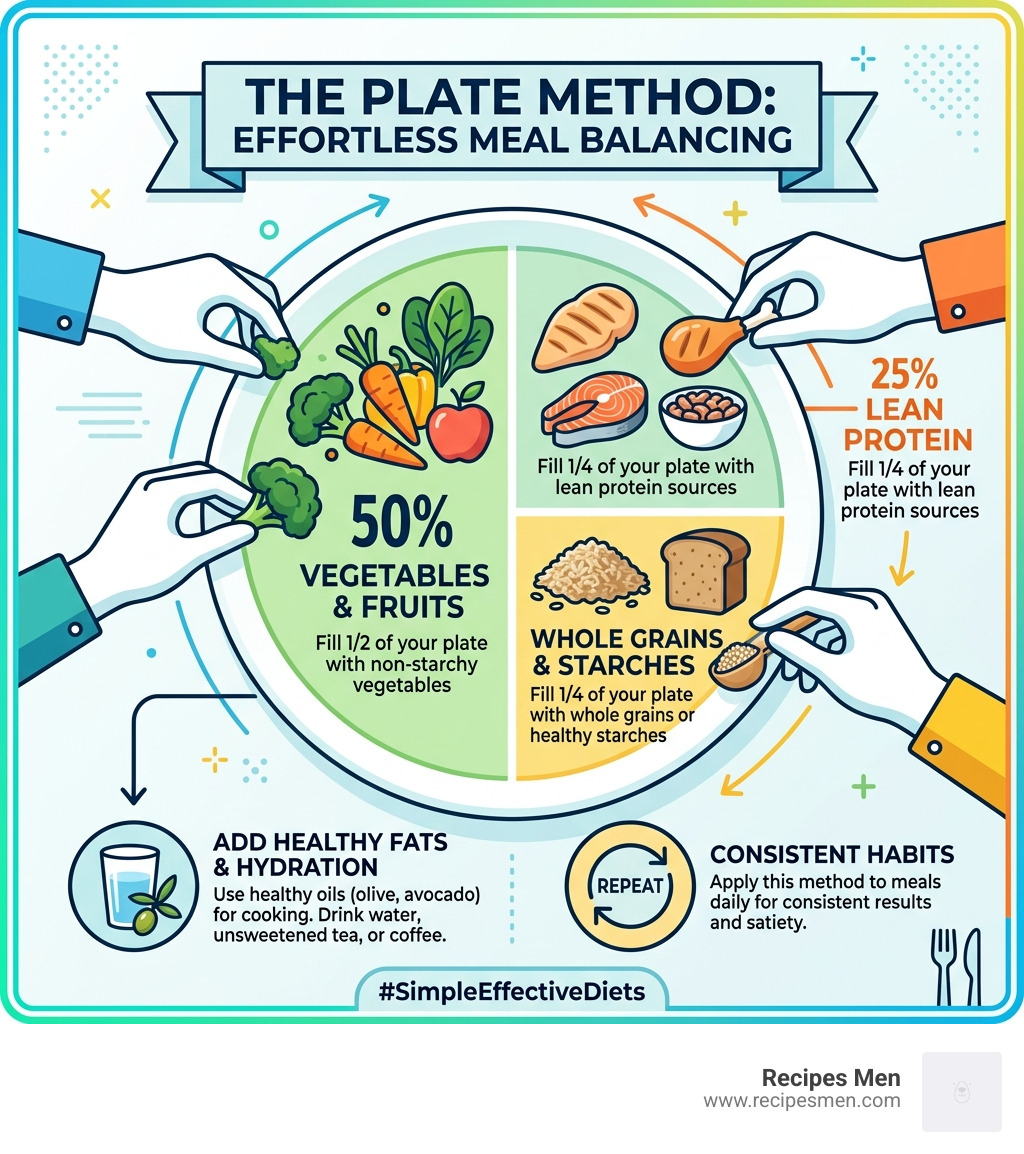
By focusing on beginner-friendly whole foods that provide high satiety (the feeling of being full), you can manage your weight without the constant hunger pangs. The secret lies in portion control and the “Plate Method,” where you fill half your plate with vegetables, a quarter with lean protein, and a quarter with whole grains or healthy starches. This visual guide eliminates the need for constant calorie counting and allows you to eat out at restaurants while still staying on track.
Core Principles of Simple Effective Diet Plans
The most successful plans aren’t about restriction; they are about substitution and habit building. We want to move away from the “diet” mindset and toward a “lifestyle” mindset.

- Whole Grains & Lean Proteins: These are your energy anchors. Quinoa, brown rice, and whole-wheat pitas provide lasting energy, while chicken, fish, and legumes keep your muscles fueled. Complex carbs are essential because they prevent the blood sugar spikes and crashes that lead to mid-afternoon cravings.
- Fiber is Your Secret Weapon: Only about 7% of adults reach their daily fiber goals. Most of the plans we recommend aim for at least 30g of fiber daily. Fiber slows digestion, keeping you full longer and helping with weight management. It also acts as a prebiotic, feeding the healthy bacteria in your gut, which is linked to improved mood and immune function.
- Sodium Reduction & Heart Health: Lowering sodium isn’t just for people with high blood pressure. Reducing intake to 2,300 mg (or 1,500 mg for those monitoring heart health) reduces bloating and protects your cardiovascular system. This is often achieved by simply swapping canned goods for fresh or frozen alternatives, or by choosing “no salt added” versions of pantry staples.
- Nutrient-Dense Assembly: Think of meals as components. If you have a pre-cooked grain, a roasted vegetable, and a lean protein, dinner is served in three minutes. This modular approach allows for variety without the need for complex culinary skills.
The Mediterranean Approach: A Simple Effective Diet Plan
Voted the best diet for eight consecutive years, the Mediterranean diet is less of a “plan” and more of a celebration of food. It focuses on heart-healthy fats, particularly extra virgin olive oil, which contains antioxidants like polyphenols that fight chronic inflammation and support arterial health.
For men, this approach is a power move. It supports brain health, balanced hormones, and steady energy levels. Instead of heavy sauces, we use lemon juice, herbs, and spices to bring flavor to fish and legumes. Legumes, such as chickpeas and lentils, are the unsung heroes here—they are incredibly cheap, shelf-stable, and packed with both protein and fiber. It’s also incredibly sustainable because it encourages social dining—enjoying a meal with friends or family actually improves your relationship with food and reduces stress-related eating.
DASH and Clean Eating: Simple Effective Diet Plans for Heart Health
If your doctor has mentioned blood pressure, the DASH (Dietary Approaches to Stop Hypertension) plan is your gold standard. It’s scientifically proven to lower cholesterol and manage weight by focusing on potassium and magnesium-rich foods like fruits, veggies, and low-fat dairy. These minerals help your blood vessels relax, naturally lowering pressure.
Clean Eating follows a similar path but focuses on “minimally processed” foods. The rule is simple: if the ingredient list looks like a chemistry textbook, put it back. By reducing added sugars (aiming for less than 6-9 teaspoons a day) and focusing on whole food groups, you naturally cut calories without feeling deprived. This is particularly important because hidden sugars in condiments and “low-fat” snacks are often the primary culprits behind weight plateaus.
Comparing Calorie Needs and Nutritional Goals
One size does not fit all. Your neighbor might need 2,000 calories to maintain his weight, while you might need 1,500 to see the scale move.
| Goal | Calorie Level | Protein Target | Fiber Target |
|---|---|---|---|
| Weight Loss (Aggressive) | 1,200 – 1,500 | 50g – 60g | 30g |
| Sustainable Weight Loss | 1,500 – 1,800 | 80g+ | 35g |
| Maintenance / Active | 1,800 – 2,000 | 100g+ | 38g |
Healthy, sustainable weight loss happens at a rate of 1 to 2 pounds per week. Research from the 1500-Calorie Meal Plan, Created by a Dietitian suggests that hitting protein and fiber targets is more important for long-term success than just cutting calories alone.
The “No-Cook” Strategy: Meal Prep and Budgeting
You don’t need to spend your entire Sunday in the kitchen. We advocate for the “Mix-and-Match” system.

- The 5-Recipe System: Prep five base foods (e.g., roasted chicken, quinoa, fajita veggies, black beans, and garlicky greens) in under an hour. This system is designed to eliminate “decision fatigue.” When you come home exhausted, the last thing you want to do is decide what to eat. By having these components ready, you remove the mental barrier to healthy eating.
- Assembly-Only Meals: Use these bases to create 10 different meals. On Monday, it’s a chicken and quinoa bowl with a squeeze of lime. On Tuesday, it’s black bean and veggie tacos using the same fajita mix. This variety keeps your palate interested without requiring new cooking skills every night.
- Budgeting: According to the British Heart Foundation, you can eat a balanced diet for around £31 per person per week. Buying pantry staples like rice, oats, and beans in bulk and choosing in-season produce keeps costs low. Frozen vegetables are also a budget-friendly secret; they are often more nutrient-dense than “fresh” produce that has sat on a truck for a week.
- Food Waste Reduction: By repeating ingredients across different “versions” of a meal, you ensure nothing rots in the crisper drawer. This not only saves money but also reduces the environmental impact of your household.
Frequently Asked Questions about Simple Dieting
Is a 1,200-calorie diet safe for beginners?
While a 1,200-calorie diet can jumpstart weight loss, the 2020-2025 Dietary Guidelines suggest it is often too low for most men to meet their nutritional needs. It can lead to nutritional deficiencies, muscle loss, and is generally unsustainable. We recommend consulting a doctor before dropping below 1,500 calories, as metabolic health can be impacted if you aren’t eating enough to fuel basic functions like heart rate and brain activity.
How can I lower my sodium without losing flavor?
The 7-Day Easy Healthy Eating Plan for Beginners suggests using citrus juices (lemon/lime) and fresh herbs to brighten food. Other DASH-approved tips include:
- Rinsing canned beans to remove excess salt.
- Using unsalted nuts for crunch.
- Swapping table salt for garlic powder, onion powder, or smoked paprika.
- Choosing low-sodium versions of deli meats and cheeses.
- Experimenting with vinegars (balsamic, apple cider) to add “zing” without salt.
Can I drink alcohol while following these plans?
Moderation is the cornerstone of any simple effective diet plan. While the Mediterranean diet famously includes an occasional glass of red wine, it is important to remember that alcohol provides “empty calories”—energy without significant nutrients. If weight loss is your primary goal, limiting alcohol to 1-2 drinks per week can significantly accelerate your progress. When you do choose to drink, opt for lower-calorie options like spirits with soda water and lime rather than sugary cocktails or heavy craft beers.
Can I swap meals if I don’t like a specific recipe?
Absolutely! Flexibility is the key to a simple effective diet plan. If a plan calls for salmon but you hate fish, swap it for chicken, turkey, or tofu. The goal is to match the nutritional profile. If you’re swapping a 400-calorie lunch, replace it with another 400-calorie option that has similar protein and fiber levels to maintain satiety. For instance, if you don’t like quinoa, brown rice or farro are excellent 1:1 substitutions that provide similar complex carbohydrates and B vitamins.
Conclusion
At RecipesMen, we believe that health shouldn’t be a headache. Whether you choose the Mediterranean lifestyle or the structured habits of the Mayo Clinic Diet, the best plan is the one you can actually follow on a rainy Tuesday when you’re tired from work.
Long-term success comes from combining these simple effective diet plans with at least 30 minutes of physical activity most days and a focus on mindful eating. You aren’t just changing what’s on your plate; you’re transforming your lifestyle for better mental and physical health.
Ready to start your journey? Explore our collection of RecipesMen Home for more straightforward, flavor-packed ideas that fit your life.
For more information on structured plans, check out these resources:
- 7-Day Mediterranean Diet Meal Plan for Beginners
- Simple Meal Plan | Mayo Clinic Diet
- The Harvard Medical School 6-Week Plan for Healthy Eating – Harvard Health
Visit us at https://www.recipesmen.com/ to take control of your health today.

