
Stop the Hangry with These High Protein Breakfast Foods
Introduction
Stop Eating Cereal: The Best Breakfast Foods High in Protein
Breakfast foods high in protein are the fastest way to kill morning hunger, stay full until lunch, and keep your energy steady all day.
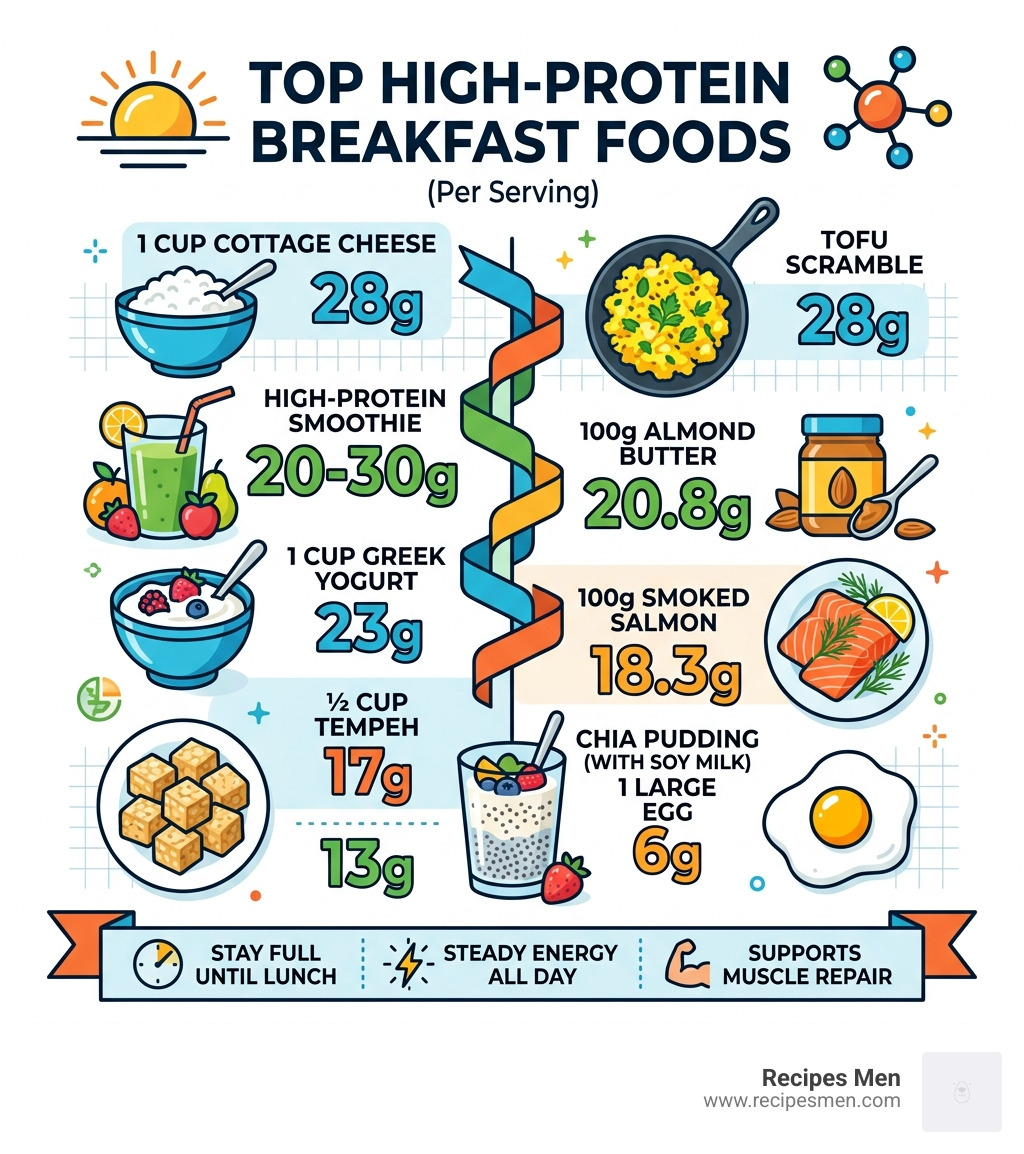
Here are the top options at a glance:
| Food | Protein Per Serving |
|---|---|
| Cottage cheese (1 cup) | 28g |
| Greek yogurt (1 cup) | 23g |
| High-protein smoothie | 20-30g |
| Tofu scramble | 28g |
| Tempeh (½ cup) | 17g |
| Almond butter (100g) | 20.8g |
| Smoked salmon (100g) | 18.3g |
| Chia pudding (with soy milk) | 13g |
| Egg (1 large) | 6g |
Most guys grab a bowl of cereal or skip breakfast entirely. But carb-heavy breakfasts spike your blood sugar and leave you starving by 10am — which leads to bad snack choices and low energy all morning.
The fix is simple: swap your usual breakfast for a protein-heavy one. Experts recommend hitting 20 to 30 grams of protein at breakfast to balance blood sugar, curb cravings, and support muscle repair throughout the day.
The good news? You don’t need protein powder, fancy ingredients, or an hour in the kitchen. The options below are affordable, quick, and actually taste good.
Why You Need Breakfast Foods High in Protein
As we move into April 2026, the data is clearer than ever: how you start your morning dictates your metabolic health for the rest of the day. When we eat a meal rich in protein, we aren’t just filling our stomachs; we are signaling to our bodies that it’s time to get to work.
One of the most critical benefits is blood sugar stability. A sugary pastry or a bowl of cornflakes causes a massive spike in insulin followed by a “crash.” This crash is what makes you “hangry”—that irritable, shaky feeling where you’d eat a shoe if it were covered in maple syrup. Protein slows down the absorption of sugar, providing a slow, steady burn of energy.
Furthermore, protein is essential for muscle maintenance and repair. Even if you aren’t a pro bodybuilder, your body is constantly breaking down and rebuilding muscle tissue. Starting your day with 20-30 grams of protein provides the amino acids necessary to kick-start this process after your overnight fast.
There is also a fascinating process called gluconeogenesis. When your body needs energy but hasn’t had carbs, it can convert protein into glucose. By eating a high-protein breakfast, you provide a secondary energy source that keeps your cognitive function sharp. No more morning brain fog! You’ll feel more alert, focused, and ready to tackle your commute or that first meeting of the day.

If you’re someone who loves the comfort of a warm bowl of oats but finds yourself hungry an hour later, you might want to look into Quick & Creamy High Protein Oatmeal (with Egg Whites). This method adds significant protein and fiber, ensuring you stay sated until lunch.
Top Breakfast Foods and How They Beat the Incredible Egg
We all love eggs. They are the gold standard of breakfast. However, at only 6 grams of protein per large egg, you’d have to eat five of them to hit a 30-gram target. That’s a lot of peeling and cracking.
When we look at other breakfast foods high in protein, some surprising champions emerge. Cottage cheese and Greek yogurt, for instance, offer significantly more protein per serving with zero prep time.
| Food Item | Protein Amount | Serving Size |
|---|---|---|
| Cottage Cheese | 28g | 1 cup |
| Greek Yogurt | 23g | 1 cup |
| Almond Butter | 20.8g | 100g |
| Smoked Salmon | 18.3g | 100g |
| Large Egg | 6g | 1 egg |
Greek Yogurt is a protein powerhouse. A standard 7-ounce container of plain, nonfat Greek yogurt has about 20 grams of protein for only 150 calories. It’s also rich in probiotics for gut health.
Cottage Cheese is the “secret weapon” of the fitness world. Just a half-cup provides 15 grams of protein and only 80 calories. It has a higher protein-to-calorie ratio than eggs and contains casein protein, which digests slowly, keeping you full for hours.
Bioavailability is also key. Animal-based proteins like dairy and eggs are “complete,” meaning they contain all nine essential amino acids your body can’t make on its own. While plant-based options are great, these dairy options are incredibly efficient at delivering nutrients to your muscles.
Savory Breakfast Foods High in Protein: Salmon and Lean Meats
If you don’t have a sweet tooth in the morning, savory options are your best friend. Smoked salmon is a gourmet way to get 18.3 grams of protein per 100g serving. It’s also loaded with Omega-3 fatty acids, which are vital for heart health and reducing inflammation.
For those who like a “fry-up” style meal, swapping standard pork sausage for turkey sausage or Canadian bacon can significantly lower saturated fat while keeping protein high. If you have leftovers, a rotisserie chicken fried rice can actually be a killer breakfast. It’s unconventional, but 5-ingredient chicken fried rice can pack up to 37 grams of protein.
Word to the wise: Watch the sodium in smoked meats and canned options. If you’re choosing these daily, try to balance them with plenty of water and potassium-rich foods like spinach or avocado.
Plant-Based Breakfast Foods High in Protein: Tofu and Tempeh
You don’t need meat or dairy to hit your goals. Extra-firm tofu provides about 15 grams of protein per 3.5 oz serving. When crumbled and sautéed with turmeric (for color) and nutritional yeast (for a cheesy flavor and B12 boost), it mimics scrambled eggs perfectly.
Tempeh, a fermented soy product, is even denser, offering 17 grams of protein per half-cup. Because these are soy-based, they are “complete proteins.” Research even suggests that eating one serving of tofu weekly can reduce heart disease risk by 18% due to beneficial isoflavones.
Pro Tip: Use “black salt” (Kala Namak) in your tofu scramble. It has a high sulfur content that makes plant-based dishes smell and taste exactly like real eggs.
Quick No-Cook and Budget-Friendly Morning Options
We know you’re busy. Sometimes you have exactly four minutes to get out the door. This is where the “Bento-style” breakfast comes in.
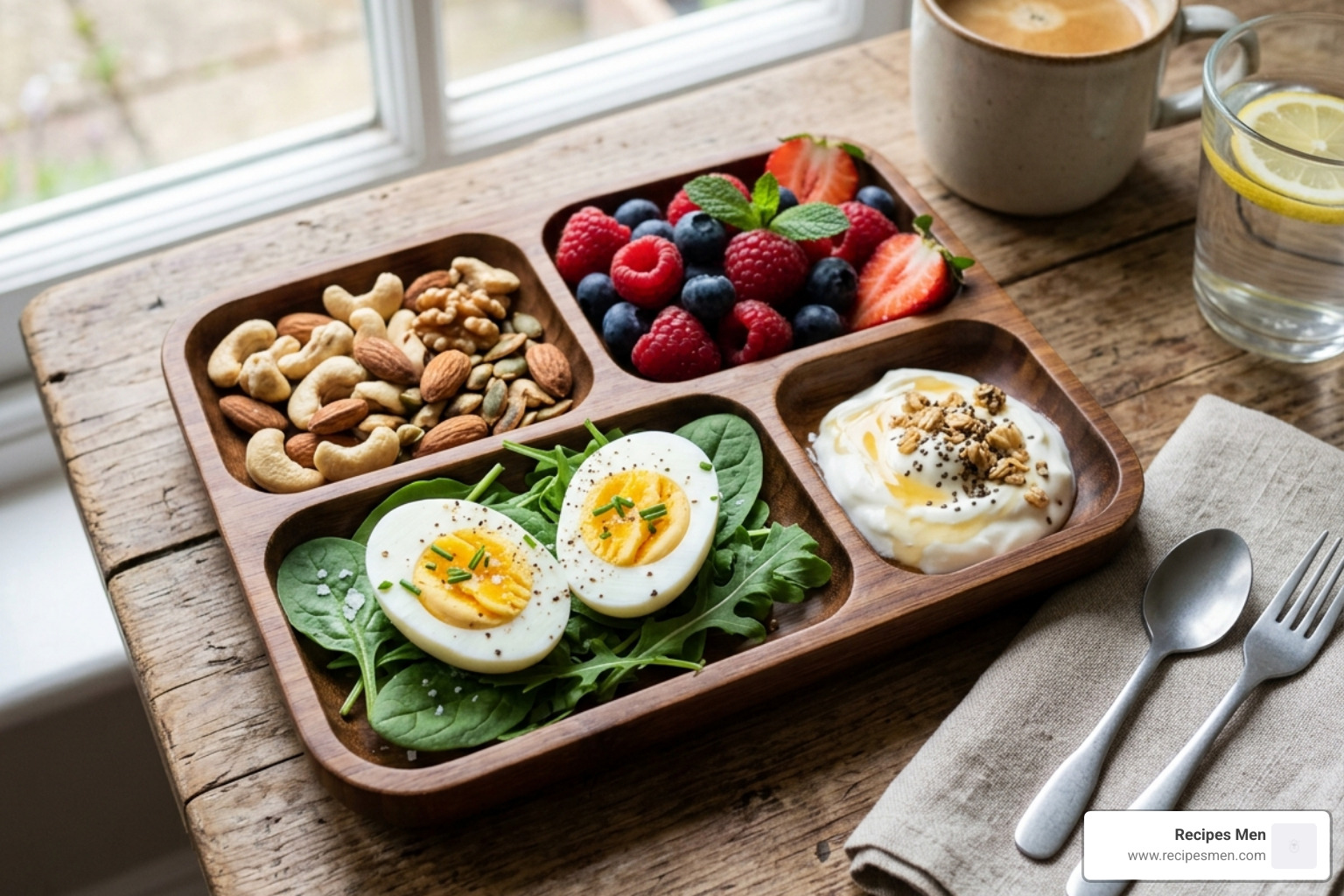
A simple plate of hard-boiled eggs (prepped on Sunday), a handful of cashews, and some berries is a balanced, high-protein meal you can eat with your hands. Cashews and other nuts add healthy fats and a bit of extra protein to keep you full.
Affordable Staples:
- Peanut or Almond Butter: Slathered on sprouted grain toast, you can easily hit 12-15g of protein.
- Chia Seed Pudding: Mix 3 tbsp of chia seeds with 1 cup of soy milk. Let it sit overnight. In the morning, you have a 13g protein meal that requires zero morning effort.
- Sprouted Toast: Choosing sprouted bread over white bread can add 3-5g of protein per slice and offers more bioavailable nutrients.
Boosting Protein in Common Breakfasts Without Powder
You don’t need expensive tubs of whey to make your breakfast a “pro” meal. We love finding ways to “stealth” protein into everyday favorites.
- Liquid Egg Whites: You can whisk these into hot oatmeal. If you whisk constantly, they don’t scramble; they just make the oats incredibly fluffy and creamy while adding 10g of protein.
- Greek Yogurt Swap: Use plain Greek yogurt instead of sour cream or milk in your recipes.
- Hemp Hearts: Sprinkle these on anything. Two tablespoons add about 6g of protein and a nice nutty crunch.
- Cottage Cheese in Pancakes: Blending cottage cheese into your pancake batter makes them taste like cheesecake and doubles the protein content.
- High-Protein Milk: Look for ultra-filtered milks in the dairy aisle which often have 13g of protein per cup compared to the usual 8g.
Meal Prep Strategies for a Stress-Free Week
The secret to consistency is making the healthy choice the easiest choice. Meal prepping your breakfast foods high in protein on a Sunday afternoon saves you from the “cereal trap” on Wednesday morning.
- Breakfast Casseroles: Bake a large tray with eggs, turkey sausage, spinach, and sweet potatoes. Slice it into squares, and you have a 25g protein breakfast ready to microwave all week.
- Egg Muffins: These are basically mini-frittatas. Use a muffin tin to bake eggs with peppers and ham. They are perfectly portioned and freezer-friendly.
- Freezer Burritos: Fill whole-wheat tortillas with scrambled eggs, black beans, and cheese. Wrap them in foil and freeze.
- Slow-Cooker Steel-Cut Oats: Put your oats and milk in the slow cooker on “warm” before you go to bed. You’ll wake up to a creamy, hot meal. Top with nut butter for an extra boost.
- Overnight Oats: The ultimate “no-cook” meal. Use a 1:1 ratio of oats to milk, add a dollop of Greek yogurt, and let the fridge do the work.
Reheating Tip: When reheating egg-based dishes, use a lower power setting on the microwave (around 50-70%) to keep the eggs from becoming rubbery.
Frequently Asked Questions About High-Protein Breakfasts
How much protein should I aim for in a breakfast serving?
Most men should aim for 20 to 30 grams of protein at breakfast. This amount is generally considered the “sweet spot” for triggering muscle protein synthesis and ensuring satiety. If you are highly active or trying to build significant muscle, you might even aim for 35-40 grams by combining a few of the options listed above, like Greek yogurt paired with a hard-boiled egg.
Are there downsides to a high-protein diet for everyone?
While protein is vital, those with pre-existing Kidney Issues or Chronic Kidney Disease (CKD) should consult with their doctor. High protein intake requires the kidneys to work harder to filter out waste products. For the average healthy adult, however, a high-protein breakfast is perfectly safe and highly beneficial. Always aim for a balance of macronutrients—don’t forget your fiber from veggies and fruits!
What are the best high-protein options for weight loss?
For weight loss, you want foods with low calorie density but high satiety.
- Egg whites and non-fat Greek yogurt are excellent because they are almost pure protein with very few calories.
- Cottage cheese is another winner.
- The thermic effect of food (TEF) means your body actually burns more calories digesting protein than it does digesting fats or carbs.
- Always pair your protein with fiber (like berries or spinach) to keep your digestion moving and your blood sugar stable.
Conclusion
Starting your day with breakfast foods high in protein isn’t just a fitness fad; it’s a foundational habit for better health, sharper mental focus, and sustained energy. Whether you’re smashing a workout or just trying to make it through a long shift without a mid-morning meltdown, protein is your best ally.
At RecipesMen, we believe healthy eating shouldn’t be complicated or tasteless. From 5-minute cottage cheese scrambles to make-ahead freezer burritos, there is an option here for every lifestyle and budget.
Ready to level up your kitchen game? For more straightforward, flavorful recipes tailored for your goals, check out https://www.recipesmen.com/. Stop settling for a “hangry” morning—fuel up and take on the day!

