
Ten simple steps to improve your emotional health and wellbeing
Why Your Mental Health Deserves Daily Attention
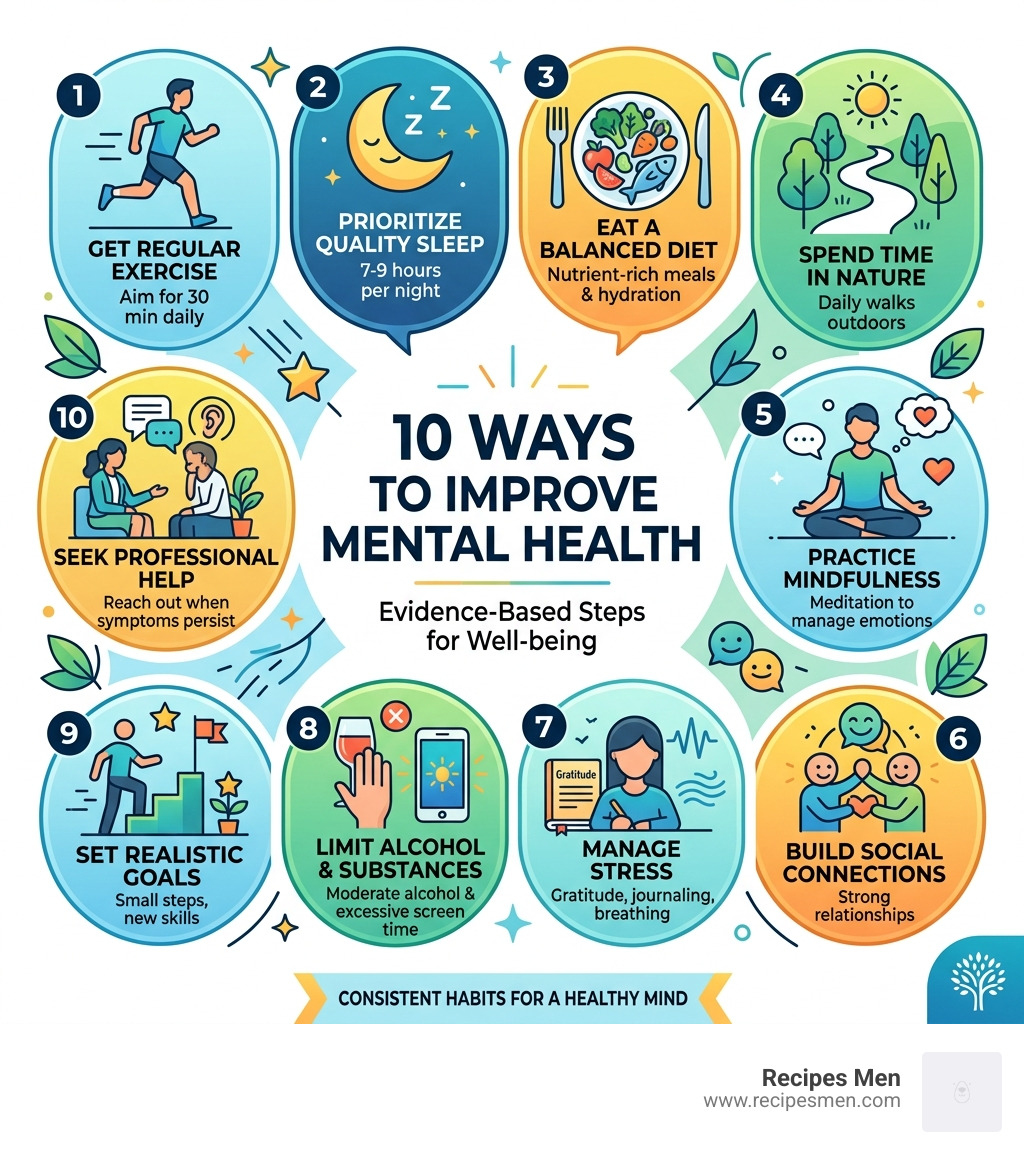
The 10 ways to improve mental health that research consistently points to are:
- Get regular physical activity – aim for 30 minutes a day
- Prioritize quality sleep – 7 to 9 hours each night
- Eat a balanced, nutrient-rich diet and stay hydrated
- Spend time in nature – even a short daily walk counts
- Practice mindfulness or meditation to manage emotions
- Build and maintain strong social connections
- Manage stress through gratitude, journaling, and breathing exercises
- Limit alcohol, substances, and excessive screen time
- Set small, realistic goals and try new things regularly
- Seek professional help when symptoms last two weeks or more
Mental health is more than just the absence of illness. It covers your emotional, psychological, and social well-being – and it shapes how you think, feel, and handle daily stress.
For busy guys juggling work, fitness goals, and everything in between, mental health can feel like the last thing on the list. But here’s the reality: about 1 in 5 adults in the United States experiences mental illness every year. And poor mental health doesn’t just affect your mood – it affects your energy, your relationships, and even your physical health.
The good news? Small, consistent habits make a real difference. You don’t need to overhaul your entire life. Simple daily actions – moving your body, eating well, sleeping enough, and staying connected – can meaningfully shift how you feel.
This article breaks down ten practical, evidence-backed steps you can start using today.
Prioritize Physical Health to Boost Your Mood
We often talk about the “mind-body connection,” but in April 2026, the science is clearer than ever: your physical state is the foundation of your emotional state. When we neglect our bodies, our brains pay the price. Conversely, when we provide our bodies with the right fuel and movement, we create a chemical environment where mental wellness can thrive.

One of the most immediate 10 ways to improve mental health is simply moving your body for 30 minutes a day. This isn’t just about building muscle; it’s about the release of “feel-good” hormones like endorphins and dopamine that naturally reduce stress and anger. According to Caring for Your Mental Health – NIMH, even small acts of self-care like regular exercise can have a massive impact on your energy levels and stress management.
Hydration is another often-overlooked factor. Your brain is approximately 75% water, and even mild dehydration can lead to brain fog, irritability, and fatigue. We recommend aiming for at least 64 ounces of water daily. Staying hydrated ensures your mind functions at its peak, helping you regulate blood sugar and maintain a steady mood throughout the day.
10 ways to improve mental health through movement
You don’t need to be an elite athlete to reap the mental benefits of exercise. Research shows that just 30 minutes of walking every day can boost your mood and improve your overall health. In fact, back in 2020, walking was the favorite way for UK adults to cope with pandemic-related stress.
For the best results, try to incorporate these movement habits:
- Break a sweat: Aim for at least 30 minutes of activity that gets your heart rate up. This triggers the release of chemicals that act as natural antidepressants.
- Go outdoors: Combining movement with fresh air multiplies the benefits.
- Try Yoga: It’s excellent for reducing anxiety and improving the mind-muscle connection.
- Consistency is key: The Physical Activity Guidelines for Americans suggest at least 150 minutes of moderate activity per week.
Whether you are dealing with daily work stress or more significant challenges like supporting someone through postpartum depression, movement provides a reliable “reset” button for the nervous system.
The role of quality sleep and nutrition
If exercise is the spark, sleep and nutrition are the fuel. Most adults need between 7 and 9 hours of sleep per night. It’s not just about the quantity, though; you need enough “dreaming sleep” (REM) for emotional processing and enough deep sleep for physical recovery.
To improve your sleep hygiene, we suggest reducing blue light exposure from phones and laptops at least an hour before bed. A cool, dark, and quiet room is the gold standard for quality rest.
On the nutrition side, what you eat directly impacts your brain chemistry. For instance, a deficiency in Vitamin B12 has been linked to higher rates of depression. According to How to Improve Mental Health: MedlinePlus, a well-balanced diet is essential for providing the nutrients your brain needs to regulate emotions.
We are big fans of Omega-3 fatty acids, found in fish like salmon, sardines, mackerel, and herring. These healthy fats are literal “brain food,” supporting heart health and improving mood. By focusing on whole foods—colorful veggies, beans, and whole grains—you provide your brain with steady glucose, avoiding the “crash and burn” cycle of high-sugar junk foods.
Master Stress Management and 10 ways to improve mental health
Stress is an inevitable part of life, but chronic stress is a thief that steals your mental clarity. Learning to manage it is one of the most vital 10 ways to improve mental health. The goal isn’t to eliminate stress entirely—that’s impossible—but to change how you respond to it.

One effective tool is “box breathing” (inhale for 4 seconds, hold for 4, exhale for 4, hold for 4). This simple technique tells your nervous system to calm down. It’s also crucial to identify your stress triggers. Are you over-committing at work? Is social media making you feel inadequate?
Setting boundaries is a sign of strength, not weakness. Learning to say “no” to extra obligations allows you to say “yes” to your own well-being. This helps shift you toward an internal locus of control, where you feel like the author of your life rather than a victim of circumstances. As noted in 31 Tips to Boost Your Mental Health | Mental Health America, setting and communicating personal boundaries is a foundational step for peace of mind.
Practicing gratitude and mindfulness
Mindfulness is the practice of being present without judgment. It sounds simple, but in a world of constant distractions, it takes work. Daily journaling is a fantastic way to start. We recommend writing down 3 to 5 things you are specifically grateful for each day. This trains your brain to look for the positives rather than dwelling on what’s going wrong.
Positive self-talk is another game-changer. We are often our own harshest critics. Try replacing self-criticism with the same encouragement you’d give a friend. Challenging negative thoughts and practicing self-compassion are essential for emotional regulation. When you catch a negative thought, ask yourself: “Is this factually true, or is this just how I feel right now?”
Connecting with nature for emotional balance
There is a reason “forest bathing” is a major health trend in Japan. Spending time in nature—even just 30 to 60 minutes outdoors—can dramatically lower cortisol levels. It’s about sensory engagement: smelling the trees, hearing the birds, and feeling the wind.
Sunlight exposure is also a natural mood booster, helping your body produce Vitamin D and regulating your circadian rhythm. If you can, take your daily 30-minute walk in a park or near water. The combination of exercise and nature is one of the most potent, budget-friendly ways to improve your mood naturally.
Build Stronger Social Connections and Daily Habits
Humans are social creatures. Even the most introverted among us need connection to thrive. Isolation is a significant risk factor for depression and heart disease. Building and maintaining relationships isn’t just “nice to have”—it’s a biological necessity.
You can strengthen your social bonds through simple acts:
- Volunteering: Helping others at a soup kitchen or youth organization provides a sense of purpose.
- Acts of kindness: Even a small gesture, like a compliment or a quick check-in text, boosts the mood of both the giver and the receiver.
- Shared activities: Join a local sports team, a book club, or a cooking class.
Social Connection vs. Isolation Risks
| Feature | Social Connection | Chronic Isolation |
|---|---|---|
| Mood | Improved resilience and happiness | Increased risk of depression/anxiety |
| Brain Health | Lower risk of cognitive decline | Higher risk of dementia |
| Physical Health | Lower blood pressure | Increased risk of heart disease |
| Stress | Better coping mechanisms | Higher cortisol levels |
Limiting negative influences and 10 ways to improve mental health
Protecting your mental health also means knowing what to cut out. Excessive screen time—especially more than two hours of TV or endless social media scrolling—can lead to feelings of inadequacy and “food noise” (that constant mental chatter about eating).
Alcohol and other substances might feel like they help in the short term, but they often worsen anxiety and disrupt sleep patterns. A “digital detox” or a break from the 24-hour news cycle can give your brain the rest it deserves. You don’t need to “earn” rest; it is a basic human requirement.
Setting goals and trying new things
Setting realistic goals gives you a roadmap. Write them down and post them where you can see them. Achieving small daily wins—like finishing a DIY project or mastering a new recipe—builds confidence and self-efficacy.
Creative expression is another powerful outlet. Whether it’s art, music, or photography, these activities help process complex emotions that words sometimes can’t reach. At Recipes Men, we believe that experimenting in the kitchen is one of the best ways to practice “mindful doing.” It requires focus, rewards you with a tangible result, and provides a healthy meal to share with loved ones.
Frequently Asked Questions about Mental Wellness
What is the difference between mental health and mental wellness?
Mental health often refers to our overall psychological state and can include diagnosable conditions listed in the DSM-5 (which contains nearly 300 disorders like anxiety or mood disorders). Mental wellness, however, is a more proactive, long-term approach. It’s about how we respond to emotions and stress on a daily basis. You can have a mental illness but still work toward high levels of mental wellness through proper habits and support.
When should I seek professional help for mental health concerns?
Self-care is powerful, but it isn’t a replacement for professional treatment. You should seek help if you experience severe symptoms lasting two weeks or more. This includes:
- Significant changes in appetite or weight.
- Difficulty sleeping or oversleeping.
- Loss of interest in hobbies you used to enjoy.
- Persistent feelings of sadness, irritability, or hopelessness.
Resources like the 988 Lifeline or the Crisis Text Line are available 24/7. Talk therapy has been shown to benefit 75% of people who try it, helping them recognize negative patterns and build better coping strategies.
How does diet specifically impact my emotional state?
Your brain requires a constant supply of glucose, but ultra-processed foods cause spikes and crashes that lead to “food noise” and irritability. Nutrient-rich meals provide the building blocks for neurotransmitters like serotonin. Hydration is equally critical; even slight dehydration can impair cognitive function and mood. By focusing on whole foods and staying hydrated, you give your brain the stability it needs to handle life’s ups and downs.
Conclusion
Improving your mental health isn’t about one giant leap; it’s about 10 simple, daily steps that add up over time. From the way you move your body to the food you put on your plate, every choice is an opportunity to invest in your well-being.
As we move through April 2026, the trend is clear: men are prioritizing their internal health just as much as their physical gains. At Recipes Men, we are here to support that journey with straightforward nutrition advice, effective workouts, and the mental health insights you need to thrive.
Self-care is deeply personal. It might take some trial and error to find the exact routine that works for you, but the effort is always worth it.
Start your wellness journey today with Recipes Men and take that first step toward a stronger, happier you.

