
The Best Ways to Stay Mentally Healthy and Happy
Why Mental Health Is the Foundation of a Happy, Productive Life
The best ways to stay mentally healthy come down to a handful of simple, consistent habits — and most of them fit into a busy day without much effort.
Quick answer — top ways to stay mentally healthy:
- Exercise for at least 30 minutes a day (even a walk counts)
- Eat a balanced diet and drink at least 64 oz of water daily
- Stick to a consistent sleep schedule and aim for 8 hours
- Practice mindfulness, deep breathing, or meditation
- Set realistic goals and learn to say no to overload
- Practice daily gratitude — write down specific things you appreciate
- Stay connected with supportive friends and family
- Challenge negative thoughts and focus on positivity
- Give back through volunteering or small acts of kindness
- Seek professional help if symptoms last 2 weeks or more
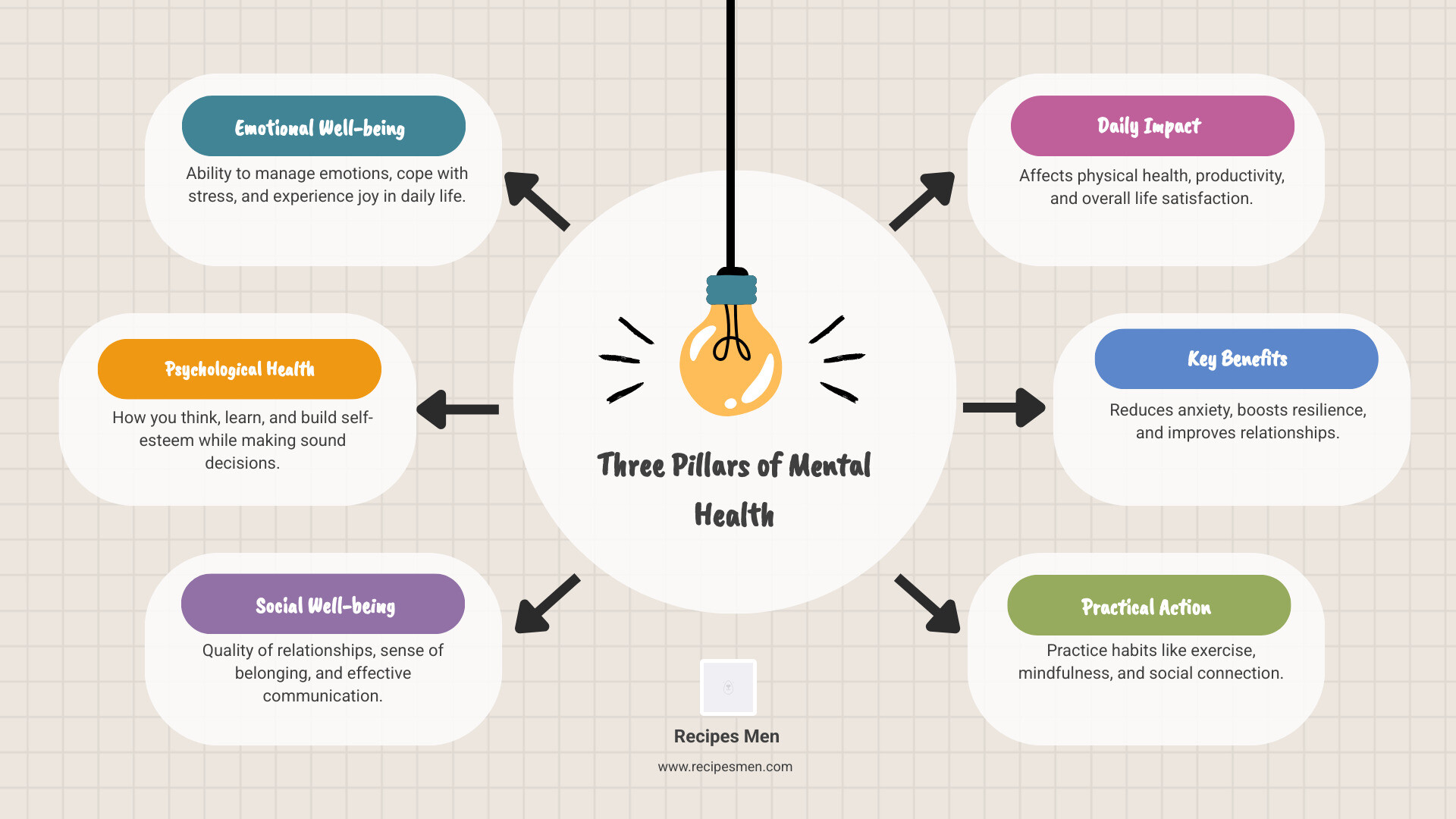
Mental health is more than just the absence of illness. It covers your emotional, psychological, and social well-being — basically, how you think, feel, handle stress, and connect with others.
And here’s the thing most guys overlook: your mental health directly affects your physical health, your work, your relationships, and your ability to reach your goals. It’s not a soft topic. It’s foundational.
The good news? Small, consistent actions — not big, dramatic changes — are what actually move the needle. Whether you’re managing daily stress, trying to eat better, or just feeling a bit off, the habits in this article are practical, science-backed, and easy to start today.
The Connection Between Physical Health and Mental Well-being
We often talk about the mind and body as if they live in different ZIP codes, but they are deeply interconnected. In our experience at Recipes Men, we’ve seen how a sluggish body almost always leads to a foggy mind. Research consistently shows that physical health is one of the most effective ways to stay mentally healthy.
Take exercise, for example. You don’t need to spend two hours at the gym to feel the benefits. Just 30 minutes of walking every day can boost your mood and improve your overall health. This simple movement releases endorphins—those feel-good chemicals in the brain—that act as natural stress-fighters.
Sleep is another non-negotiable pillar. A lack of quality sleep can make you significantly more likely to become depressed or anxious. Your brain needs that downtime to process emotions and clear out metabolic waste. Aiming for 8 hours of sleep and maintaining proper hydration—drinking at least 64 ounces of water daily—ensures your brain has the environment it needs to function at its peak.

Nutrition for Cognitive Clarity
What we put on our plates matters just as much as how we move. Nutritional neuroscience shows that certain nutrients can actually help protect brain cells and improve cognitive function.
- Omega-3 Fatty Acids: Found in fish, walnuts, and seeds, these fats are essential for brain health and reducing inflammation.
- Leafy Greens: Spinach and kale are packed with Vitamin K and folate, which help slow cognitive decline.
- Dark Chocolate: Choosing chocolate with at least 70% cocoa provides flavonoids and antioxidants that increase brain vascularization.
- Choline: Found in eggs, this nutrient supports the production of acetylcholine, a neurotransmitter critical for memory and learning.
- Whole Grains: These provide a steady, sustained release of glucose, preventing the “sugar crashes” that lead to irritability and brain fog.
If you are busy, meal prepping is a game-changer. Having healthy snacks like homemade trail mix or berry parfaits ready to go prevents you from reaching for junk food when stress hits.
| Nutrient | Source | Mental Health Benefit |
|---|---|---|
| Omega-3s | Salmon, Walnuts | Reduces symptoms of depression |
| Vitamin B12 | Eggs, Lean Meats | Prevents mood disorders and fatigue |
| Flavonoids | Berries, Dark Chocolate | Improves memory and learning |
| Folate | Spinach, Beans | Supports serotonin production |
The Impact of Movement and Rest
Movement isn’t just about burning calories; it’s about regulating your nervous system. Regular physical activity helps reset your circadian rhythm, making it easier to fall asleep at night.
To maximize the mental benefits of rest, we recommend a “digital sunset.” Reducing blue light exposure from phones and laptops at least an hour before bed tells your brain it’s time to wind down. By sticking to a consistent sleep schedule—even on weekends—you stabilize your energy levels and build a stronger defense against daily stressors. For more detailed guidance on how lifestyle affects your mind, you can explore How to Improve Mental Health: MedlinePlus.
Daily Habits and Ways to Stay Mentally Healthy
Building mental fitness is a lot like building muscle. You wouldn’t expect to be in shape after one workout, and you shouldn’t expect mental resilience to happen overnight. It requires small, daily habits that strengthen your “mental muscles.”
One of the most effective ways to stay mentally healthy is practicing “attending and befriending” your emotions. Instead of numbing out with a screen when you feel stressed, try pausing for three deep breaths. Acknowledge the feeling—say, “I see you, anxiety”—and then move forward. This creates a compassionate boundary between you and your stress.
Setting personal boundaries is also vital. In our world, we often feel pressured to say “yes” to everything. Learning to say “no” to overload is an act of self-care. It allows you to prioritize your goals and prevents the burnout that destroys mental well-being.

Mindfulness and Relaxation as Ways to Stay Mentally Healthy
Mindfulness isn’t about clearing your mind of all thoughts; it’s about paying attention to the present moment without judgment. This practice helps you understand yourself better and enjoy life more.
- The 4-4-4-4 Technique: Also known as box breathing. Inhale for 4 seconds, hold for 4, exhale for 4, and hold for 4. This simple tool can instantly calm your nervous system.
- Progressive Muscle Relaxation: Tense and then release each muscle group in your body, starting from your toes and moving up to your head.
- Guided Imagery: Visualize a peaceful scene to trigger the body’s natural relaxation response.
- Pomodoro Technique: Work for 25 minutes, then take a 5-minute break. This prevents mental fatigue and keeps you focused.
For more evidence-based strategies on maintaining your well-being, the National Institute of Mental Health (NIMH) offers excellent toolkits and resources.
Building Mental Resilience Through Gratitude
Gratitude is a scientifically proven way to “rewire” your brain for positivity. Instead of focusing on what’s going wrong, a gratitude practice trains you to notice what’s going right.
Don’t just say “I’m grateful for my family.” Be specific. “I’m grateful for the way my brother called me just to check-in today.” Writing down three specific wins or appreciations each day builds self-value and replaces self-criticism with encouragement. These small wins accumulate, leading to long-term mental fitness and the ability to bounce back from life’s inevitable challenges.
Building Resilience Through Social Connection and Giving
We are social creatures by nature. Even the most introverted among us needs a sense of belonging to stay mentally healthy. Meaningful relationships provide emotional support and help us share positive experiences that buffer against stress.
Try to find ways to connect that don’t involve a screen. Arrange a fixed time for a family dinner, or plan a hike with friends. These face-to-face interactions are far more restorative than “likes” on social media. In fact, re-evaluating your relationships is a key part of wellness. Surround yourself with people who encourage you, and don’t be afraid to distance yourself from those who consistently drain your energy.
Giving back is another powerful tool. Whether it’s volunteering at a local community center or simply helping a neighbor with a DIY project, acts of kindness create a sense of reward and purpose. Giving to others shifts your focus away from your own problems and reinforces your sense of self-worth.
When to Seek Professional Support and Resources
Self-care is powerful, but it isn’t a substitute for professional medical advice when things get heavy. It’s important to know the “two-week rule.” If you are experiencing severe or distressing symptoms that have lasted 2 weeks or more, it is time to seek professional help.
Warning signs that you should talk to a provider include:
- Difficulty sleeping or sleeping too much.
- Significant changes in appetite or weight.
- Loss of interest in things you usually enjoy.
- Persistent low mood, hopelessness, or irritability.
- Difficulty concentrating or completing daily tasks.
Start by talking to your primary care provider; they can offer referrals to specialists or therapists. If you or someone you know is in immediate distress, the 988 Suicide & Crisis Lifeline is confidential, free, and available 24/7. You can also find more information on how to access care through the NIMH help page.
Frequently Asked Questions about Ways to Stay Mentally Healthy
What is the difference between mental health and mental fitness?
Mental health refers to your overall emotional, psychological, and social state. Mental fitness, on the other hand, is the proactive practice of “training” your brain. Just as physical fitness involves lifting weights to get stronger, mental fitness involves exercises like mindfulness, focus training, and cognitive challenges to build resilience and mental sharpness.
How much daily exercise is needed to improve mood?
Research shows that just 30 minutes of moderate exercise, such as a brisk walk, can have an immediate positive impact on your mood. Consistency is key; doing this daily helps regulate stress hormones and keeps your energy levels stable throughout the day.
What are the immediate warning signs of mental distress?
The most common signs include persistent feelings of sadness or irritability, changes in sleep and appetite, and a “foggy” feeling that makes it hard to concentrate. If these symptoms interfere with your work or relationships for more than two weeks, they are significant indicators that you may need extra support.
Conclusion
Your journey toward better mental wellness doesn’t have to be complicated. By focusing on small, consistent habits—like moving your body, eating brain-boosting foods, and practicing gratitude—you can build a foundation of long-term resilience.
At Recipes Men, we believe that staying healthy is a holistic journey. It’s about more than just a workout or a meal; it’s about finding balance and giving yourself grace as you grow. As we move through April 2026, make it your goal to prioritize your mind just as much as your body.
For more straightforward tips on nutrition, quick recipes, and lifestyle advice tailored for men, visit https://www.recipesmen.com/. Mental health is essential to your overall quality of life—take the first small step today.

