
Food With Very Low Calories That Won’t Leave You Hangry
Stop Eating Less — Start Eating Smarter With Food With Very Low Calories
The best food with very low calories that actually keeps you full:
| Food | Serving | Calories |
|---|---|---|
| Spinach | 1 cup (30g) | 7 cal |
| Swiss chard | 1 cup (36g) | 7 cal |
| Cucumber | 3.5 oz (100g) | 16 cal |
| Celery | 3.5 oz (100g) | 14 cal |
| Cauliflower | 1 cup chopped | 27 cal |
| Broccoli | 1 cup chopped | 31 cal |
| Strawberries | 1/2 cup | 25 cal |
| Grapefruit | Half a fruit | 43 cal |
| Cod | 100g | 84 cal |
| Low-fat cottage cheese | 1/2 cup | 80 cal |
You’re busy. You’re hungry. And you don’t want to survive on tiny portions that leave you staring at the fridge at 10pm.
Here’s the thing most diet advice gets wrong: you don’t have to eat less food to eat fewer calories. You just have to eat the right food.
Consider this: a small order of fries runs about 250 calories. For those same 250 calories, you could eat 10 cups of spinach, 1.5 cups of strawberries, and a small apple. That’s a mountain of food — not a diet.
This is the core idea behind volume eating. Certain foods give you a huge amount to eat for very few calories. They’re packed with water and fiber, which fills your stomach and keeps hunger at bay. Meanwhile, foods like raisins pack 480 calories into a single cup — while a cup of grapes gives you the same satisfying portion for just 104 calories.
The science is simple. The results are real.
Below, you’ll find the best low-calorie foods that actually satisfy — organized by type, backed by numbers, and built for guys who want to eat well without obsessing over every bite.
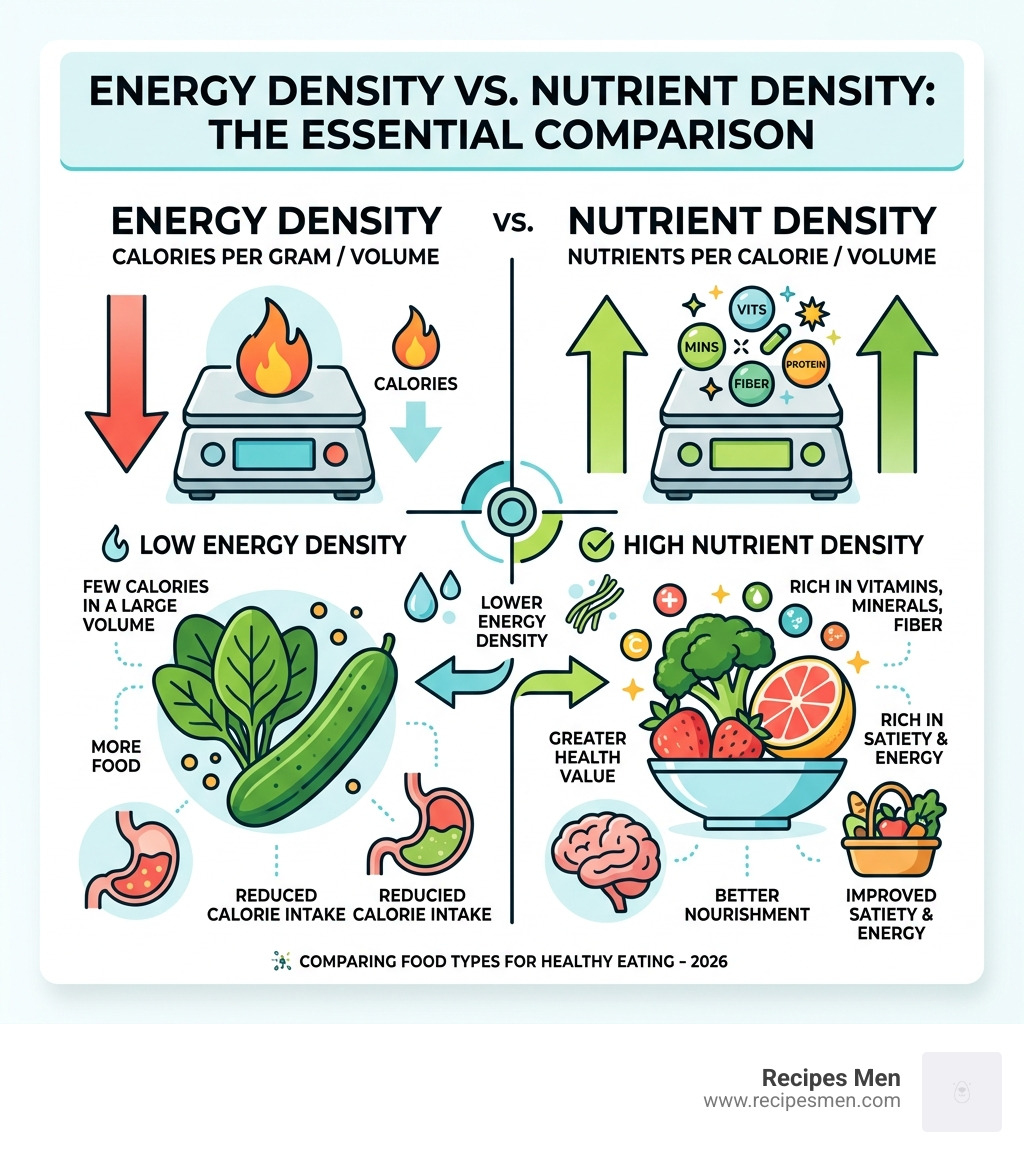
The Science of Energy Density in Food With Very Low Calories
If you’ve ever felt like you could eat an entire bag of chips and still be hungry, you’ve experienced the “energy density” trap. Energy density refers to the number of calories in a specific weight or volume of food. High energy density means a lot of calories in a small package (think butter or chocolate). Low energy density means very few calories in a large amount of food.
In April 2026, the secret to weight management isn’t starvation; it’s mastering three main factors that influence density:
- Water Content: Water has zero calories but adds significant weight and volume. Foods like grapefruit (90% water) and carrots (88% water) allow you to eat more without blowing your calorie budget.
- Dietary Fiber: Fiber adds bulk and takes longer to digest. It keeps your digestive system moving and keeps you feeling full for longer.
- Fat Reduction: Fat is the most energy-dense macronutrient, providing 9 calories per gram. By choosing lean proteins over fatty cuts, you drastically lower the calorie count of your meal.
To see this in action, look at the dramatic difference between fresh and dried fruit:
| Food Item | Volume | Calories |
|---|---|---|
| Raisins | 1 cup | 480 |
| Grapes | 1 cup | 104 |
By choosing the fresh grapes, you save 376 calories while eating the exact same volume of food. For more ideas on how to stock your pantry, check out these 30 Zero-Calorie Foods to Try.
Top Filling Vegetables and Fruits for Volume Eating
When we talk about food with very low calories, we are usually talking about the produce aisle. These are the “MVP” foods that allow you to fill your plate to the edges.

Cauliflower is perhaps the most versatile tool in our nutritional shed. At just 25–27 calories per cup, it can be “riced,” mashed, or roasted. It’s a great way to replace high-carb grains while maintaining the volume of your meal. Broccoli is another heavyweight, providing 31–34 calories per cup and over 100% of the Vitamin C you need in a day.
Don’t overlook the humble Lettuce: Only 15 Calories/100g. It serves as the perfect base for almost any meal, adding crunch and volume for virtually no caloric cost. Similarly, Asparagus: Only 20 Calories/100g is a diet-friendly powerhouse that pairs perfectly with lean meats.
Leafy Greens: The Ultimate Food With Very Low Calories
If you want to eat like a king but lose weight like a pro, leafy greens are your best friend. We’re talking about:
- Spinach: 7 calories per cup.
- Swiss Chard: 7 calories per cup.
- Kale: 8 calories per cup (raw) or 49 calories (cooked).
- Arugula: 25 calories per 3.5 oz.
These greens are packed with Vitamin K, which is essential for bone health and blood clotting. Because they are so low in calories, you can use them to “bulk up” any meal. We love throwing two handfuls of spinach into a pasta sauce or a morning omelet—it wilts down, adds nutrients, and helps you feel satisfied without changing the flavor profile of your dish.
Water-Rich Fruits to Satisfy Your Sweet Tooth
You don’t have to give up dessert; you just need to choose fruits that provide hydration and fiber along with their natural sugars.
- Strawberries: Only 25 calories per 1/2 cup. They are rich in antioxidants and can even help protect against long-term cognitive decline.
- Grapefruit: Half a grapefruit contains just 43–64 calories. It’s 90% water, making it incredibly refreshing.
- Watermelon: At 46 calories per cup, it’s the ultimate summer snack.
- Clementines: One clementine is roughly 35 calories and provides 40% of your daily Vitamin C.
These fruits are far superior to “100-calorie snack packs” made of refined flour. While the calories might be the same, the fruit provides vitamins, minerals, and the water content needed to actually stop your hunger.
High-Protein Options to Boost Satiety
While vegetables provide volume, protein provides the “staying power.” Protein has a higher thermic effect of food (TEF) than carbs or fats, meaning your body burns more calories just trying to digest it. It also helps preserve lean muscle mass, which is vital for keeping your metabolism high.

If you’re looking for a pasta alternative that won’t leave you feeling heavy, consider Shirataki Noodles: The Zero-Calorie ‘Miracle’ Noodles. Made from the konjac plant, these noodles are 97% water and 3% fiber, meaning they have almost no calories but take up plenty of space in your stomach.
Lean Seafood and Plant-Based Proteins
Seafood is a secret weapon for anyone looking for food with very low calories that still feels like a “real” meal.
- Cod: 84 calories per 100g. It’s a lean, white fish that is high in protein and low in fat.
- Tilapia: Roughly 100 calories per 100g fillet.
- Shrimp: Highly versatile and low-cal. A Cajun shrimp burger or a spicy shrimp curry soup can be incredibly filling while staying under 400 calories.
- Edamame: 1/2 cup provides 8g of protein and 4g of fiber for around 140 calories.
These options are rich in omega-3 fatty acids and provide the essential building blocks for muscle without the heavy saturated fats found in marbled steaks or processed meats.
High-Protein Food With Very Low Calories for Muscle Maintenance
For daily staples, we recommend these four high-protein, low-calorie options:
- Chicken Breast: A thick slice of rotisserie chicken breast is about 122 calories. It’s the gold standard for lean protein.
- Egg Whites: Almost pure protein with very few calories compared to whole eggs.
- Low-Fat Cottage Cheese: 1/2 cup delivers 14g of protein for only 80 calories.
- Greek Yogurt (Plain, Low-Fat): 100g contains about 73 calories and 12g of protein.
Pairing these with the high-volume vegetables mentioned earlier creates a “power meal” that triggers satiety hormones and keeps you full until your next scheduled snack.
Frequently Asked Questions about Low-Calorie Eating
What is the FDA definition of low-calorie?
The FDA has strict standards for what can be labeled “low-calorie.” For individual food items, it must contain 40 calories or less per serving. For whole meals or main dishes, the standard is 120 calories or less per 100 grams. When you see these claims on a label in the grocery store, you can trust that the product fits into a calorie-controlled plan.
Are there risks to a very low-calorie diet?
While eating food with very low calories is healthy, relying only on them can lead to trouble. Your body still needs essential fats for hormone production and enough total energy to prevent “metabolic adaptation” (where your metabolism slows down to protect you from perceived starvation).
There are also specific interactions to watch for. For example, grapefruit can interfere with certain medications like statins or hormonal birth control. Always consult a doctor if you’re making a drastic change to your diet, especially if you have existing health conditions.
How do I make low-calorie food taste better?
Low calorie doesn’t have to mean bland. We recommend:
- Blooming Spices: Sauté garlic, ginger, or curry powder in a tiny bit of broth or oil for 1–2 minutes to release their oils and deepen the flavor.
- Roasting: Roasting vegetables like cauliflower or Brussels sprouts caramelizes their natural sugars.
- Vinegar-Based Dressings: Use balsamic or apple cider vinegar with herbs instead of heavy, creamy dressings.
- Aromatics: Onions, peppers, and leeks add massive flavor for very few calories.
Conclusion
At Recipes Men, we believe that healthy living shouldn’t be a chore. You can hit your weight loss goals, maintain your muscle, and keep your mental health in check without feeling deprived. By focusing on nutrient-dense, low-energy-dense foods, you “democratize” your own wellness—making it sustainable and, most importantly, delicious.
Whether you’re whipping up a shrimp curry or just grabbing a handful of almonds (14 almonds are under 100 calories!), consistency beats intensity every time. Stop fighting your hunger and start fueling your body with the right volume.
Ready to start cooking? More info about healthy recipes is just a click away. Let’s get to work.

