
What to Eat from Dawn to Dusk for Maximum Gym Results
Why Your Full Day Diet Plan for Gym Results Matters More Than You Think
A full day diet plan for gym is the single most important tool you can use to back up your training. Here’s a quick-start snapshot of what an effective gym day of eating looks like:
Quick Answer: Full Day Gym Diet Plan at a Glance
| Meal | What to Eat | Key Goal |
|---|---|---|
| Breakfast | Eggs + oats + fruit | Fuel for the day |
| Morning Snack | Greek yogurt + berries | Protein + energy boost |
| Lunch | Chicken + rice + vegetables | Sustained energy |
| Post-Workout | Whey protein + banana | Muscle recovery |
| Dinner | Salmon + sweet potato | Repair and rebuild |
| Evening Snack | Cottage cheese + nut butter | Overnight recovery |
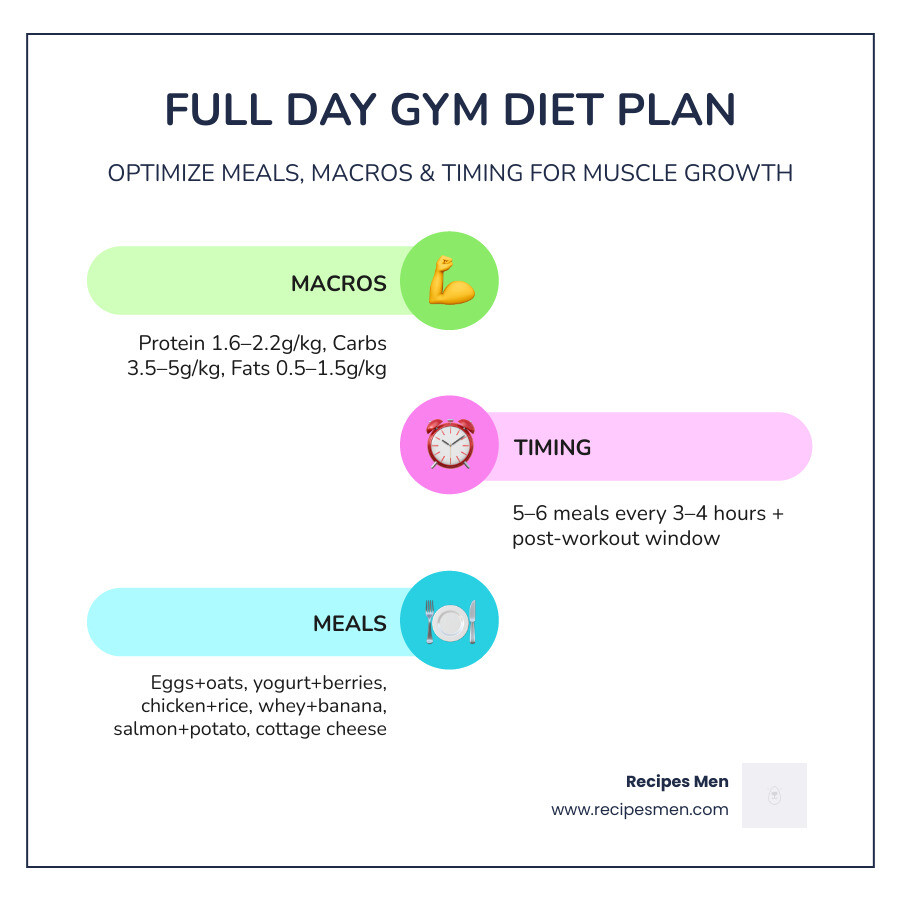
Aim for 1.6–2.2g of protein per kg of body weight, spread across 5–6 meals every 3–4 hours.
The saying “you can’t out-train a bad diet” exists for a reason. Your training breaks muscle down. Food is what builds it back up — stronger.
For a busy guy in his 30s juggling work, stress, and workouts, random eating kills progress fast. Skipping meals, under-eating protein, or grabbing whatever is convenient leaves your body without the raw materials it needs to grow and recover.
The good news? You don’t need a complicated plan. You need a consistent one.
This guide walks you through exactly what to eat from your first meal to your last — and why each piece matters for your results in the gym.
Core Nutritional Principles for a Full Day Diet Plan for Gym Success
Before we dive into the recipes, we need to understand the “why” behind the plate. In April 2026, nutrition science has moved past the “just eat big” phase. We now focus on nutrient density and metabolic health to ensure that the weight we gain is high-quality muscle, not just bulk.
Calorie Surplus and Maintenance
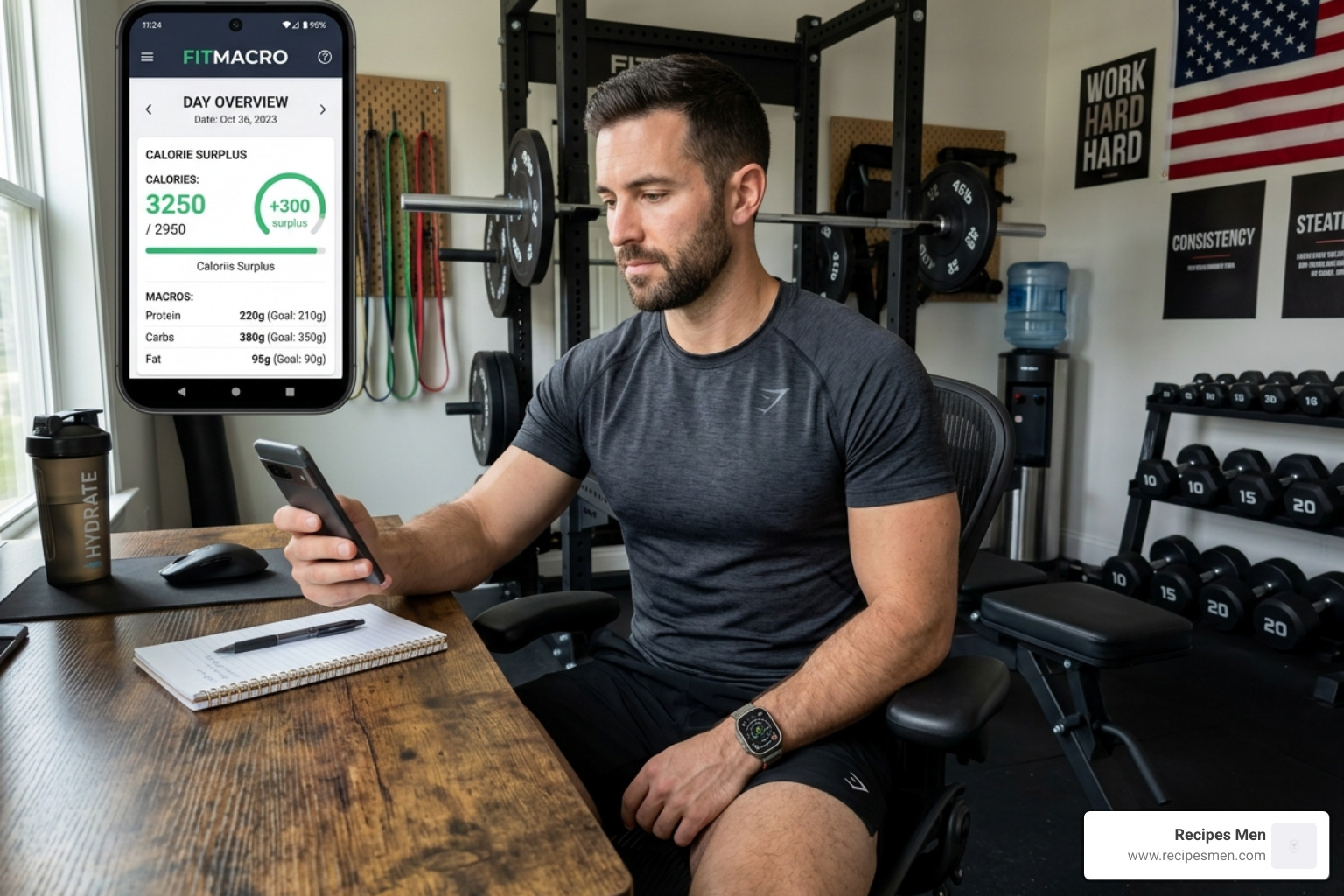
To build muscle, your body needs a reason to grow. That reason is a calorie surplus. Research suggests that to gain muscle effectively, you should aim to eat 10–20% above your maintenance calories. For a typical 170-pound man, this often means starting around 2,500 to 2,800 calories. If you are “cutting” (losing fat), you’ll do the opposite, dropping about 15% below maintenance.
The Power of Protein
Protein is the building block of your muscles. For gym-goers, the gold standard for protein intake is 1.6–2.2 grams per kg of body weight. For most of us, this lands between 110g and 150g of protein daily. Spreading this out across the day is vital; aiming for 20–30g of protein per meal ensures your body stays in an anabolic (muscle-building) state.
Carbs for Fuel and Fats for Hormones
Carbohydrates are not the enemy; they are the high-octane fuel your brain and muscles need for heavy lifting. Aim for 3.5–5g of carbs per kg of body weight. Think oats, rice, and sweet potatoes. Meanwhile, healthy fats (avocados, nuts, olive oil) should make up 0.5–1.5g per kg to support testosterone production and joint health.
Hydration and Micronutrients
You can’t perform if you’re a dried-out raisin. Men should aim for approximately 13 cups of water daily, and women around 9 cups. If you’re sweating buckets in the gym, add electrolytes to maintain mineral balance. Don’t forget your “micros”—aim for at least 7 servings of colorful fruits and veggies to keep your immune system from crashing under the stress of training.
The Ultimate Full Day Diet Plan for Gym Performance: A Sample Menu
Consistency is easier when the food actually tastes good. Here is a sample full day diet plan for gym enthusiasts that balances macros without making you feel like a robot eating out of a plastic tub.
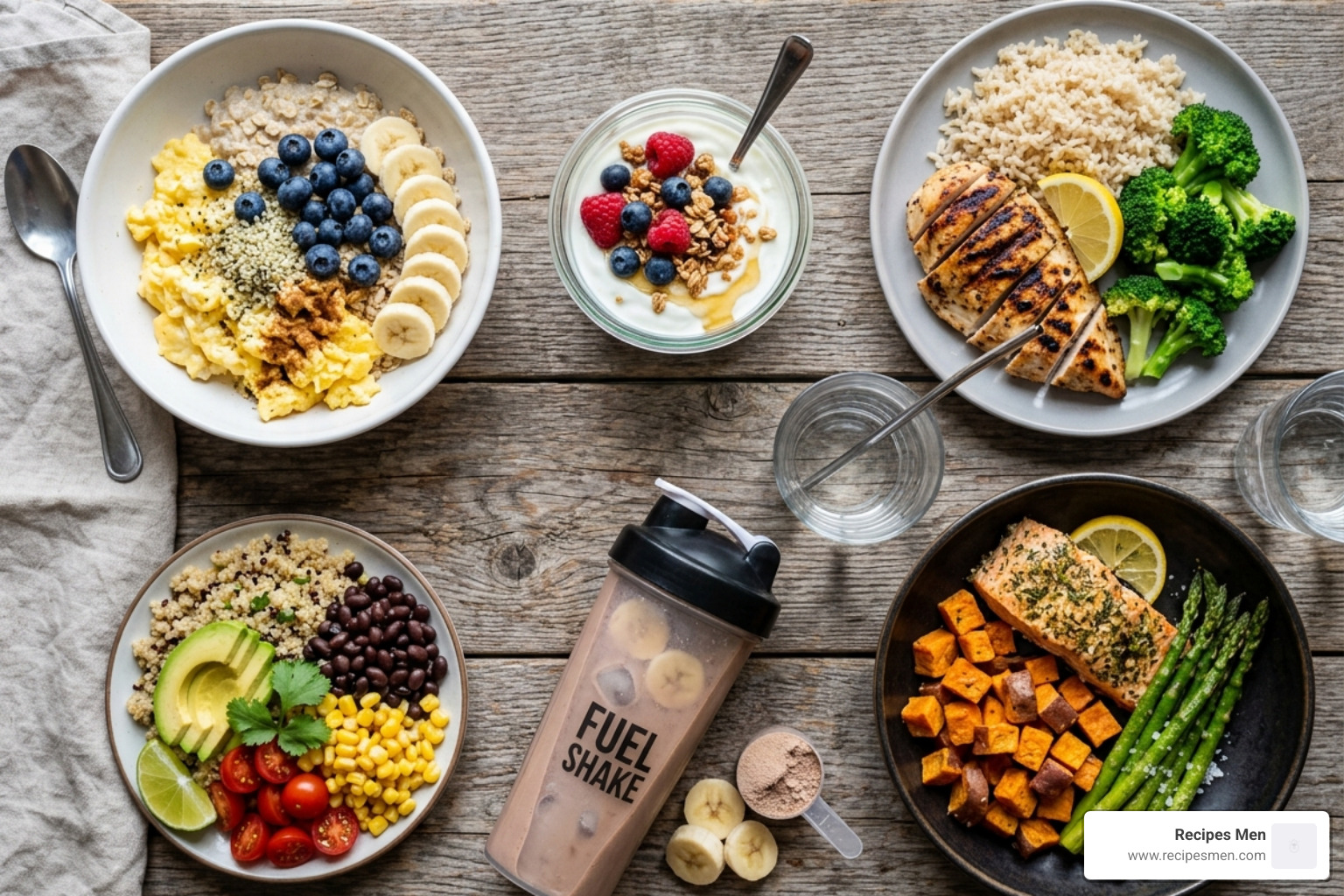
- Breakfast (The Foundation): Scrambled eggs (3-4) with a side of steel-cut oats topped with a handful of blueberries. This provides a mix of fast-acting and slow-digesting energy.
- Morning Snack (The Bridge): One cup of Greek yogurt with mixed berries. High in protein and probiotics for gut health.
- Lunch (The Sustainer): 6-8 oz of grilled chicken breast, 1 cup of jasmine rice, and a pile of steamed broccoli. This is the classic “bodybuilder” meal for a reason—it works.
- Post-Workout (The Repair): A high-quality whey protein shake and a large banana. The banana provides fast carbs to spike insulin and drive that protein into the muscle cells.
- Dinner (The Rebuilder): 6 oz of baked salmon (rich in Omega-3s), one medium sweet potato, and roasted asparagus.
- Evening Snack (The Overnight Guard): One cup of cottage cheese with a tablespoon of almond butter. Cottage cheese contains casein, a slow-digesting protein that feeds your muscles while you sleep.
Structuring Your Full Day Diet Plan for Gym Timing
Timing is the “secret sauce.” To maximize muscle protein synthesis, we recommend eating every 3–4 hours.
- Pre-Workout: 2-3 hours before your session, eat complex carbs and moderate protein. If you’re training early in the morning, grab a simple carb like a piece of toast or a banana 30 minutes before.
- Intra-Workout: For sessions under 60 minutes, water is fine. For long, grueling sessions, an electrolyte drink can keep your intensity high.
- Post-Workout: This is the most critical window. Aim for 20–30g of protein within 60-90 minutes of finishing your last set to kickstart recovery.
Optimizing Your Full Day Diet Plan for Gym Recovery
Recovery doesn’t happen in the gym; it happens while you sleep. To reduce inflammation, prioritize foods rich in Omega-3 fatty acids and magnesium (like spinach and pumpkin seeds). Some athletes swear by tart cherry juice in the evening to reduce muscle soreness. A full day diet plan for gym success is only as good as the sleep that follows it.
Customizing Your Plan for Bulking, Cutting, and Maintenance
Not everyone has the same goal. Your full day diet plan for gym results needs to shift based on whether you want to get big or get shredded.
Bulking Phase
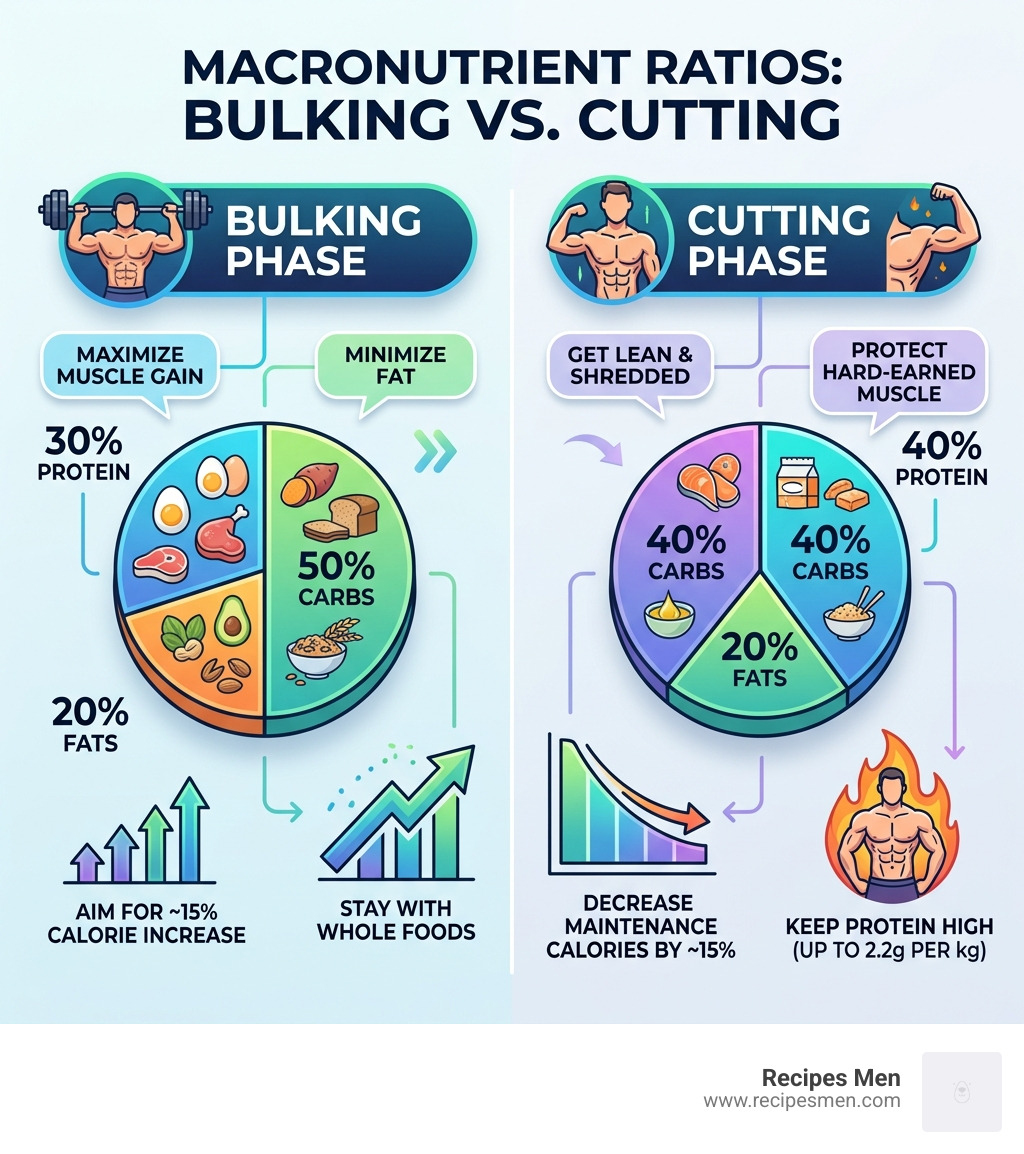
During a bulk, we want to maximize muscle gain while minimizing fat. Aim for a 15% calorie increase. Most find success with a ratio of 30% protein, 50% carbs, and 20% fats. Don’t use this as an excuse for “dirty bulking” (junk food). Stick to whole foods to avoid metabolic sluggishness.
Cutting Phase
To get lean, decrease your maintenance calories by about 15%. To protect your hard-earned muscle, keep your protein high (up to 2.2g per kg) while tapering down carbs and fats. A common cutting ratio is 40% protein, 40% carbs, and 20% fats.
Maintenance and Carb Cycling
If you’re happy with your size but want to improve performance, try carb cycling. Eat higher carbs on your heavy leg or back days, and lower carbs on rest days. This promotes “metabolic flexibility,” teaching your body to burn fat for fuel while using carbs for performance.
Meal Prep Strategies and Your Essential Grocery List
The biggest enemy of a full day diet plan for gym success is “decision fatigue.” When you’re tired after work, you’re more likely to order pizza than grill chicken.
Batch Cooking Hacks
- Proteins: Grill 2-3 lbs of chicken or turkey breast on Sunday.
- Carbs: Cook a large pot of quinoa or brown rice. It stays fresh in the fridge for 4-5 days.
- Veggies: Roast a giant tray of mixed vegetables (peppers, onions, broccoli) all at once.
- Flavor Rotation: Use different seasonings (taco, lemon pepper, garlic herb) so you don’t get bored eating the same base ingredients.
Your Essential Grocery List
- Proteins: Chicken breast, lean ground turkey, salmon, eggs, Greek yogurt, cottage cheese, whey protein powder.
- Carbs: Steel-cut oats, sweet potatoes, jasmine rice, quinoa, bananas, berries.
- Fats: Avocados, raw almonds, almond butter, extra virgin olive oil.
- Greens: Spinach, kale, broccoli, asparagus.
Frequently Asked Questions about Gym Nutrition
How much protein do I really need daily?
While the internet might tell you that you need 300g of protein, the science suggests 1.6–2.2g per kg of body weight is the sweet spot for muscle repair. For a 150lb (68kg) person, that’s roughly 110g to 150g. More than that isn’t necessarily harmful, but your body will likely just use the excess for energy rather than muscle building.
Can I build muscle on a vegetarian or vegan diet?
Absolutely. You just have to be more strategic. Focus on plant-based proteins like tofu, tempeh, lentils, and chickpeas. Since plant proteins often lack certain amino acids, mix your sources (like beans and rice) to ensure a “complete” protein profile. We also recommend a B12 supplement for those on a strictly vegan plan.
What are the most common diet mistakes to avoid?
- Dirty Bulking: Eating processed junk just to hit calorie targets leads to fat gain and inflammation.
- Dehydration: Even slight dehydration can drop your strength by 10%.
- Skipping Carbs: Low-carb diets are great for some, but for high-intensity gym sessions, they often lead to burnout and “flat” looking muscles.
- Ignoring Micros: If you only eat chicken and rice, you’ll eventually run into vitamin deficiencies that stall your progress.
Conclusion
Building the body you want is a marathon, not a sprint. A full day diet plan for gym consistency is the vehicle that gets you to the finish line. By focusing on high-quality protein, smart carbohydrate timing, and relentless hydration, you turn every gym session into a growth opportunity.
At Recipes Men, we believe that healthy eating shouldn’t be a chore. It should be straightforward, flavorful, and effective. Monitor your progress weekly—aim for a 0.5–1% change in body weight—and adjust your calories as you get stronger.
Ready to start cooking? Check out our latest meal plans and recipes for more inspiration on how to fuel your hustle.

