
Why Mental Health Matters More Than You Think
The top tips to improve mental health aren’t complicated — but they are easy to overlook when life gets busy. Here’s a quick overview:
- Move your body — even a 30-minute walk daily lifts your mood
- Sleep 7-9 hours — poor sleep makes everything harder
- Eat well and stay hydrated — what you eat affects how you feel
- Stay connected — relationships are fuel for mental wellbeing
- Practice mindfulness — being present reduces stress and anxiety
- Show gratitude — a daily habit that rewires how you think
- Set boundaries — say no to overload, yes to what matters
- Seek help when needed — if symptoms last 2+ weeks, talk to someone
Mental health isn’t just the absence of illness. It covers your emotional, psychological, and social wellbeing — shaping how you think, feel, handle stress, and connect with others.
For busy guys juggling work, fitness, and everything else, it’s often the first thing to slip. But here’s the thing: small, consistent actions compound fast.
You don’t need a therapist on speed dial or a two-hour meditation retreat. You just need a few simple habits that actually fit your life.
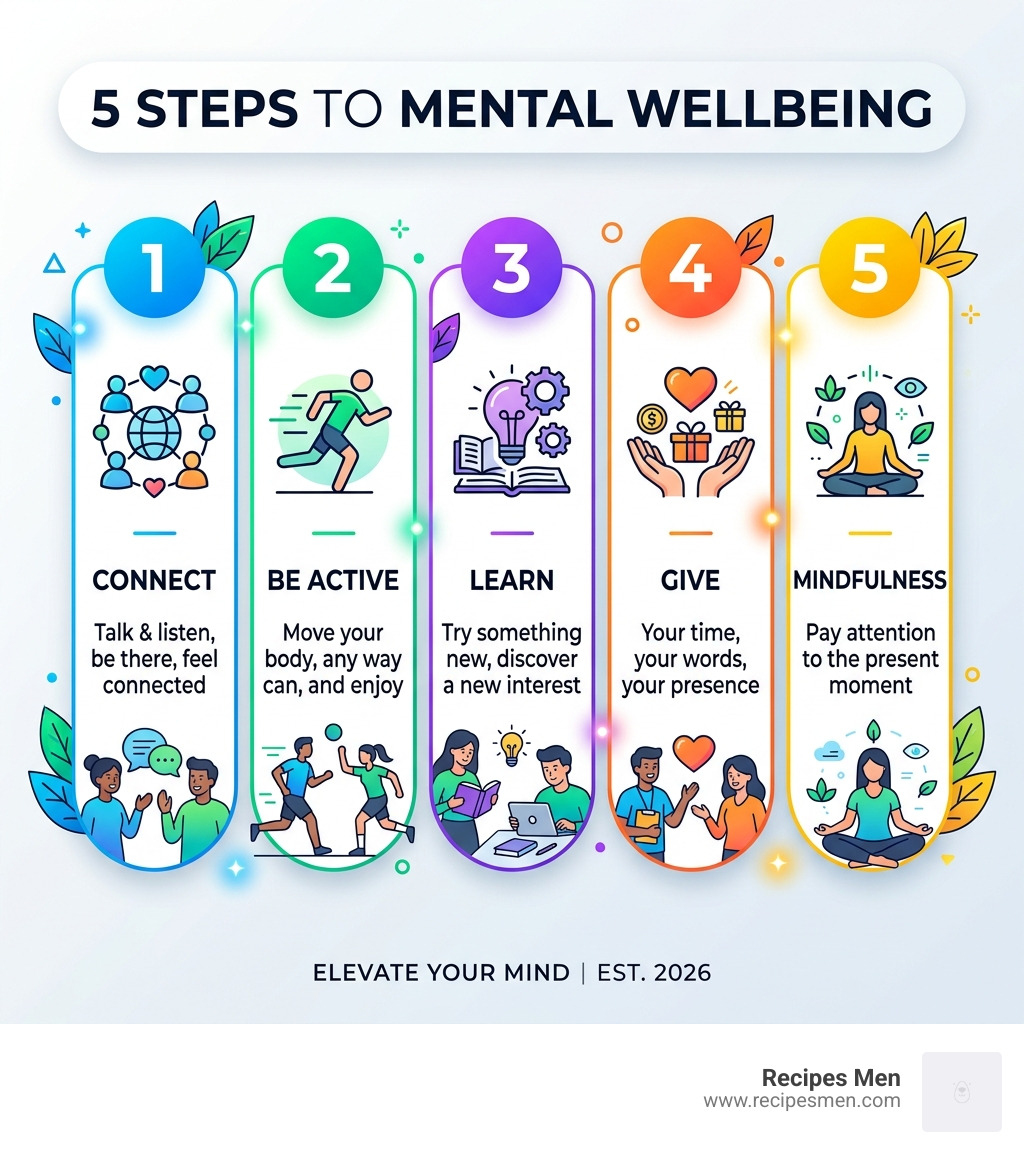
Top tips to improve mental health through daily habits
When we talk about mental health in April 2026, we’re looking at it through a lens of “mental hygiene.” Just like you wouldn’t skip brushing your teeth for a week and expect a Hollywood smile, we can’t skip our mental maintenance and expect to feel 100%.
Self-care isn’t just about bubble baths (though, as our friend Erin found out, a relaxing soak after the kids are in bed can be a game-changer for anxiety). It’s about a personalized approach. What works for your gym partner might not work for you. This is why we advocate for a “trial and error” mindset. Maybe journaling feels a bit “woo-woo” to you, but setting a strict boundary on work emails makes you feel like a new man. You have to find your own rhythm.
According to the Caring for Your Mental Health – National Institute of Mental Health (NIMH), small acts of self-care can have a massive impact even if they aren’t done in huge blocks of time. It’s about the consistency of the habit, not the intensity of the effort.
The Foundation: Sleep Hygiene
If there is one thing we consistently get wrong, it’s sleep. Recent research from the Mental Health Foundation shows that millions of us aren’t getting the rest we need. In fact, the average adult only has about three days a week where they actually feel they’ve had “good quality” sleep.
To get your mind back on track, we need to aim for 7 to 9 hours of sleep per night. This isn’t just about time in bed; it’s about getting enough deep sleep and REM (dreaming) sleep. To make this happen, we recommend:
- Reducing Blue Light: Your phone is a sleep killer. Try to put the screens away at least 30-60 minutes before bed.
- Consistent Schedule: Going to bed and waking up at the same time—even on weekends—helps regulate your internal clock.
- Cool and Dark: Keep your bedroom cool and quiet. Your brain needs a drop in temperature to signal that it’s time to shut down.
Top tips to improve mental health through nutrition

At Recipes Men, we know that the kitchen is the first stop for a better mood. You’ve heard that “you are what you eat,” but it’s more accurate to say “you feel what you eat.”
A balanced diet provides the fuel your brain needs to manage stress. For example, did you know that low levels of Vitamin B12 have been linked to depression? Or that leafy greens are packed with folate, which helps produce dopamine?
Hydration is just as critical. We should be aiming for at least 64 ounces of water a day. Dehydration leads to brain fog, irritability, and fatigue—all of which make daily stressors feel ten times heavier.
We also need to be mindful of our chemical crutches. While that fourth cup of coffee might get you through the afternoon slump, too much caffeine can mimic the physical symptoms of anxiety (racing heart, jitters). Similarly, while alcohol might help you “switch off” at night, it actually disrupts your sleep quality and acts as a depressant the next day. Monitoring these intake levels is one of our top tips to improve mental health.
Movement as medicine
You don’t need to live in the gym to reap the mental rewards of exercise. Research shows that just 30 minutes of walking every day can boost your mood and improve your overall health.
When we move, our brain chemistry changes. We release endorphins—the body’s natural feel-good chemicals—and reduce levels of the body’s stress hormones, such as adrenaline and cortisol.
Physical activity also gives us a sense of accomplishment. Whether it’s hitting a new personal best on a lift or just finishing a 2-mile walk after a long day, setting and achieving these small goals raises self-esteem. It’s a powerful cycle: physical health supports mental health, and mental health gives you the motivation to stay physically active.
Mastering Mindset and Stress Response
Stress is inevitable, but how we respond to it is where we have power. Reframing unhelpful thoughts is a skill that takes practice, but it’s one of the most effective tools in our arsenal. When you catch yourself in a negative spiral—thinking things like “I’m failing at everything”—stop and challenge that thought. Is it actually true? What evidence do you have to the contrary?
The Top tips to improve mental wellbeing – Every Mind Matters – NHS suggests that recognizing these patterns is the first step to breaking unhelpful cycles.
| Feature | Mindfulness | Relaxation Techniques |
|---|---|---|
| Primary Goal | Awareness of the present moment | Eliciting the body’s relaxation response |
| Focus | Observing thoughts/feelings without judgment | Reducing physical and mental tension |
| Common Methods | Mindful breathing, sensory observation | Progressive muscle relaxation, guided imagery |
| Best Used For | Breaking negative thought cycles | Immediate stress reduction and calming the body |
One of our favorite immediate stress-busters is the 4-4-4-4 breathing method (also known as Box Breathing). It’s simple:
- Inhale for 4 seconds.
- Hold for 4 seconds.
- Exhale for 4 seconds.
- Hold for 4 seconds. Repeat this four times, and you’ll feel your nervous system begin to reset.
Top tips to improve mental health with mindfulness
Mindfulness is really just the art of being “where your feet are.” It’s about paying attention to the present moment rather than dwelling on the past or worrying about the future.
One of the most effective ways to practice this is through Forest Bathing (or Shinrin-yoku). This Japanese practice involves immersing yourself in a forest environment and engaging all your senses. You don’t need to hike five miles; you just need to sit or walk slowly and notice the smell of the pine, the sound of the wind in the leaves, and the texture of the bark.
If you can’t get to a forest, simple sensory tuning works anywhere. Spend five minutes noticing five things you can see, four things you can touch, three things you can hear, two things you can smell, and one thing you can taste. This grounds you in the “now” and pulls you out of your head.
Practicing gratitude and boundaries
Gratitude isn’t about ignoring the bad; it’s about intentionally noticing the good. We recommend spending 10 minutes journaling each day. Write down three specific things you’re grateful for. Not just “my family,” but “the way my son laughed at that joke today.” This trains your brain to scan for positives.
Equally important is setting boundaries. Learning to say “no” is a vital self-care skill. If your plate is full, taking on more responsibilities isn’t “hustling”—it’s a recipe for burnout. Set priorities, communicate your limits, and give yourself permission to rest without feeling like you have to “earn” it.
We are all first-time humans. Give yourself some grace as you learn and change. One unique tip we love is writing a letter to your future self. When you’re feeling good and clear-headed, write down the strategies that are working for you. When times get tough later on, you’ll have a roadmap written by the person who knows you best: you.
Strengthening Social Connections and Purpose

Humans are social animals. Even the most introverted among us need a sense of belonging and community. Strong relationships provide emotional support and help us share positive experiences, which are essential for mental wellbeing.
We can strengthen these connections by:
- Shared Meals: Arrange a fixed time to eat dinner with family or friends without the TV on.
- Volunteering: Giving to others creates positive feelings and a sense of purpose. Whether it’s helping a neighbor with a DIY project or volunteering at a local community center, acts of kindness boost the mood of both the giver and the receiver.
- Learning New Skills: Taking on a new hobby—like cooking a complex new recipe from Recipes Men or learning to fix a bike—boosts self-confidence and provides a sense of achievement.
When to Seek Professional Support
While self-care is powerful, it is not a replacement for professional help when things get serious. We use the “2-week rule” as a general guideline. If you are experiencing severe or distressing symptoms that have lasted two weeks or more, it’s time to reach out.
Symptoms to watch for include:
- Difficulty sleeping or sleeping too much.
- Significant changes in appetite or weight.
- A persistent low mood or feeling of hopelessness.
- Loss of interest in things you used to enjoy.
- Inability to perform daily tasks or concentrate at work.
- Increased irritability or “short fuse.”
Start by talking to your primary care provider. They can provide referrals to mental health professionals who can offer therapy or other treatments.
Immediate Resources: If you or someone you know is in a mental health crisis, immediate help is available:
- Call or text 988 (the Suicide & Crisis Lifeline) in the US and Canada.
- Reach out to local crisis centers or emergency services.
- Remember: seeking help is a sign of strength, not weakness. Mental health is essential to your overall quality of life, and you don’t have to carry the weight alone.
Frequently Asked Questions about Mental Wellbeing
What are the first signs of declining mental health?
The first signs often show up in your routines. You might notice a persistent low mood, disruption in your sleep patterns (either insomnia or oversleeping), and a loss of interest in hobbies or social interactions. If these feelings last for more than two weeks or start making it impossible to complete your normal daily tasks, it’s a clear signal to check in with a professional.
How long does it take to see results from self-care?
Small acts of self-care can provide immediate relief—like the “reset” you feel after a 30-minute walk or a deep breathing session. However, long-term mental health improvement comes from daily consistency. Think of it as habit-building; after a few weeks of consistent sleep and gratitude practice, you’ll likely notice a significant shift in your overall resilience and outlook.
Can diet really change how I feel mentally?
Absolutely. The gut-brain axis is a major focus of modern science. Nutrient deficiencies (like B12 or Omega-3s) can directly impact mood regulation and anxiety levels. Eating a diet rich in whole foods, healthy fats, and lean proteins provides the steady energy your brain needs to handle stress, whereas high-sugar diets often lead to “crashes” that can mimic or worsen symptoms of anxiety and depression.
Conclusion
Improving your mental health doesn’t require a total life overhaul. It starts with proactive maintenance—the small, daily habits like getting enough sleep, moving your body, and eating well. By treating your mental health with the same importance as your physical health, you can build the resilience needed to handle whatever life throws your way.
At Recipes Men, we’re committed to helping you live your best life, from the kitchen to the gym and beyond. If you’re ready to fuel your body and mind with straightforward, flavorful nutrition, Start your wellness journey with us today. Taking care of yourself isn’t just about you—it’s about being the best version of yourself for the people who matter most.

