
The Best Leg Day Meal Prep Strategies for Serious Gains
Why Your Leg Day Meal Prep Determines Your Results
Leg day meal prep is the single most important thing you can do outside the gym to support muscle growth, speed up recovery, and make sure those brutal squat sessions actually pay off.
Here’s a quick breakdown of what effective leg day meal prep looks like:
- Protein: 1.6–2.2g per kilogram of body weight daily (aim for ~30g per meal)
- Carbs: 3.5–5g per kilogram of body weight to fuel and replenish glycogen
- Calories: Target around 2,800 calories on training days
- Timing: Eat a balanced meal 1–3 hours before training; refuel with protein and carbs within a few hours after
- Key foods: Chicken, eggs, sweet potatoes, quinoa, Greek yogurt, oats, salmon
Leg day is the hardest session most guys do all week. Squats, deadlifts, lunges — they push your quads, hamstrings, and glutes to the limit. And when you train that hard, your body needs serious fuel to rebuild stronger.
The problem? Most guys nail the workout and forget the nutrition. They grab whatever’s in the fridge, skip the post-workout meal, or eat too little protein to actually recover. Then they wonder why their legs never seem to grow.
Proper nutrition is just as important as the workout itself. Without the right foods prepped and ready, you’re leaving real gains on the table — no matter how hard you train.
That’s exactly what this guide fixes. You’ll get the macros, the meal timing, the recipes, and the batch cooking strategies to make leg day nutrition simple, consistent, and effective.
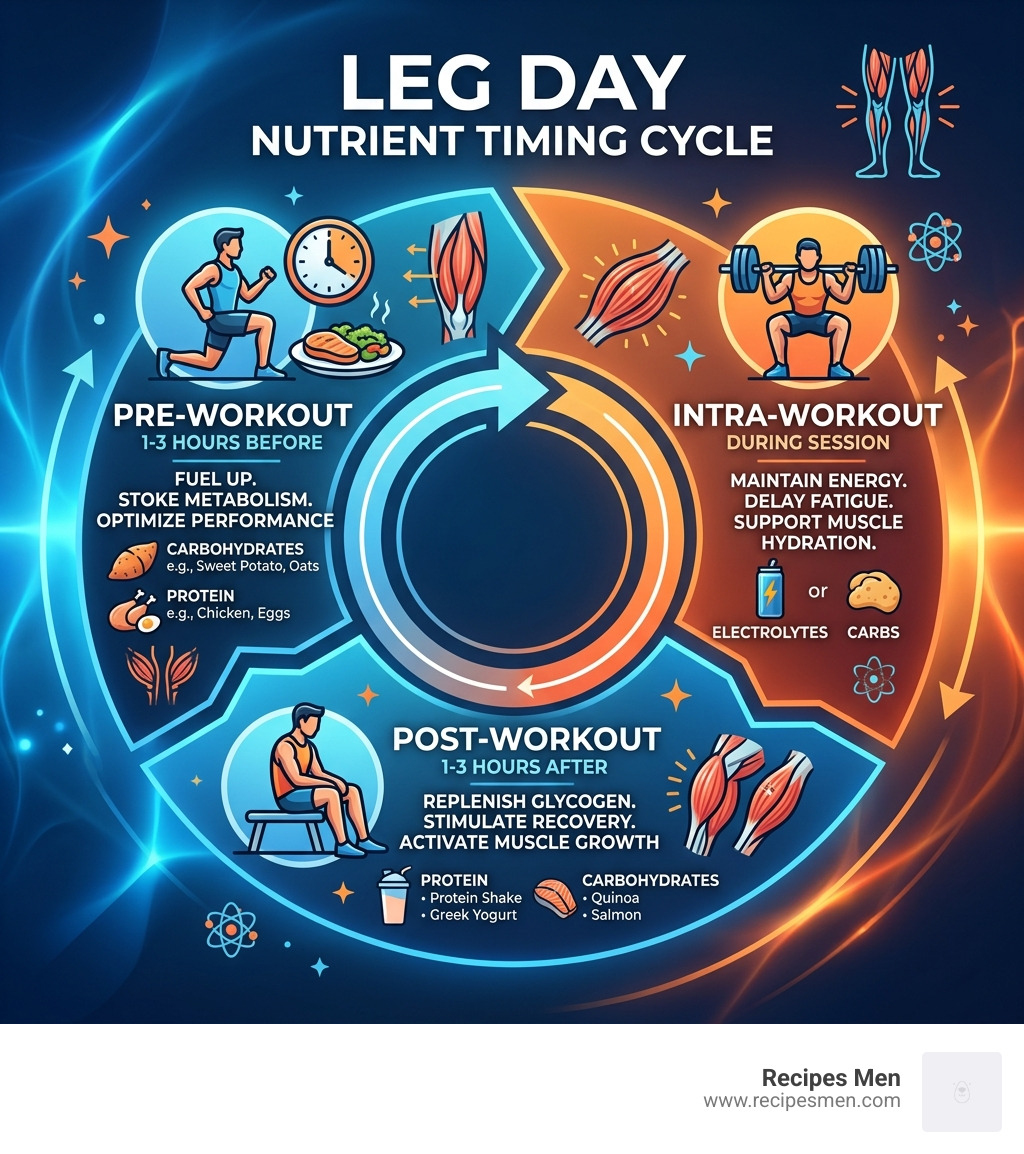
Why Leg Day Nutrition is the Foundation of Growth
As we head into April 2026, the science of muscle hypertrophy is clearer than ever: you cannot out-train a poor diet, especially when it comes to the largest muscle groups in your body. When you perform heavy compound movements like back squats or sumo deadlifts, you create microscopic tears in your muscle fibers. Muscle protein synthesis (MPS) is the process of repairing these tears, and it requires a steady supply of amino acids—specifically leucine.
Leucine acts as the “on switch” for muscle growth. Without a leg day meal prep strategy that prioritizes high-quality protein, your body remains in a catabolic state, breaking down muscle tissue rather than building it. Furthermore, leg day is metabolically expensive. Because these muscles are so large, training them spikes your metabolic rate and depletes your glycogen stores (the sugar stored in your muscles for energy).
Replenishing these stores with complex carbohydrates is vital for insulin regulation. Insulin is a highly anabolic hormone; it helps shuttle nutrients into the muscle cells for repair. Beyond the big three macros, your leg day meal prep must include micronutrients. Zinc and choline support muscle contraction and neurotransmitter function, while Vitamin D and iron are essential for bone density and oxygen transport to those working quads.
Mastering Your Leg Day Meal Prep: Timing and Macros
Efficiency is the name of the game. To see serious gains, we recommend aiming for 1.6 to 2.2 grams of protein per kilogram of body weight. For a 180lb (82kg) man, that’s roughly 130g to 180g of protein daily. On leg day, your carbohydrate needs spike to 3.5–5g per kilogram to ensure you don’t “bonk” halfway through your sets.

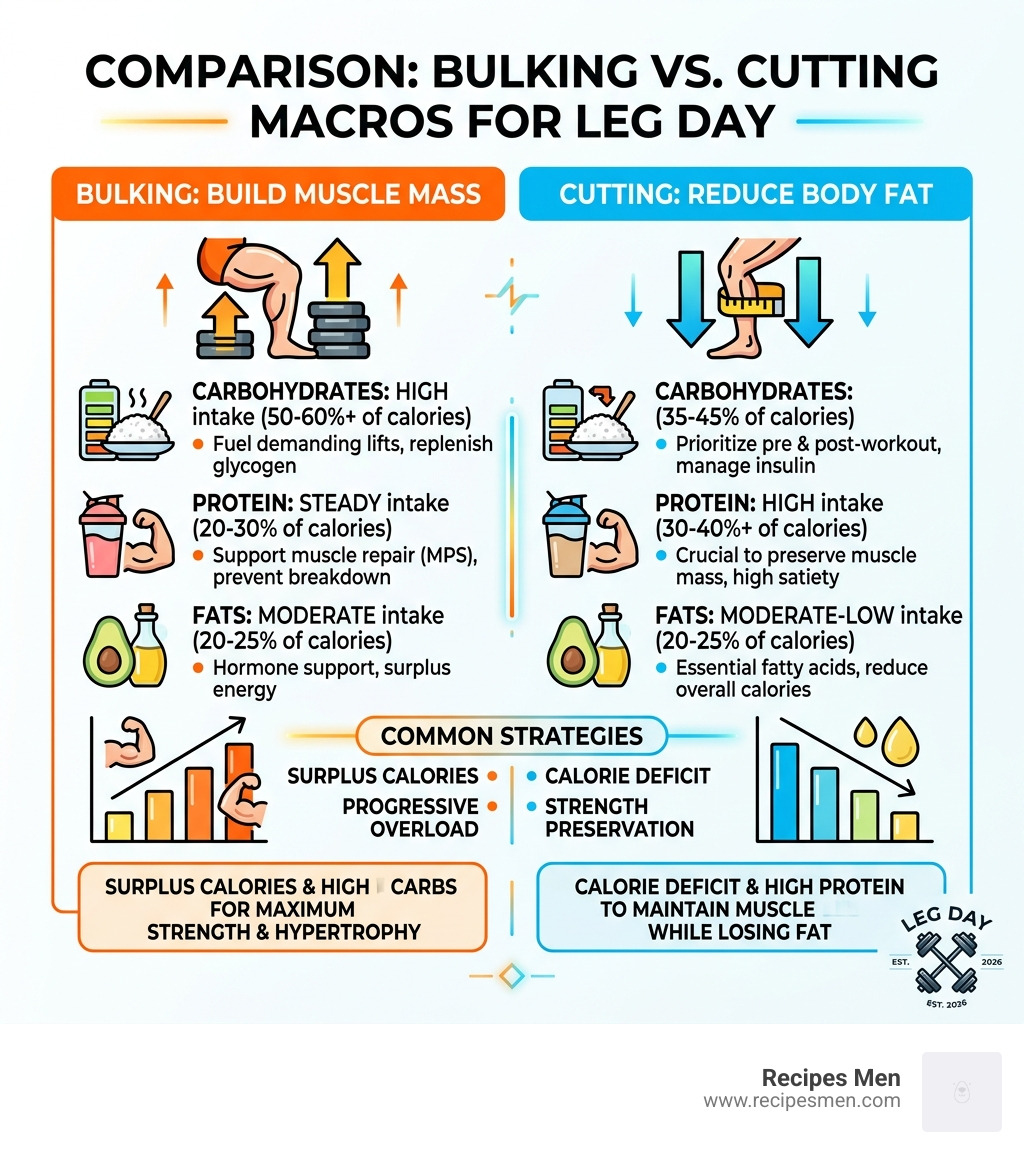
Ideal Macro Ratios for Leg Day Meal Prep
For a target of 2,800 calories, your macro split should look something like this:
- Protein (25-30%): Essential for tissue repair and maintaining a positive nitrogen balance.
- Carbohydrates (45-55%): Your primary fuel source. Think oats, sweet potatoes, and quinoa.
- Fats (20-25%): Crucial for hormone support, including testosterone production, which is vital for leg development.
Sample 2,800 Calorie Leg Day Meal Prep Plan
If you’re wondering what a full day of eating looks like to hit these numbers, here is a blueprint we use at Recipes Men:
- Breakfast: 3 scrambled eggs with spinach and a large bowl of oatmeal topped with berries.
- Pre-Workout (1-3 hours before): Chicken breast with brown rice or a turkey sandwich on whole-grain bread.
- Intra/Post-Workout: A whey protein shake mixed with 1 cup of orange juice. The OJ provides quick sugars to replenish glycogen immediately.
- Lunch/Dinner: 6-8oz of lean protein (chicken, beef, or fish) with a double serving of complex carbs (sweet potatoes or quinoa) and fibrous greens.
- Before Bed: Greek yogurt or a casein protein shake to provide a slow release of amino acids while you sleep.
7 High-Protein Recipes for Your Leg Day Meal Prep
The key to sticking to a leg day meal prep routine is variety. You can’t eat plain chicken and broccoli every day without losing your mind. Here are seven powerhouse recipes to rotate through your containers:
- Chicken Quinoa Power Bowls: Combine grilled chicken breast, tri-color quinoa, and roasted sweet potatoes. This bowl is a macro-bomb, providing roughly 54g of protein and 12g of fiber.
- Gingered Turkey Meatballs: Mix lean ground turkey with ginger, garlic, and cilantro. Serve over cauliflower rice or traditional jasmine rice for a high-protein, anti-inflammatory meal.
- Slow-Cooker Pulled Lamb: Use a lamb shoulder for a tender, shreddable protein source. Lamb is rich in leucine and provides a nice break from poultry.
- Lighter Mongolian Beef: Slice flank steak thin (pro tip: freeze it for 60 minutes first to get perfect strips) and sauté with a low-sodium soy sauce and ginger glaze.
- Spiced Chicken Legs with Chickpeas: A budget-friendly option. Roast chicken legs with chickpeas and quinoa in one pan for an easy 50g of protein per serving.
- Sesame Tuna Burgers: Fresh tuna provides high-quality protein and omega-3s. Sear them quickly to keep them juicy.
- Shrimp Chipotle Bowls: Shrimp is incredibly lean. Pair 40g of protein worth of shrimp with black beans and avocado for healthy fats.
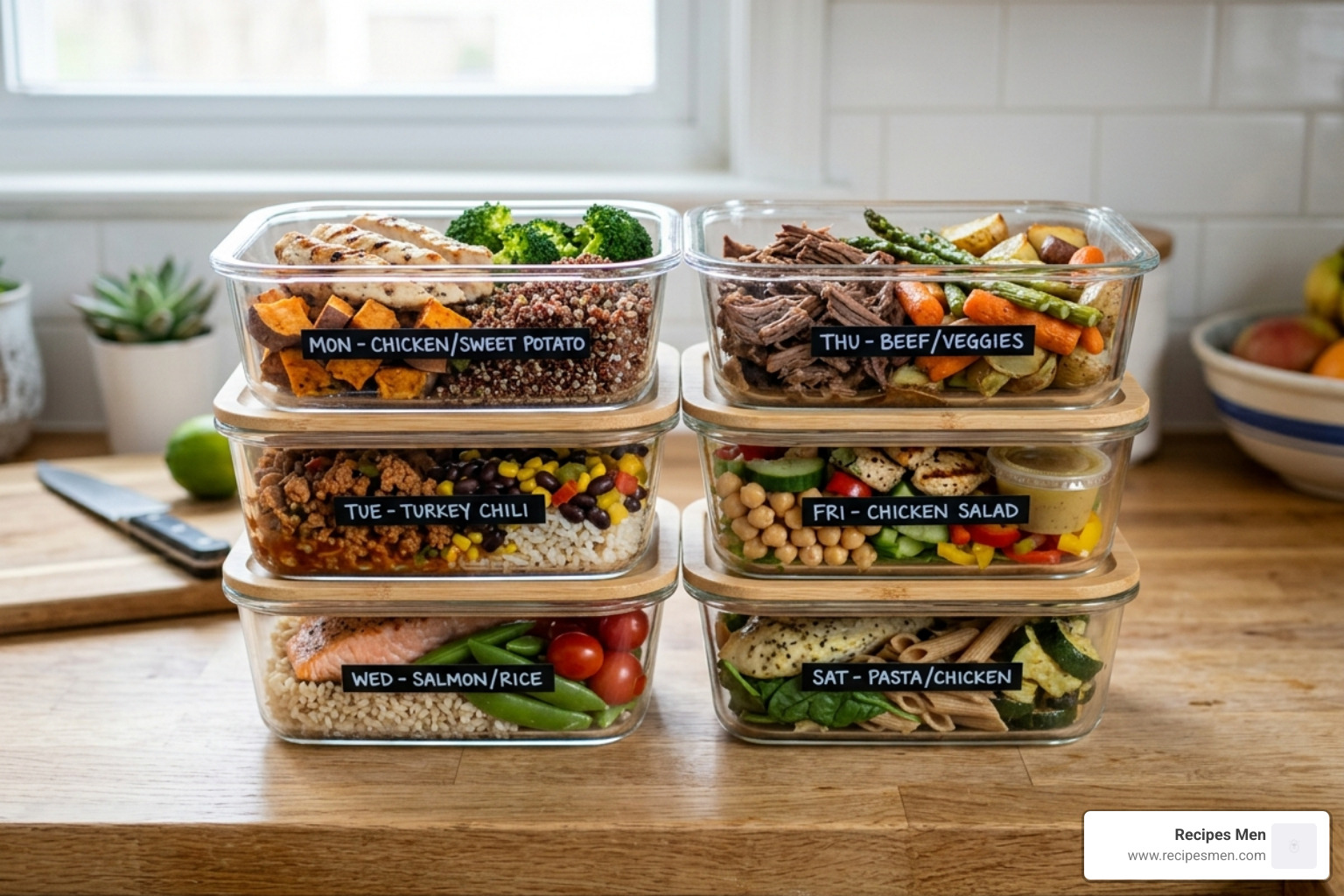
Batch Cooking Your Leg Day Meal Prep Recipes
We know you’re busy. You don’t want to spend every evening in the kitchen. The secret is “batch cooking.” Choose one day—Sunday is the classic—to prep your “foundation” foods.
- The One-Pan Method: Toss your chicken and vegetables on separate sheet pans. This allows you to pull the veggies out early so they don’t get soggy while the chicken finishes.
- Rice Cooker Efficiency: Make a massive pot of quinoa or brown rice at the start of the week.
- Flavor Rotation: Keep your proteins neutral while cooking, then add different sauces (buffalo, lemon-tahini, or chipotle) when you assemble the bowls to avoid “flavor fatigue.”
Pro Tips for Efficient Preparation and Storage
Ever found yourself reaching for a burger because you were too tired to decide what to cook? That’s “decision fatigue.” By having your leg day meal prep ready, you eliminate the need for willpower.
- Glass Over Plastic: Glass containers keep food fresher for longer and don’t retain smells.
- The Cooling Rule: Let your food cool completely before snapping the lid on. If you trap steam, your veggies will turn to mush and your chicken will get rubbery.
- Reheating Hacks: Use an air fryer for 3-5 minutes to revive roasted potatoes or chicken thighs. It brings back the texture that a microwave destroys.
- Frozen is Fine: Don’t sleep on frozen vegetables. They are often frozen at peak ripeness and are much cheaper than fresh produce that might go bad in your fridge.
Enhancing Recovery with Hydration and Supplements
Your muscles are approximately 75% water. Even a 2% drop in hydration can lead to a significant decrease in strength and endurance during your squats. We recommend drinking water consistently throughout the day, not just during your workout.
Scientific research on hydration and exercise performance shows that electrolyte balance is just as important as water volume. If you’re sweating heavily on leg day, add a pinch of sea salt or an electrolyte powder to your water.
Regarding supplements:
- Creatine Monohydrate: The most researched supplement in history. 5g daily helps with ATP production (energy) for explosive lifts.
- Whey Protein: Ideal for post-workout due to its rapid absorption.
- Omega-3s: Found in fish oil or avocado, these fats help reduce the inflammation caused by heavy lifting.
Frequently Asked Questions about Leg Day Meal Prep
How much protein should I eat on leg day?
You should aim for 1.6 to 2.2 grams of protein per kilogram of body weight. For most men, this means targeting about 30-40g of protein per meal. Prioritize leucine-rich sources like chicken, beef, and dairy to maximize muscle protein synthesis.
Can I meal prep for leg day on a vegetarian diet?
Absolutely. The key is combining protein sources to ensure you get a complete amino acid profile. Quinoa, lentils, and tofu are staples. Adding Greek yogurt or eggs (if you are lacto-ovo) makes hitting your protein goals much easier. Don’t forget to include Vitamin C-rich foods (like bell peppers) to help with iron absorption from plant sources.
What are common leg day meal prep mistakes?
The biggest mistake is under-eating carbohydrates. Many guys try to stay “low carb” even on leg day, which leads to poor performance and slow recovery. Other mistakes include ignoring hydration and failing to let food cool before storage, which leads to soggy, unappetizing meals that you’ll eventually want to throw away.
Conclusion
Success in the gym is built in the kitchen. By mastering your leg day meal prep, you aren’t just eating for hunger; you’re eating for performance. Whether you’re bulking up or leaning out in April 2026, the consistency of your nutrition will always be the deciding factor in your leg development.
Stop leaving your results to chance. Take the time this Sunday to batch-cook your proteins, roast your complex carbs, and set yourself up for a week of wins. Your quads will thank you.
Fuel your growth with our latest high-protein guides

