
Master Your Week with This Simple 7 Day Workout Meal Plan
Why a 7 Day Workout Meal Plan Changes Everything
A 7 day workout meal plan is the simplest way to make sure your food actually supports your training — not just fills you up.
Here’s what a solid week of workout nutrition looks like at a glance:
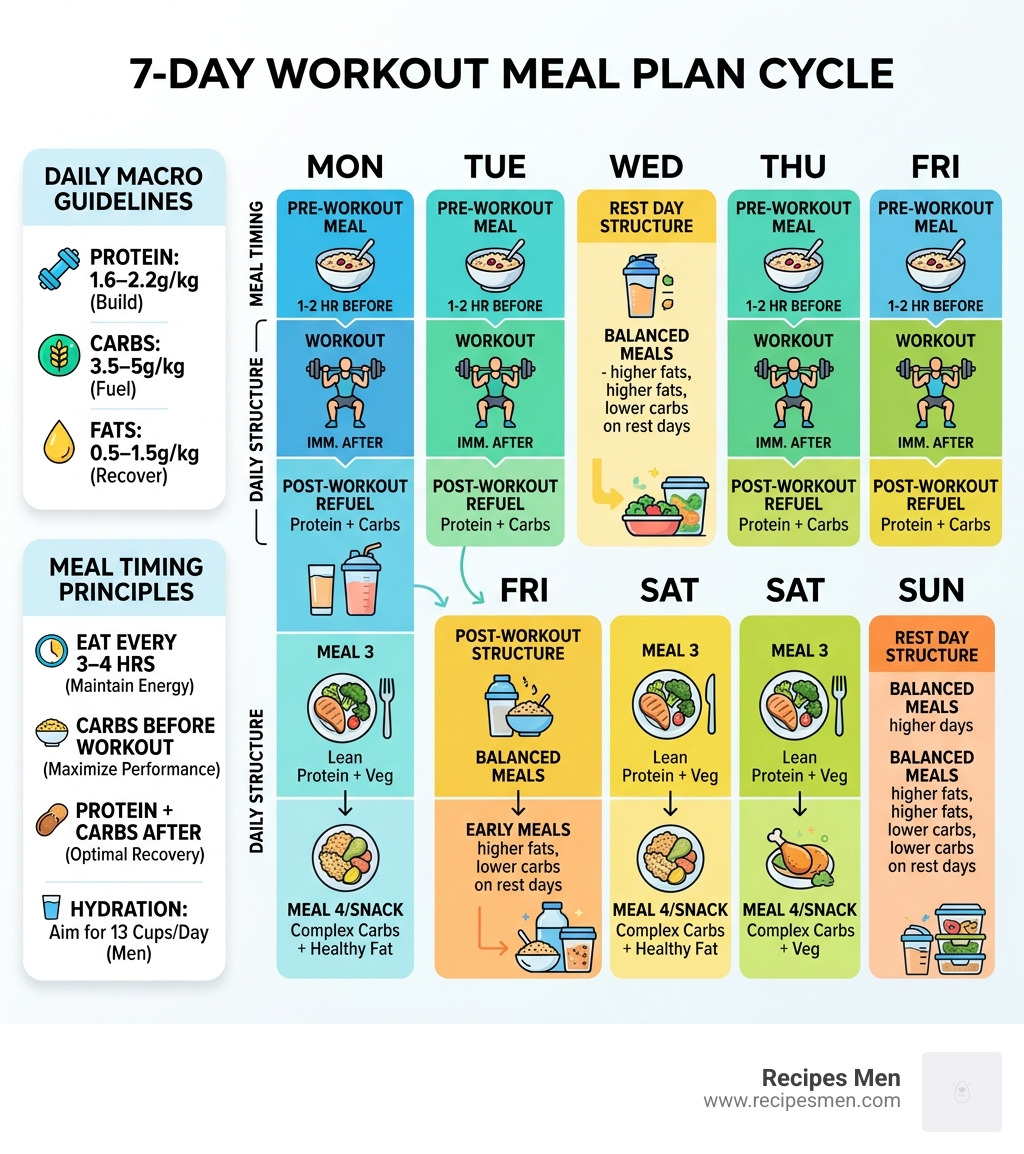
- Protein: 1.6–2.2g per kg of body weight daily (roughly 110–150g for most men)
- Calories for muscle gain: 10–20% above your maintenance level (around 2,200–2,600 for a 150 lb person)
- Carbs: 3.5–5g per kg of body weight — your primary fuel source for training
- Fats: 0.5–1.5g per kg — essential for hormones and recovery
- Meal timing: Eat every 3–4 hours, with carbs before workouts and protein + carbs after
- Hydration: Men should aim for around 13 cups of water daily
Most guys in their 30s already know they should eat better. The problem isn’t knowledge — it’s the chaos of a busy week.
You get home from work exhausted. The fridge is half empty. You eat whatever’s easiest, and the workout you did that morning gets undone by a poor night of eating.
That’s exactly what a structured weekly meal plan solves.
Research backs this up too. A 2022 review found that muscle-strengthening activities are linked to lower risk and mortality from major non-communicable diseases. But training alone isn’t enough — what you eat before, during, and after each session determines how much of that hard work actually sticks.
This guide gives you a complete, no-guesswork plan: meals, macros, prep tips, and everything in between.
Core Principles of a 7 Day Workout Meal Plan
To master your 7 day workout meal plan, we need to look at the “Big Three” of nutrition: calories, macronutrients, and food quality. As we move through April 2026, the science of performance nutrition has become clearer than ever. It isn’t about starving yourself; it’s about providing the “bricks” (protein) and the “gasoline” (carbs) your body needs to rebuild.
The Science of Muscle Growth
Muscle hypertrophy—the technical term for muscle growth—happens through three main mechanisms: mechanical tension (lifting heavy), metabolic stress (that “burn” you feel during high reps), and muscle damage. Your diet’s job is to repair that damage. For bodybuilders or those looking to maximize size, the recommendation is often higher: between 2.3–3.1 grams of protein per kilogram of lean body mass per day.
Macronutrient Balance
We generally recommend a balanced approach for most active men:
- Protein (25-40%): Essential for building healthy cells and repairing damaged ones.
- Carbohydrates (35-50%): These are stored in your muscles as glycogen. Without them, your workouts will feel sluggish.
- Fats (15-30%): Crucial for hormone production, including testosterone, which is the engine of muscle growth.
Top High-Protein Foods to Include:
- Animal-Based: Lean ground beef, chicken breast, turkey mince, eggs (aim for about 11 per week), and salmon.
- Plant-Based: Tofu, tempeh, lentils, chickpeas, and edamame.
- Dairy: Greek yogurt (look for >10g protein per serving) and cottage cheese.
Strategic Meal Timing for Performance and Recovery
When you eat is almost as important as what you eat. Aligning your 7 day workout meal plan with your training schedule ensures you have energy when you’re under the bar and nutrients when you’re on the couch.
Pre-Workout: The Fueling Window
If you exercise first thing in the morning, your body needs quick energy. Simple carbs like graham crackers, a piece of white toast, or a sports drink are best because they digest rapidly. If you have 1-2 hours before your session, add some fiber and protein, like an English muffin with peanut butter. The Best 7-Day Healthy Meal Plan, Created by a Dietitian emphasizes that avoiding high-fat or very high-fiber meals immediately before exercise prevents that “heavy” feeling in the gut.
Post-Workout: The Recovery Window
This is when your muscles are like sponges. Aim for 20–30g of protein combined with moderate carbohydrates within 60–90 minutes of finishing. This kickstarts muscle protein synthesis and replenishes glycogen stores. If you’re training late at night and don’t want a full heavy dinner, a high-quality protein shake is an excellent alternative.
Intra-Workout
For most workouts under 60 minutes, water is sufficient. However, if you’re doing high-intensity HIIT or long-distance endurance, a carbohydrate-electrolyte drink can help maintain your burn rate and prevent fatigue.
The Ultimate 7 Day Workout Meal Plan for Every Training Style
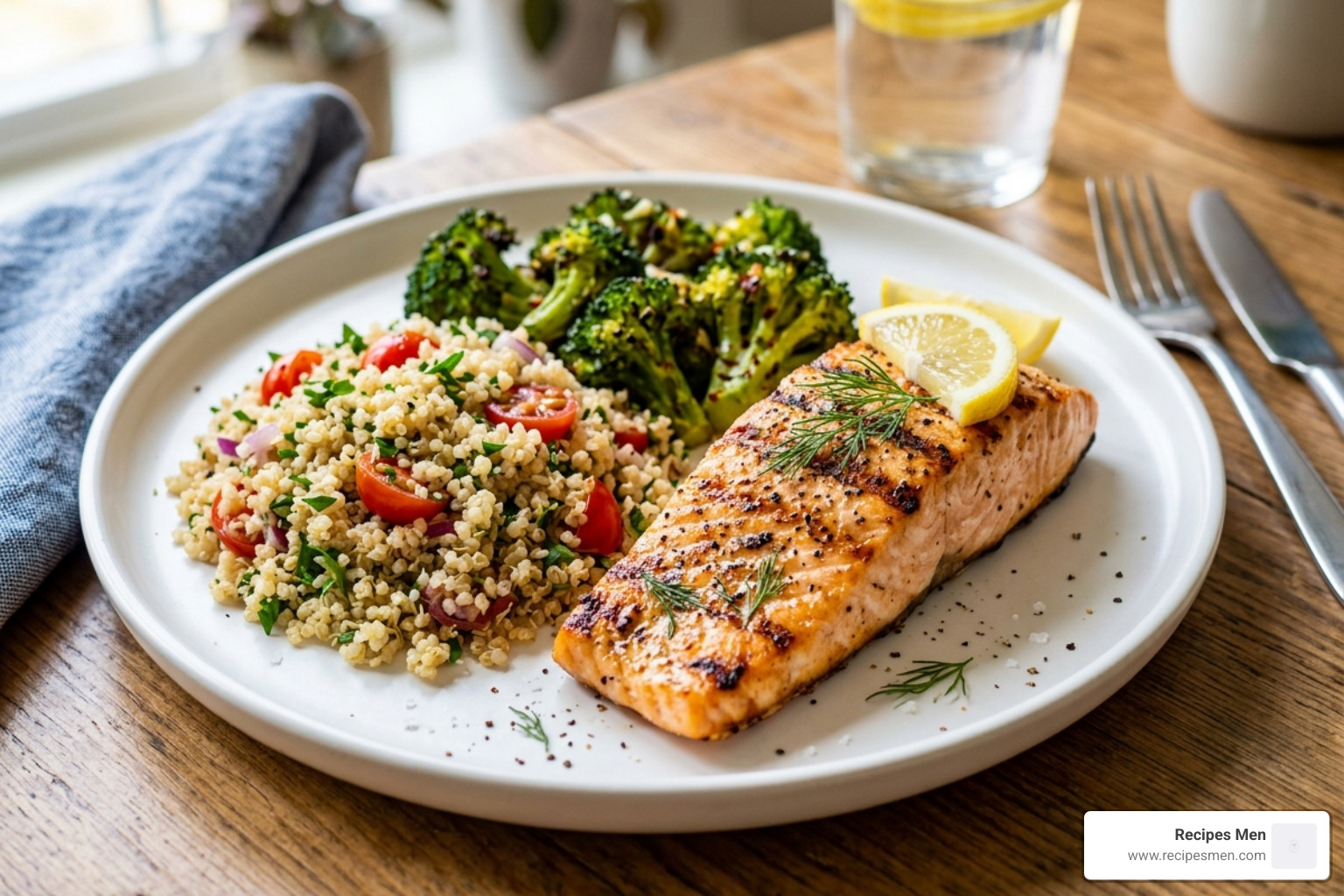
We’ve designed this plan to be flexible. Whether you’re hitting the weights or going for a run, these meals provide the nutrient density required for high-level performance.
Day 1-3: Fueling Strength and Hypertrophy (7 Day Workout Meal Plan)
These days focus on higher calorie intake and complex carbohydrates to support mechanical tension and heavy lifting.
- Breakfast: Scrambled eggs with spinach on whole-grain toast or protein pancakes with fresh berries.
- Lunch: Quinoa bowl with grilled chicken, black beans, and avocado.
- Dinner: Lean ground beef burgers (no bun or whole-wheat bun) with a side of roasted sweet potatoes.
- Snack: Greek yogurt with a handful of almonds or a protein shake.
Day 4-7: Cardio, Endurance, and Active Recovery (7 Day Workout Meal Plan)
On these days, we shift slightly. We still need protein for repair, but we focus on healthy fats and nitrate-rich greens (like kale and spinach) which are linked to improved muscle function.
- Breakfast: Cinnamon-raisin overnight oats made with protein-rich milk or a smoothie with kale, protein powder, and flaxseeds.
- Lunch: Chopped power salad with chickpeas, tuna, and a light vinaigrette.
- Dinner: Baked salmon with garlicky mixed greens and a small portion of jasmine rice.
- Snack: Hard-boiled eggs or snickerdoodle almonds.
For more structured guidance, you can explore 7-Day Meal Prep Plan for Building Lean Muscle – Healthy Fresh Meals to see how to organize these days effectively.
Customizing Your Plan: Bulking, Cutting, and Maintenance
Not every man has the same goal. Your 7 day workout meal plan should shift based on whether you want to gain size, lose fat, or stay exactly where you are.
| Goal | Calorie Adjustment | Macro Focus |
|---|---|---|
| Bulking | +10-20% above maintenance | High Carbs, High Protein |
| Cutting | -10-20% below maintenance | Very High Protein, Moderate Fat, Lower Carbs |
| Maintenance | Equal to TDEE | Balanced Macros (50/25/25 split) |
The Experience Factor
If you are a beginner, you can often gain muscle even in a slight calorie deficit (the “newbie gains” phase). However, experienced lifters usually need a dedicated surplus of 100–300 calories to see significant muscle hypertrophy. During a “cut,” keeping protein high (up to 2.2g per kg) is vital to ensure the weight you lose is fat, not hard-earned muscle.
Grocery List and Meal Prep Hacks for Busy Athletes
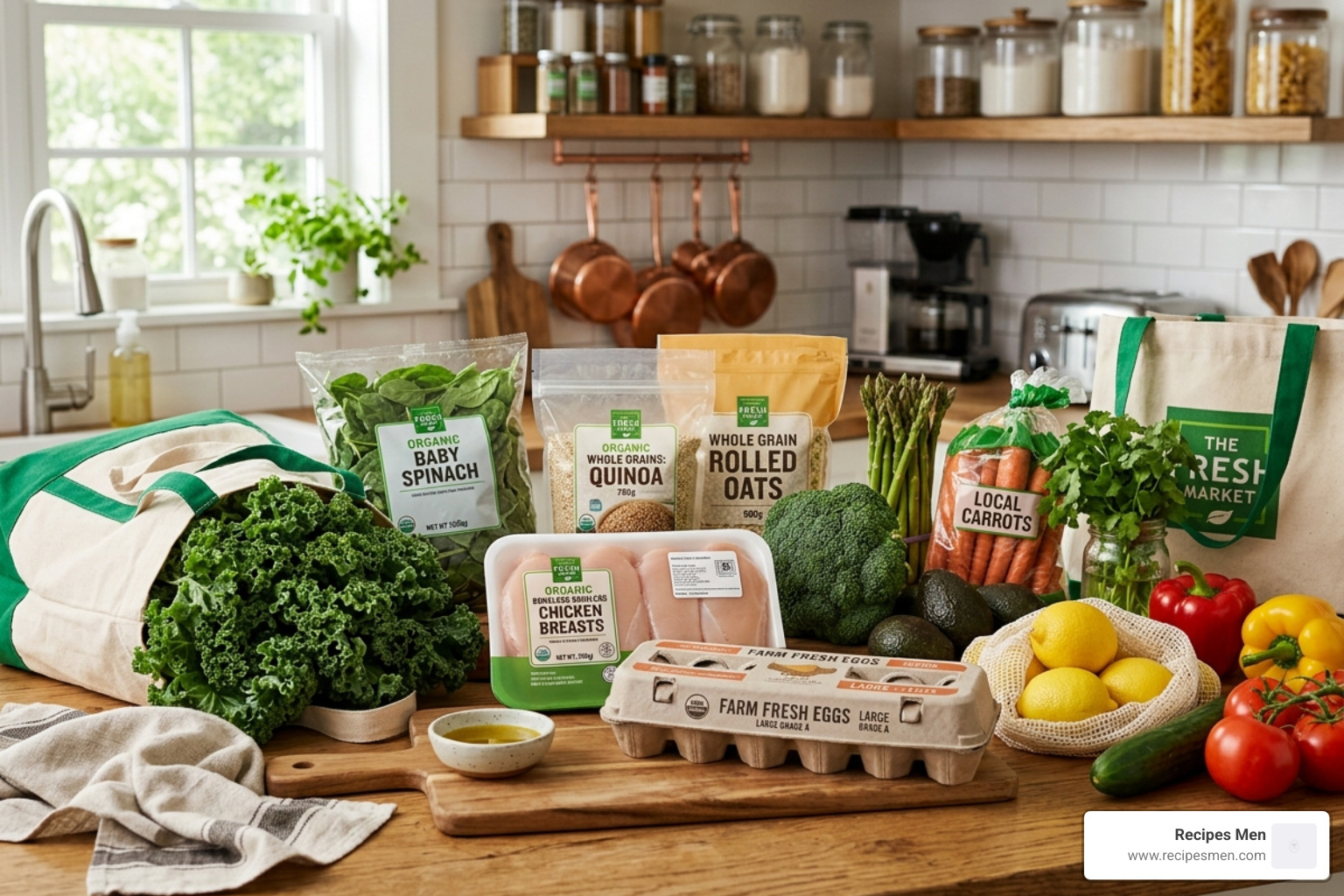
The secret to staying consistent with a 7 day workout meal plan is eliminating decision fatigue. If you have to decide what to eat when you’re hungry, you’ve already lost.
Batch Cooking Basics
Spend two hours on Sunday afternoon to save ten hours during the week.
- Proteins: Bake 1kg of chicken breast and brown 500g of turkey mince at the same time.
- Grains: Cook a large pot of brown rice or quinoa.
- Vegetables: Roast two large trays of broccoli, peppers, and carrots.
Budget-Friendly Tips
Eating for performance doesn’t have to be expensive. A high-protein plan can be managed for $50-$65 a week if you stick to staples. Buy frozen vegetables—they are just as nutritious as fresh—and opt for bulk bags of rice and oats. Overlapping ingredients across your meals (using spinach in your eggs and your smoothies) reduces waste and cost.
Storage
Invest in BPA-free glass containers. They keep food fresher longer and are safer for reheating. Label your containers by day so you can “grab and go” without thinking.
Frequently Asked Questions about Workout Nutrition
Should I include supplements like creatine or protein shakes?
While whole foods should always come first, supplements can be helpful. Creatine monohydrate is one of the most researched supplements in history and is proven to help with strength and power. Protein shakes are simply a convenient tool to help you hit your daily protein targets, especially post-workout. Always look for third-party verified products.
How much water do I really need for recovery?
Muscles are about 75% water. Dehydration can lead to strength loss and increased soreness. Men should aim for approximately 13 cups (about 3 liters) of fluid daily. If you are sweating heavily, you may need more. A good rule of thumb is to check your urine color; it should be light like lemonade, not dark like apple juice.
What are common mistakes to avoid in a workout meal plan?
- Extreme Calorie Cutting: Avoiding a 1,200-calorie diet is crucial for men. It is unsustainable and leads to muscle loss and hormonal crashes.
- Skipping Carbs: Many guys fear carbs, but they are the primary fuel for high-intensity lifting.
- Lack of Variety: Eating only chicken and broccoli leads to burnout. Use different spices and sauces (like low-sodium soy or hot sauce) to keep things interesting.
- Ignoring Fiber: You need at least 24–30g of fiber daily for gut health and satiety.
Conclusion
Mastering your week doesn’t require a degree in nutrition; it requires a system. By following a 7 day workout meal plan, you take the guesswork out of the kitchen so you can put all your focus into the gym.
At Recipes Men, we believe that healthy eating should be straightforward and flavorful. Consistency trumps perfection every time. If you miss a meal or have a “cheat” pizza, don’t sweat it—just get back on the plan for the next meal. Sustainable habits are what build a physique that lasts.
For more straightforward, muscle-building recipes and tips tailored for men, check out our latest guides at Recipes Men. Let’s get to work!

