
The Broke Athlete’s Guide to Budget Protein Foods
Why Budget Protein Foods Are Harder to Ignore in 2026
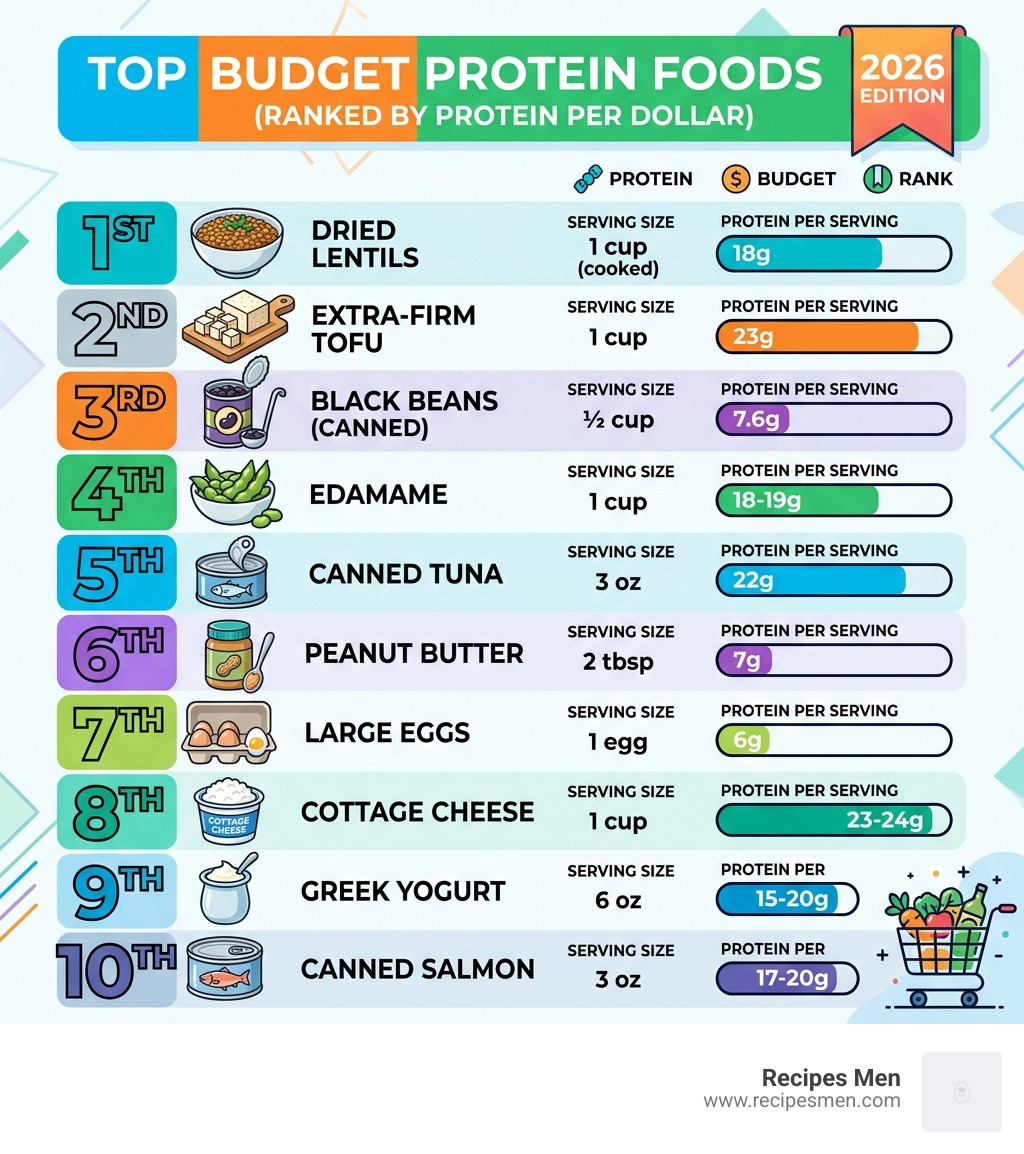
Budget protein foods are the smartest tool in your grocery arsenal right now — and here are the best ones to grab first:
| Food | Protein per Serving | Approx. Cost |
|---|---|---|
| Dried lentils | 18g per cup (cooked) | ~$0.02 per serving |
| Large eggs | 6g per egg | ~$2-4 per dozen |
| Canned tuna | 22g per 3 oz | ~$1 per 5-oz can |
| Black beans (canned) | 7.6g per ½ cup | ~$1 per 15-oz can |
| Cottage cheese | 23-24g per cup | ~$3 per 16-oz tub |
| Greek yogurt | 15-20g per 6 oz | ~$5 per 24-oz tub |
| Peanut butter | 7g per 2 tbsp | ~$2.50 per 16-oz jar |
| Extra-firm tofu | 23g per cup | ~$2.50 per 14-oz block |
| Edamame | 18-19g per cup | ~$2 per 12-oz bag |
| Canned salmon | 17-20g per 3 oz | ~$3.60 per 6-oz can |
Here’s the reality check: a dozen eggs that cost $1.32 in August 2020 averaged $6.23 in March 2026. Ground beef hit a record $6.12 per pound. And grocery inflation is still running above the broader cost-of-living index.
For a guy in his 30s trying to build muscle, stay lean, and not blow his food budget — that stings.
But here’s what most people miss: protein doesn’t have to be expensive. The foods that deliver the most protein per dollar are often the ones already sitting on the back shelf of your pantry — or they should be.
Protein isn’t just about muscle. It repairs tissue after hard workouts, keeps you full longer, supports your immune system, and even gives your metabolism a small boost because your body burns more calories digesting it than it does digesting carbs or fat. Getting enough of it consistently matters — and getting it cheaply is completely doable when you know where to look.
This guide cuts through the noise and shows you exactly which foods deliver the most protein for the least money in 2026.
Understanding Your Daily Protein Requirements
Before we start filling our carts, we need to know how much we actually need. The “standard” Recommended Daily Allowance (RDA) is 0.8 grams per kilogram of body weight. For a 150-pound person, that’s only about 54 grams of protein a day. However, many experts in 2026 argue this is the bare minimum to prevent deficiency, not the optimal amount for health or performance.
If you are an athlete, a lifter, or simply trying to lose weight without losing muscle, your needs are higher. We typically recommend a range of 1.2 to 2.0 grams per kilogram of body weight. For a 180-pound lifter, that means aiming for roughly 130 to 180 grams daily.
Age is another factor. As we get older, our bodies become less efficient at processing protein, leading to age-related muscle loss. USDA guidelines for adults over 60 suggest at least 0.54 grams per pound of body weight to maintain strength and mobility.
Digestibility and Bioavailability
Not all proteins are created equal. Digestibility scores tell us how much of the protein we eat actually gets used by the body. Animal proteins (meat, eggs, dairy) generally have a 90-100% digestibility rate. Plant proteins (beans, grains, nuts) sit closer to 70%. This doesn’t mean plant proteins are “bad,” it just means you might need to eat a slightly larger volume of them to get the same net benefit.
Check out this list of 17 Cheap and Healthy Sources of Protein to see how various items stack up.
| Food Category | Protein Density | Digestibility Score |
|---|---|---|
| Eggs/Dairy | High | 97-100% |
| Meat/Poultry | High | 94-100% |
| Soy/Legumes | Moderate | 70-80% |
| Grains/Nuts | Low-Moderate | 60-70% |
Complete vs. Incomplete Proteins
Proteins are made of 20 amino acids. Nine of these are “essential,” meaning our bodies can’t make them—we have to eat them.
- Complete Proteins: These contain all nine essential amino acids in the right proportions. Almost all animal products are complete, as are soy (tofu, edamame) and quinoa.
- Incomplete Proteins: Most plant-based budget protein foods like beans, lentils, and nuts are low in one or two essential amino acids.
The fix is simple: variety. You don’t need to “complement” proteins in every single meal. If you eat beans at lunch and rice or toast at dinner, your body pools those amino acids together to handle tissue repair and hormone regulation just fine.
Top Animal-Based Affordable Protein Sources
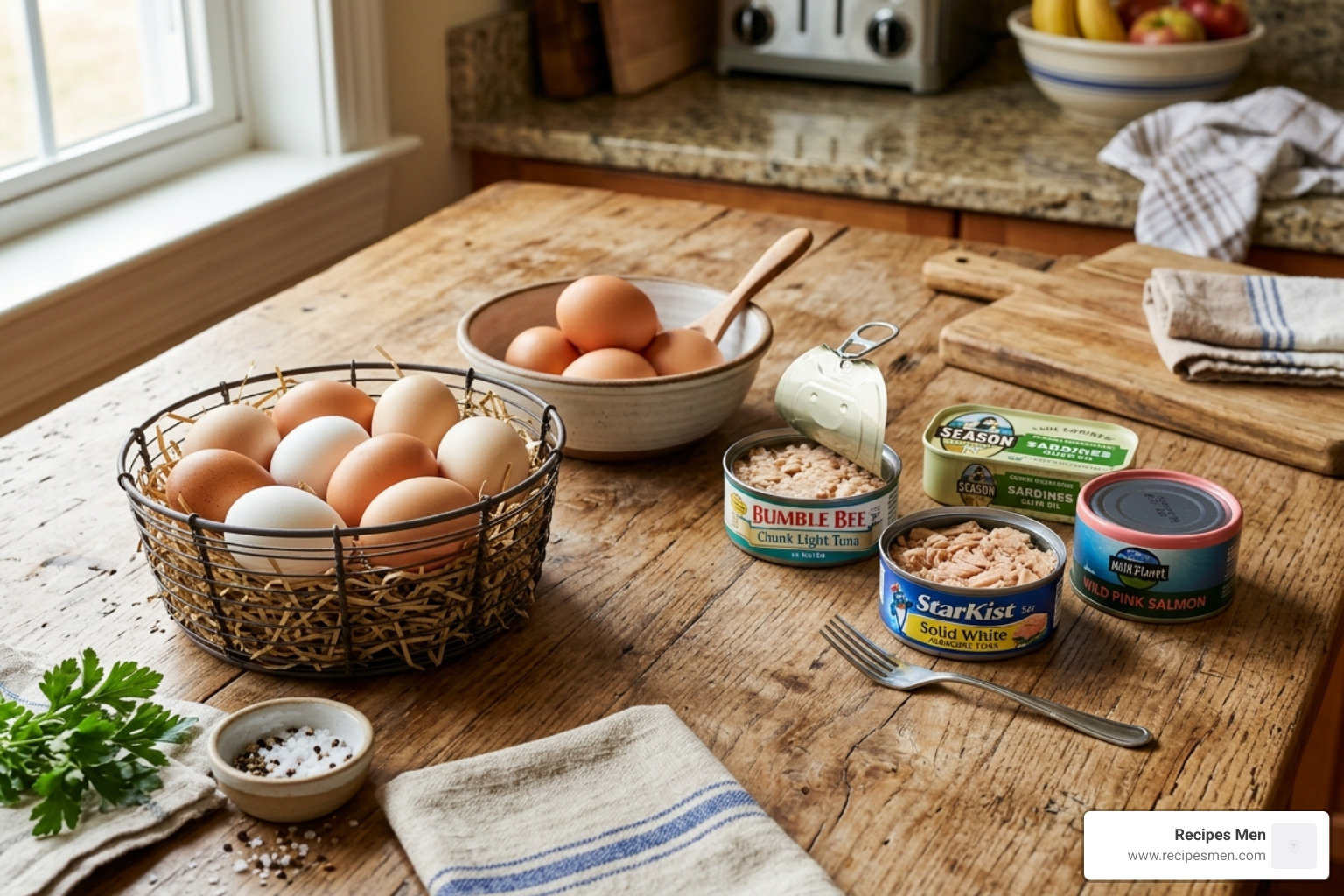
When it comes to bioavailability and nutrient density, animal proteins are hard to beat. They are packed with Vitamin B12, iron, and zinc—nutrients that are vital for energy levels and recovery. While prices have risen, you can still find cheap high protein foods in the animal aisle if you avoid the “premium” cuts.
Eggs and Dairy: The Gold Standard for Value
Eggs are often called the perfect protein. Even at $4 a dozen, two large eggs provide 13 grams of high-quality protein for about 66 cents. Don’t fall for the “enriched” egg myths—omega-3 or antioxidant-enriched eggs usually just cost more without adding extra protein.
Dairy is another powerhouse. Greek yogurt is a favorite because it contains 15-20 grams of protein per 6 ounces—nearly double that of regular yogurt. It’s also loaded with probiotics for gut health. Cottage cheese is the “secret weapon” for many athletes; one cup packs a massive 24 grams of protein. Both are great sources of casein (a slow-digesting protein) and whey (fast-digesting), making them perfect for muscle maintenance. To save the most, always buy the large 24-oz or 32-oz store-brand tubs rather than individual cups.
Canned Fish and Lean Poultry
Canned tuna is a classic for a reason. A single 5-oz can provides over 20 grams of protein and heart-healthy omega-3s for about a dollar. To keep it safe, opt for “light” tuna over albacore to minimize mercury exposure, especially if you eat it several times a week.
Canned salmon is another budget win. It often contains tiny, soft, edible bones, which makes it an incredible source of calcium. If you prefer fresh meat, look for chicken thighs instead of breasts. Bone-in, skin-on thighs are significantly cheaper per pound. While the “edible yield” is lower because of the bone, the price difference usually still makes thighs the better value. Ground turkey is another lean, affordable option that can replace beef in almost any recipe—just use a little oil and seasoning so it doesn’t dry out.
Plant-Based Powerhouses: The Best Budget Protein Foods

If you really want to see your grocery bill drop, look to plants. Plant-based budget protein foods are not only cheaper but are also great for your heart and the environment. Legumes like chickpeas actually help “fix” nitrogen in the soil, making them a sustainable choice for the planet.
For more ideas on how to use these, see 10 Cheap Protein Sources and How to Add Them to Your Diet – GoodRx.
Legumes and Grains as Budget Protein Foods
- Lentils: These are arguably the kings of budget nutrition. One pound of dry lentils costs about $1.50 and provides multiple servings with 18g of protein and 15g of fiber per cup.
- Black Beans: A one-pound bag of dry black beans costs roughly $1.80 and yields 6 cups of cooked beans. That’s about 13 servings of protein for less than two bucks.
- Soy Staples: Tofu and edamame are rare complete plant proteins. A block of extra-firm tofu (about $2.50) can be scrambled like eggs or tossed into a stir-fry for 32g of total protein.
- Peanut Butter: At roughly $2.50 for a 16-oz jar, it’s a staple. While high in fat, it provides 7g of protein per 2 tablespoons. We suggest using it as a “protein booster” in oats or smoothies.
- Whole Grains: Don’t ignore oats and amaranth. A cup of cooked oats has about 6g of protein. If you cook your oats in milk and add a scoop of peanut butter, you’ve got a high-protein breakfast for pennies.
Strategies to Stretch Your Protein Dollar in 2026
Knowing what to buy is half the battle; knowing how to shop is the other half. In 2026, the gap between an optimized grocery cart and a random one can be as much as $60 a month for one person.
- Unit Pricing is Key: Don’t look at the total price. Look at the “price per ounce” or “price per gram” on the shelf tag. This is how you realize that the 5lb bag of frozen chicken is actually cheaper than the “on sale” fresh pack.
- Warehouse Clubs and Bulk Buying: If you have the space, buy your dry goods (beans, lentils, rice) and whey protein in bulk. A 5lb tub of whey protein might seem expensive at $60, but at roughly $0.80 per serving, it’s often cheaper than many whole-food proteins.
- Store Brands: There is almost no nutritional difference between name-brand Greek yogurt or peanut butter and the store-brand version. You’re just paying for the label.
- Frozen and Canned: Frozen vegetables and canned beans are picked at peak ripeness and processed immediately. They are just as nutritious as fresh but cost significantly less and won’t rot in your fridge if you have a busy week.
- Meal Prepping: This is the ultimate budget move. Cooking a big batch of lentils or browning two pounds of ground turkey on Sunday ensures you won’t spend $15 on a “high-protein” bowl at a fast-casual restaurant on Wednesday.
For more strategic tips, check out How to Get Enough Protein on a Tight Budget | WorkMoney.
Frequently Asked Questions about Budget Protein Foods
What is the cheapest protein source per gram in 2026?
Currently, dried lentils and dried black beans are the undisputed champions, costing as little as $0.32 to $0.34 per 30 grams of protein. Among animal sources, large eggs (when bought in 18 or 30-packs) and canned tuna remain the most cost-effective, typically hovering around $0.40 to $0.60 per 30 grams of protein.
Is whey protein powder actually a cost-effective budget protein food?
Yes, surprisingly. While the upfront cost of a 5lb tub (roughly $55-$70) feels high, the cost per 24g-25g serving is often under $1.00. This makes it more affordable per gram than many fresh meats. It’s a “convenience play”—it requires zero cooking and is shelf-stable for months. For the best value, stick to Whey Protein Concentrate rather than the more expensive Isolate, unless you have a severe lactose intolerance.
Can I build muscle using only plant-based budget protein foods?
Absolutely. You just need to be mindful of your total leucine intake. Leucine is the specific amino acid that “triggers” muscle growth. Animal proteins are naturally higher in leucine, but you can achieve the same effect with plant proteins by eating a larger variety and slightly higher volume. Combining grains (like rice) and legumes (like beans) ensures you get a full amino acid profile to support hypertrophy.
Conclusion
At Recipes Men, we believe that hitting your fitness goals shouldn’t require a second mortgage. Whether you’re a “broke athlete” or just someone trying to navigate the 2026 economy, budget protein foods like eggs, lentils, and canned tuna are your best friends.
Consistency is the most important part of any nutrition plan. By stocking your pantry with these affordable staples, you ensure that you always have a high-protein meal ready to go, no matter how tight the budget gets. Focus on nutrient density, shop smart at warehouse clubs, and don’t be afraid to embrace the power of the humble bean.
Ready to put these ingredients to work? Explore our high-protein meal plans for straightforward, flavorful recipes that won’t break the bank.

