
The Daily Eating Plan to Lose Weight Without Losing Your Mind
Why Your Daily Eating Plan to Lose Weight Is the Most Important Tool You Have
A daily eating plan to lose weight is the single most effective tool for shedding fat without going hungry, obsessing over every bite, or burning out after two weeks.
Here’s the quick version of what works:
- Create a moderate calorie deficit — aim for about 500 calories less than you burn each day
- Eat mostly whole foods — lean proteins, vegetables, whole grains, healthy fats
- Hit your protein and fiber targets — at least 86g of protein and 31g of fiber daily
- Aim for 1–2 pounds of weight loss per week — any faster and you risk muscle loss and rebound weight gain
- Move your body — even 30 minutes of walking counts
- Stay consistent — sustainable beats perfect, every time
You’ve probably tried cutting carbs. Or skipping meals. Or living on salads that leave you raiding the pantry at 10 PM. Sound familiar?
The problem isn’t your willpower. It’s the plan.
Most diets fail because they’re built around restriction, not structure. The research is clear: a balanced, calorie-controlled eating plan built around foods you actually enjoy leads to real, lasting fat loss — without the misery.
Whether you’re starting fresh or breaking through a plateau, this guide gives you a science-backed, practical system you can follow from Monday morning without needing a nutrition degree or hours in the kitchen.
Calculating Your Personal Daily Eating Plan to Lose Weight
Before we talk about what goes on your fork, we need to talk about the math. Don’t worry—we aren’t doing calculus here, but weight loss is fundamentally a game of “calories in vs. calories out.” To win, we need to know your starting line.
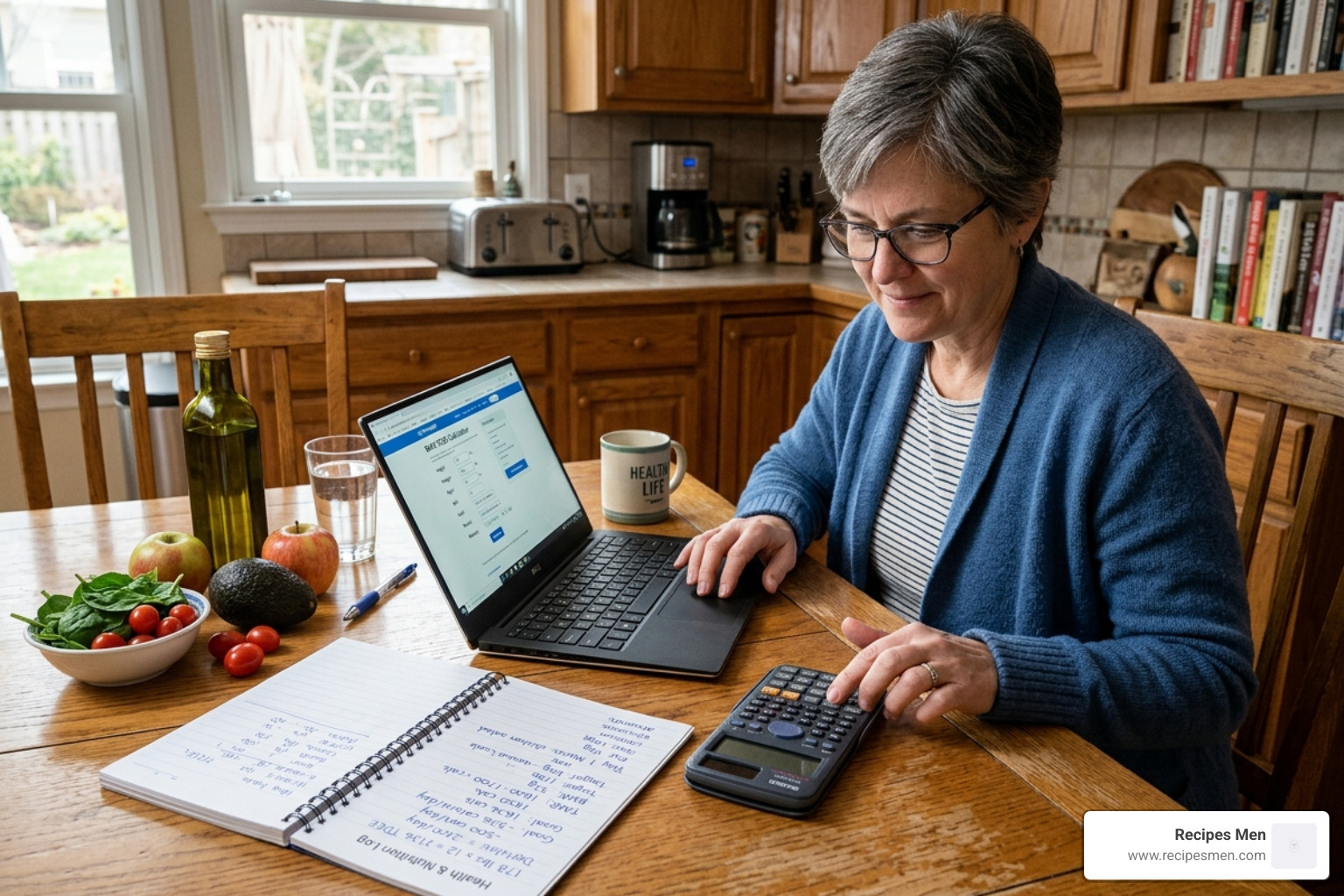
The gold standard for finding your needs is the Mifflin-St. Jeor equation. This formula calculates your Basal Metabolic Rate (BMR)—the number of calories your body burns just staying alive while you binge-watch your favorite show.
- For Men: 10 x (weight in kg) + 6.25 x (height in cm) – 5 x (age) + 5
- For Women: 10 x (weight in kg) + 6.25 x (height in cm) – 5 x (age) – 161
Once you have your BMR, you multiply it by an activity factor to find your Total Daily Energy Expenditure (TDEE). This is the total number of calories you burn in a day.
| Activity Level | Description | Multiplier |
|---|---|---|
| Sedentary | Little to no exercise, desk job | BMR x 1.2 |
| Lightly Active | Light exercise 1–3 days/week | BMR x 1.375 |
| Moderately Active | Moderate exercise 3–5 days/week | BMR x 1.55 |
| Very Active | Hard exercise 6–7 days/week | BMR x 1.725 |
To lose weight safely, we recommend subtracting 500 calories from your TDEE. Research suggests this reduction typically leads to losing about 1 pound (450 grams) per week. While a review of 35 studies showed people can lose anywhere from 0.004 to 2.5 pounds per week depending on the deficit, aiming for the middle ground ensures you aren’t starving.
Understanding Realistic Weight Loss Rates
We all want results yesterday, but the “Lose 20 Pounds in 3 Days” headlines are nonsense. A realistic, healthy rate is 1 to 2 pounds (0.5 to 1 kg) per week.
Why go slow? When you lose weight too fast, your body thinks there’s a famine. It responds by slowing down your metabolism and burning through muscle instead of fat. Slow and steady progress allows for metabolic adaptation to happen gradually, making the weight much easier to keep off long-term.
The scale doesn’t always tell the whole story. If you’re lifting weights, you might be gaining muscle while losing fat. Use body measurements (like your waist circumference) and how your clothes fit as better indicators of success than just the number on the scale.
Building a Balanced Plate: What to Eat and What to Avoid
At Recipes Men, we believe you shouldn’t have to eat like a rabbit to look like a lion. The best way to structure your daily eating plan to lose weight is to follow the Healthy Eating Plate model.

Instead of obsessing over every gram, aim for these proportions:
- 1/2 of your plate: Non-starchy vegetables (think broccoli, spinach, peppers, or zucchini).
- 1/4 of your plate: Lean proteins (chicken, fish, beans, or lean beef).
- 1/4 of your plate: Whole grains (brown rice, quinoa, or whole-wheat pasta).
- A “thumb” of healthy fats: Olive oil, avocado, or nuts.
For more detailed strategies on crafting these meals, check out our Heart-Healthy Meal Planning Guide.
Prioritizing Protein and Fiber in Your Daily Eating Plan to Lose Weight
If calories are the “quantity” of your diet, protein and fiber are the “quality.” They are your two best friends when it comes to staying full on fewer calories.
Protein is the most filling macronutrient. It has a high “thermic effect,” meaning your body burns more calories just trying to digest a steak than it does a donut. Aim for at least 86 grams of protein per day to support muscle preservation.
Fiber is the “secret weapon” for fat loss. It slows down digestion and keeps your blood sugar stable, which kills those 3 PM cravings. Aim for at least 31 grams of fiber daily.
Top Picks for Satiety:
- Legumes: Lentils and beans are protein-fiber powerhouses.
- Greek Yogurt: High in protein and great for gut health.
- Leafy Greens: High volume, almost zero calories.
- Whole Eggs: Nutrient-dense and more satisfying than just egg whites.
Foods and Drinks to Limit for Success
You don’t have to ban your favorite foods forever, but some items make the journey much harder. We recommend limiting:
- Sugar-Sweetened Beverages: Soda and juice provide “liquid calories” that don’t trigger fullness signals in the brain.
- Refined Carbohydrates: White bread and pastries spike insulin and leave you hungry an hour later.
- Processed Meats: Bacon and deli meats are often high in sodium, which causes water retention.
- Ultra-Processed Snacks: Chips and cookies are designed to be “hyper-palatable,” making it nearly impossible to stop at one serving.
Practice mindful indulgence. If you want a burger, have a great one on Saturday night, then get right back to your plan on Sunday morning.
A Sample 7-Day 1,500-Calorie Meal Plan
A 1,500-calorie diet fits the needs of many people looking to lose fat. This sample week provides at least 86g of protein and 31g of fiber daily to keep you satisfied.
- Monday:
- Breakfast: 2 eggs, 1 slice Ezekiel toast, 1/2 avocado.
- Lunch: Turkey pita sandwich with peppers, lettuce, and mustard.
- Dinner: 4 oz grilled salmon with 1 cup steamed broccoli and 1/2 cup quinoa.
- Tuesday:
- Breakfast: Overnight oats with Greek yogurt and berries.
- Lunch: Veggie and hummus wrap with a side of apple slices.
- Dinner: Sheet-pan chicken fajitas (chicken breast, bell peppers, onions) with 2 corn tortillas.
- Wednesday:
- Breakfast: Spinach and mushroom frittata.
- Lunch: Chicken salad (made with Greek yogurt) over a large bed of greens.
- Dinner: Lean beef and vegetable soup with a small whole-grain roll.
- Thursday:
- Breakfast: Protein smoothie (whey, spinach, frozen berries, almond milk).
- Lunch: Tuna salad stuffed into a large tomato or bell pepper.
- Dinner: Baked cod with roasted butternut squash and green beans.
- Friday:
- Breakfast: Whole-wheat avocado toast topped with a poached egg.
- Lunch: Black bean and chicken burrito bowl (no rice, extra greens).
- Dinner: Turkey meatballs over zucchini noodles with marinara sauce.
- Saturday:
- Breakfast: Greek yogurt parfait with walnuts and a drizzle of honey.
- Lunch: Mediterranean chickpea salad with cucumbers, tomatoes, and feta.
- Dinner: Grilled steak (lean cut) with a large side of roasted asparagus.
- Sunday:
- Breakfast: Bran flakes with fat-free milk and a banana.
- Lunch: Leftover steak salad with balsamic vinaigrette.
- Dinner: Shrimp stir-fry with plenty of snap peas, carrots, and ginger.
For a deeper dive into these recipes and more, visit The Ultimate 7-Day Weight Loss Meal Plan.
Customizing Your Daily Eating Plan to Lose Weight for Long-Term Success
The best plan is the one you can stick to. Use these strategies to make it fit your life:
- The 30/30/30 Rule: Eat 30 grams of protein within 30 minutes of waking up, followed by 30 minutes of light exercise. This helps balance hunger hormones for the rest of the day.
- Batch Cooking: Spend 90 minutes on Sunday grilling chicken and roasting veggies. Having “base ingredients” ready means you can “Mix-n-Match” meals in minutes.
- Portion Control: Use a food scale for calorie-dense items like nuts and oils. For everything else, use your hand: a palm-sized portion of protein, a fist-sized portion of veggies, and a cupped hand of carbs.
- Eating Out: Review menus in advance. Look for “grilled,” “steamed,” or “roasted” and ask for sauces on the side.
Beyond the Scale: Health Benefits and Lifestyle Integration
Losing weight is about more than just looking better in a t-shirt. It’s about reducing visceral fat—the “hidden” fat that wraps around your internal organs. This fat releases inflammatory molecules (cytokines) that increase your risk of heart disease, type 2 diabetes, and even certain cancers.
To maximize your results, integrate these lifestyle pillars:
- Physical Activity: Aim for 150 minutes of moderate aerobic exercise (like brisk walking or biking) per week.
- Resistance Training: Lift weights 2–3 times a week. This prevents muscle loss, ensuring that the weight you lose is actually fat.
- Sleep Quality: Getting less than 7 hours of sleep disrupts your hunger hormones (ghrelin and leptin), making you crave sugar the next day.
- Stress Management: High cortisol levels from chronic stress can encourage your body to store fat specifically in the abdominal area.
Frequently Asked Questions about Weight Loss Meal Plans
Is a 1,200-calorie diet safe for everyone?
Generally, no. For many adults, 1,200 calories is too low to meet basic nutritional needs and can lead to gallstones, hair loss, and a crashed metabolism. While it may work for smaller-framed, sedentary women under medical supervision, most people find a range of 1,400–1,700 calories more sustainable and safer. Always consult a doctor before dropping below 1,200 calories.
How do I track my intake without becoming obsessed?
You don’t have to track every grape for the rest of your life. Use a food journal or app for the first two weeks to learn what portions look like. After that, transition to hand portions and mindful eating. Focus on “non-scale victories,” like having more energy or sleeping better, rather than just the daily calorie count.
Can I lose weight without doing any exercise?
Yes, weight loss is primarily driven by your diet. However, exercise makes the process much more efficient. Without movement, a larger percentage of the weight you lose will come from muscle tissue rather than fat. Even 10 minutes of daily movement helps maintain your metabolic rate and improves your mood.
Conclusion
Losing weight doesn’t require a radical overhaul of your identity—it just requires a better system. By focusing on a daily eating plan to lose weight that prioritizes protein, fiber, and whole foods, you create a lifestyle that is both effective and enjoyable.
At Recipes Men, we’re here to help you bridge the gap between “knowing what to do” and “actually doing it” with flavorful, straightforward nutrition. Forget the crash diets and the starvation. Start your journey with a single balanced meal today.
Start your healthy eating journey today

