
How to Build Stronger Calves with the Perfect Routine
Why a Calf Raise Workout Routine Is Worth Your Time
A solid calf raise workout routine is one of the most overlooked tools for building stronger legs, improving athletic performance, and preventing common lower-body injuries.
Quick answer — here’s a simple calf raise routine to get started:
- Standing calf raises — 3 sets of 12-15 reps
- Seated calf raises — 3 sets of 15 reps
- Single-leg calf raises — 2 sets of 10-12 reps per leg
- Frequency — 2-4 times per week
- Key tip — Use a full range of motion, pause at the top, and lower slowly
Most guys in the gym spend their time on squats, deadlifts, and bench press — and completely ignore their calves. It’s understandable. Calves are small, they’re at the back of your legs, and they’re not exactly the first thing you flex in the mirror.
But here’s the thing: your calves work harder than almost any other muscle in your body, every single day. Every step you take, every staircase you climb — your calves are doing the work.
That constant use is exactly why they’re so hard to grow. And it’s why most people need a structured plan, not just a few random sets tacked onto the end of leg day.
Beyond looks, strong calves protect your Achilles tendon, stabilize your ankles and knees, and drive explosive power in running and jumping. Pulled calf muscles account for 12% of professional soccer injuries and 13% of football injuries — a stat that shows just how important this muscle group really is.
Whether you’re training at home or in the gym, this guide gives you everything you need to build calves that are stronger, more resilient, and finally growing.
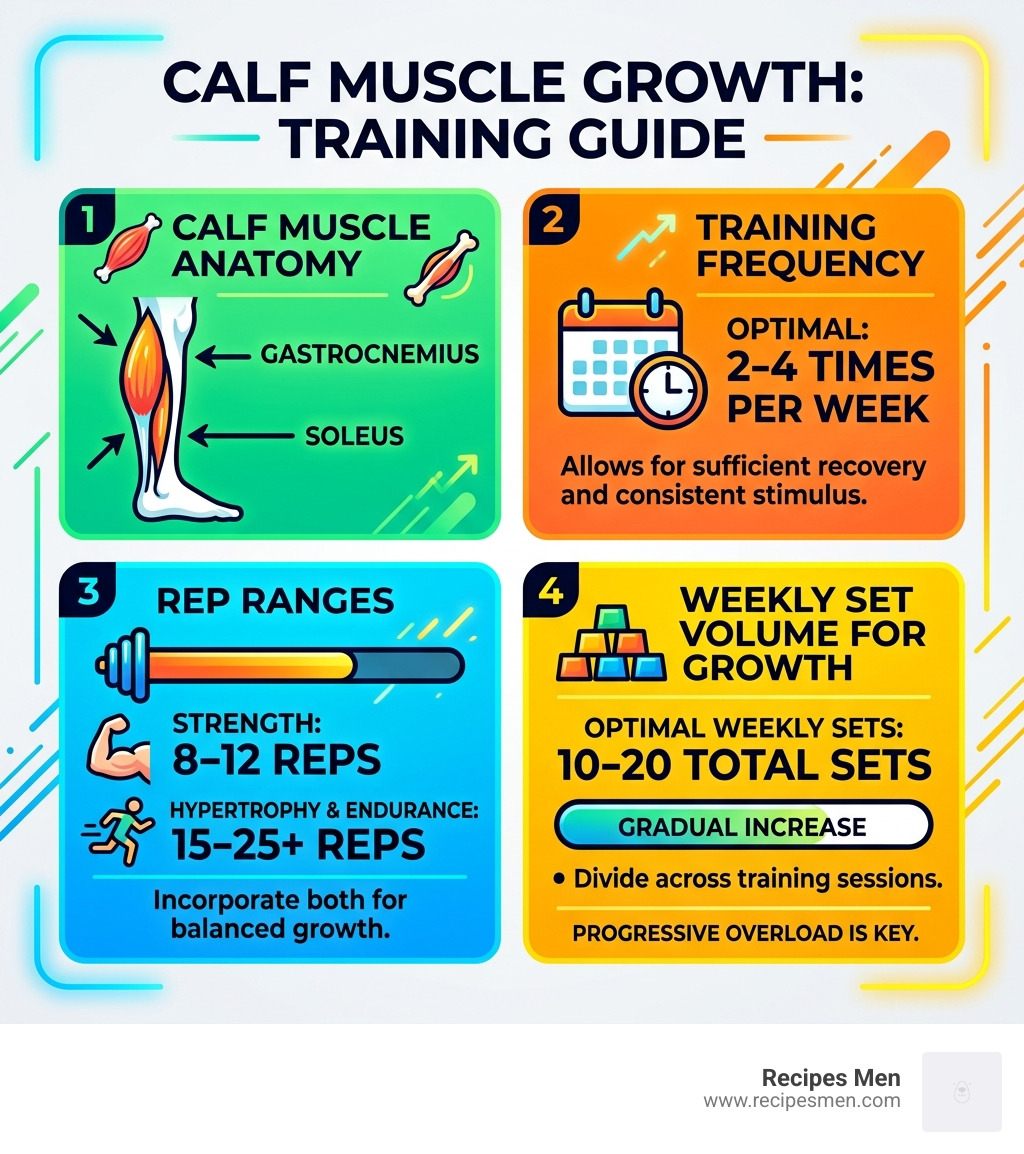
Understanding Calf Anatomy: Gastrocnemius vs. Soleus
To build an effective calf raise workout routine, we first need to understand what we are actually training. The calf isn’t just one big lump of muscle; it’s a complex group known as the triceps surae.
The Gastrocnemius (The “Show” Muscle)
The gastrocnemius is the larger, diamond-shaped muscle that most people think of when they hear “calves.” It has two heads (medial and lateral) and is unique because it crosses two joints: the knee and the ankle. Because it attaches above the knee, it is most active when your legs are straight. This is why 4 Powerhouse Calf Exercises | Cal-Fit often emphasize standing movements.
The Soleus (The “Power” Muscle)
The soleus sits underneath the gastrocnemius. It’s a flatter, wider muscle that only crosses the ankle joint. Interestingly, the soleus makes up roughly 60% of your total calf muscle mass. Unlike the gastrocnemius, the soleus is most active when the knee is bent. If you only do standing raises, you are ignoring more than half of your calf potential!
Muscle Fibers and Health
The soleus is a marathon runner of a muscle, containing up to 80% slow-twitch fibers in some people. This means it responds well to higher repetitions and longer time under tension. Both muscles converge into the Achilles tendon. Strengthening these muscles isn’t just about aesthetics; it’s vital for tendon health. In fact, eccentric calf exercises benefit people suffering from Achilles tendinopathy in around 60% of cases.
To ensure you have the energy to power through these high-rep sets, check out The Best Leg Day Meal Prep Strategies For Serious Gains to fuel your lower body workouts properly.
The Ultimate Calf Raise Workout Routine for Every Level
Building calves in April 2026 requires more than just “luck” or “genetics.” It requires progressive overload—the gradual increase of stress placed upon the body during exercise. Because we use our calves for walking every day, they are incredibly resilient. To make them grow, we have to hit them with more volume and frequency than other muscle groups.
We recommend training calves 2-4 times per week. Since they recover quickly (usually within 24–48 hours), high frequency is the “secret sauce” for growth.
| Feature | Beginner Routine | Advanced Routine |
|---|---|---|
| Frequency | 2 times per week | 3-4 times per week |
| Total Weekly Sets | 6-8 sets | 12-16 sets |
| Primary Goal | Form and Mind-Muscle Connection | Hypertrophy and Intensity |
| Intensity | Bodyweight / Light Weight | Heavy Loads / Drop Sets |
If you prefer training without a gym, you can Master Your Own Weight With This Bodyweight Calisthenics Routine to build a solid foundation.
Beginner Calf Raise Workout Routine
For beginners, the goal is to master the range of motion. Many people “bounce” at the bottom of a calf raise, using the Achilles tendon like a spring. We want the muscle to do the work, not the tendon.
- Standing Bodyweight Calf Raises: 3 sets of 12-15 reps. Use a wall or sturdy chair for balance.
- Seated Calf Raises (using a chair and household weights): 3 sets of 15 reps.
- Focus: A 2-second pause at the top (the “squeeze”) and a 3-second descent (the “stretch”).
This routine is perfect for those who need to How To Master An Easy 30 Minute Workout At Home while still seeing real progress.
Advanced Calf Raise Workout Routine
Once you can easily perform 20 bodyweight reps, it’s time to turn up the heat. Advanced lifters should focus on Best Workouts for Strengthening Your Calves: Build Powerful Lower Legs – Fitness RX for Men which include weighted variations and intensity finishers.
- Weighted Standing Calf Raises: 4 sets of 8-12 reps (Heavy).
- Seated Calf Raise Machine: 4 sets of 15-20 reps.
- Single-Leg Deficit Raises: 3 sets to failure.
- Intensity Technique: Use a 30:30 work-to-rest ratio. Perform 30 seconds of reps, rest for 30 seconds, and repeat for 4 minutes. This creates massive metabolic stress, which is great for those stubborn slow-twitch fibers.
Essential Variations and Proper Form
To get the most out of your calf raise workout routine, you need to vary the movement. Different angles and knee positions target different areas of the lower leg.
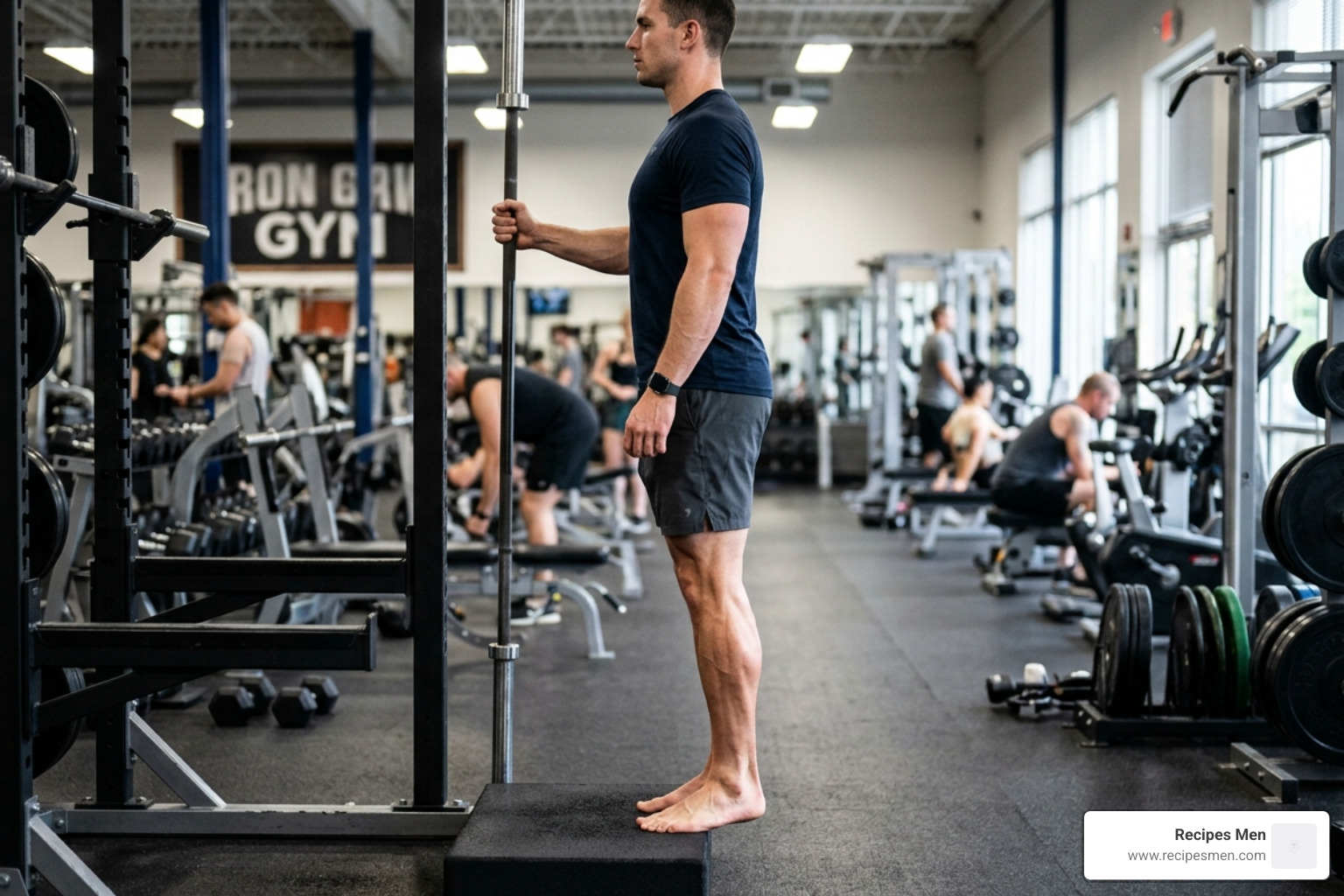
1. Standing Calf Raise (Gastrocnemius Focus)
Stand with the balls of your feet on the edge of a step. Keep your knees straight but not locked. Lower your heels below the level of the step to get a deep stretch. Drive up as high as possible. Avoid the common mistake of “rushing” the reps.
2. Seated Calf Raise (Soleus Focus)
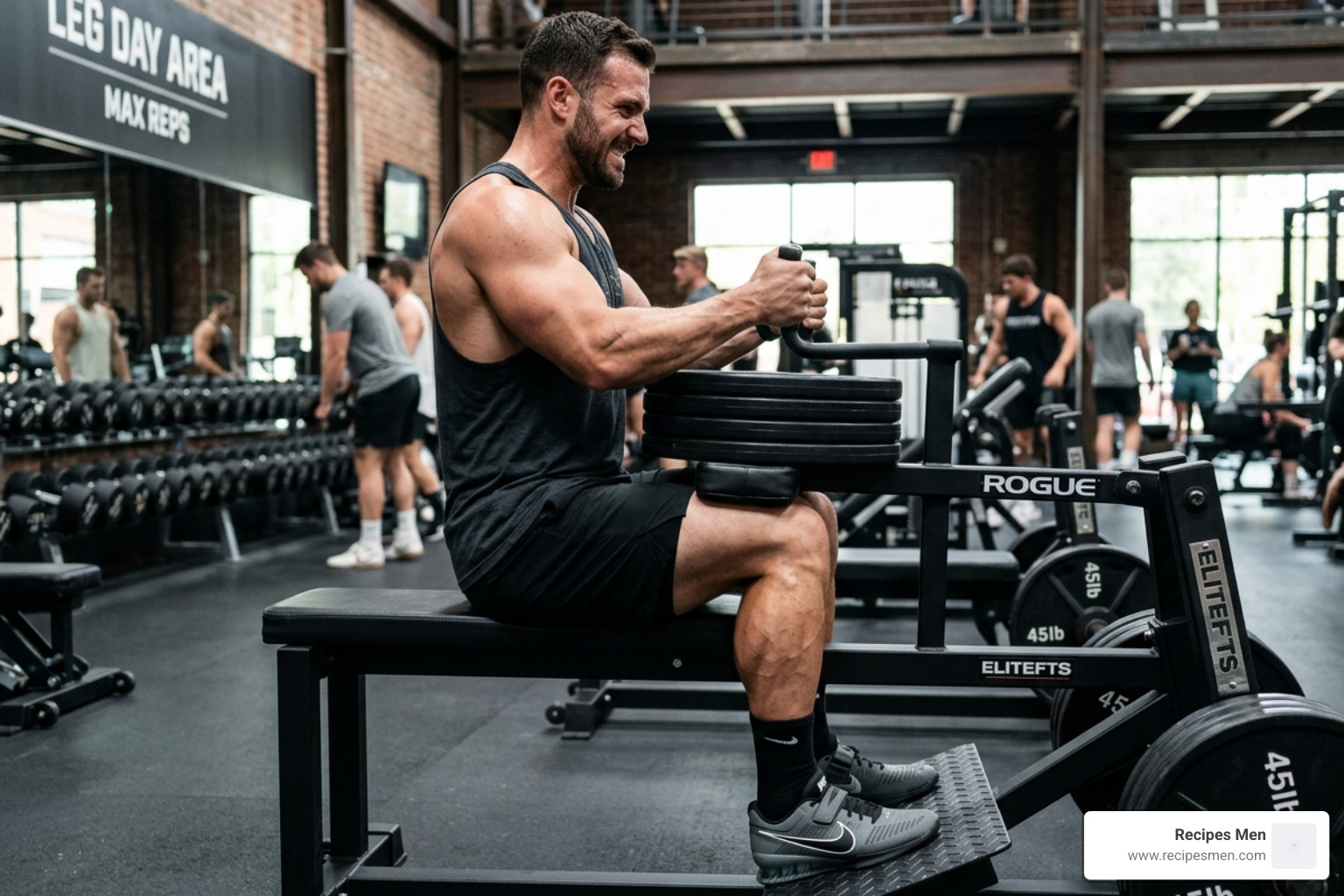
Sit with your knees bent at a 90-degree angle. Place a weight (or the machine pad) across your lower thighs. Lift your heels by pushing through the balls of your feet. Because the knee is bent, the gastrocnemius is “disadvantaged,” forcing the soleus to take the brunt of the load.
3. Donkey Calf Raise
This was a favorite of old-school bodybuilders. Bend forward at the hips, resting your arms on a bench or railing. Have a partner sit on your lower back (or use a specialized machine). This position provides a unique stretch on the gastrocnemius that is hard to replicate elsewhere.
4. Single-Leg Deficit Raise
Unilateral (one-leg) training is essential for fixing imbalances. If one calf is smaller than the other, always start with the weaker side and only do as many reps on the strong side as the weak side could manage. To add resistance at home, Master The Basics With These Essential Home Dumbbell Moves by holding a single dumbbell on the working side.
Why Your Calves Aren’t Growing and How to Fix It
“It’s just my genetics!” We’ve all heard it—and maybe said it. While genetics do determine where your muscle belly attaches (high calves vs. low calves), they don’t prevent growth entirely.
The real reasons calves don’t grow are usually:
- Insufficient Range of Motion: Most people only do the middle 50% of the movement. You must go all the way down into a deep stretch and all the way up onto your tiptoes.
- Too Much Momentum: If you are bouncing, your Achilles tendon is doing the work. Stop at the bottom for 1 full second to kill the “stretch reflex” before pushing back up.
- Ignoring the Tibialis Anterior: This is the muscle on the front of your shin. If it’s weak, it can limit your ankle mobility, which in turn limits your calf range of motion. Try adding 2 sets of “toe raises” (lifting your toes toward your shins) to your routine.
- Low Frequency: Walking 10,000 steps a day is a “low-intensity” stimulus for your calves. To trigger growth, you need “high-intensity” resistance training multiple times a week.
According to Best Calf Exercises for Size and Strength | LoadMuscle , the sweet spot for stubborn calves is 10-16 direct sets per week. If you’re only doing 3 sets once a week, you aren’t giving them a reason to change.
Frequently Asked Questions about Calf Training
Can I train calves every day?
Technically, you can, but we don’t recommend it. While calves recover fast, training them every single day can lead to overuse injuries like tendonitis. Aim for 3-4 sessions a week with at least 24 hours of rest between hits. This allows for muscle fiber repair and prevents chronic fatigue.
Why are calves so hard to grow?
As mentioned, they are “built” for endurance. To overcome this, you need to use a variety of rep ranges. Hit them heavy (5-8 reps) to target the fast-twitch fibers of the gastrocnemius, and hit them light/high-rep (15-25 reps) to exhaust the slow-twitch fibers of the soleus. Standing Calf Raise: How to Do It, Variations, & Benefits | BODi suggests that even beginners may need significant weight (70+ lbs) to stimulate growth because the calves are already so strong from carrying your body weight.
Do I need gym machines for big calves?
Not at all! You can build impressive calves using a staircase and a backpack full of books. The key is the “deficit”—letting your heels hang off the edge of a step. This provides the full range of motion that flat-ground raises lack. Resistance bands and dumbbells are also excellent home alternatives.
Conclusion
Building a powerful lower body requires attention to detail. A consistent calf raise workout routine is the bridge between looking like you lift and actually having a balanced, athletic physique. By targeting both the gastrocnemius and the soleus, using a full range of motion, and applying progressive overload, you can overcome even the most “stubborn” genetics.
Hinge Health members have seen an average 68% reduction in pain within 12 weeks by including calf exercises in their mobility work. Whether your goal is to jump higher, run faster, or just fill out your socks, the effort you put in today will pay off in stability and strength tomorrow.
For more expert advice on leg training and overall fitness, visit our Category/Exercicios E Treinos section. Keep pushing, stay consistent, and we’ll see you at the gym!
Explore more tips at https://www.recipesmen.com/.

