
Lean Muscle Gain Dinners: Recipes for Success
Why Your Diet Is the Real Key to Building Muscle
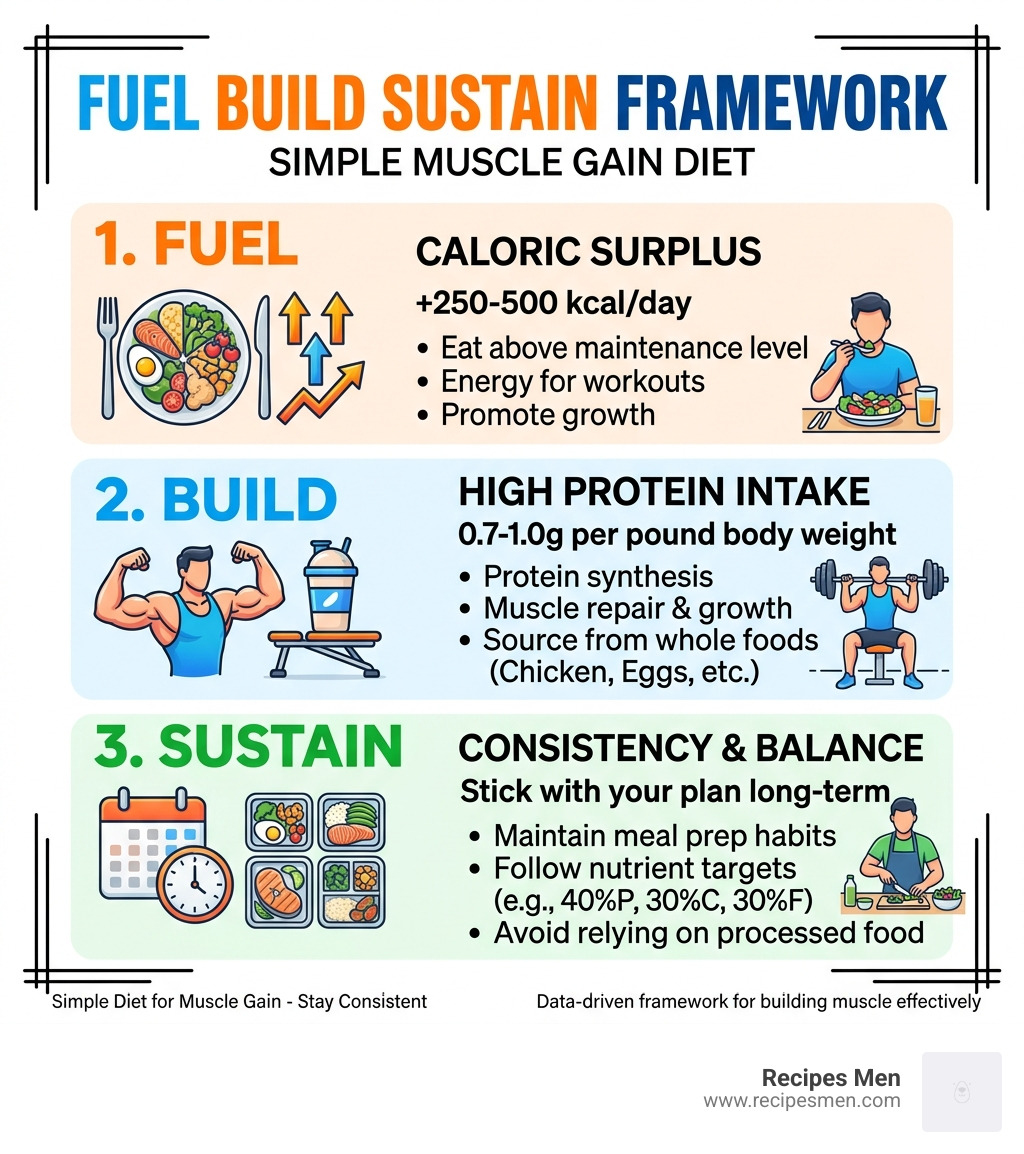
A simple diet for muscle gain comes down to three things: eat enough calories, hit your protein target, and stay consistent.
Here’s a quick breakdown to get you started:
| Step | What to Do |
|---|---|
| 1. Set your calories | Eat 250–500 calories above your daily maintenance level |
| 2. Hit your protein | Aim for 0.7–1g of protein per pound of body weight daily |
| 3. Balance your macros | Target roughly 40% protein, 30% carbs, 30% healthy fats |
| 4. Choose whole foods | Chicken, eggs, salmon, Greek yogurt, oats, brown rice |
| 5. Stay consistent | Meal prep weekly to avoid falling back on fast food |
Most guys in their 30s already know they should “eat more protein.” But knowing and doing are two different things — especially when you’re juggling work, family, and the daily grind.
The good news? Building muscle doesn’t require a complicated plan or hours in the kitchen. It requires the right foods, in the right amounts, eaten consistently.
Research backs this up. Studies point to 1.6 to 2.2 grams of protein per kilogram of body weight as the sweet spot for muscle growth. For a 180-pound man, that’s roughly 130–180 grams of protein per day — achievable with a few solid meals and smart prep.
This guide gives you exactly that: a practical, no-fluff plan with real dinners and meals you’ll actually want to eat.
The Science of a Simple Diet for Muscle Gain
Building muscle, or hypertrophy, isn’t just about moving heavy weights in the gym; it’s about providing the “bricks and mortar” for construction. Think of your workout as a demolition crew that creates micro-tears in your muscle fibers. Your diet is the delivery truck that brings in new materials to repair those fibers, making them bigger and stronger than before.
To get this right in April 2026, we have to look at energy balance. You cannot build a house without extra materials, and you cannot build muscle without a caloric surplus. This means consuming more energy than your body burns during its daily activities.

We recommend a “lean bulk” approach. In the past, people would “dirty bulk” by eating anything in sight, but research now shows that a massive surplus often leads to more fat gain than muscle thickness. By aiming for a modest 250–500 calorie surplus above your Total Daily Energy Expenditure (TDEE), you provide enough fuel for growth without needing a “cutting” phase that lasts six months. If you want to dive deeper into the basics of keeping things streamlined, check out our guide to Stop Overcomplicating Your Gains The Ultimate Simple Diet Guide.
Macronutrient Ratios for a Simple Diet for Muscle Gain
While total calories dictate whether you gain weight, macronutrients (macros) dictate what kind of weight you gain. For most of us at Recipes Men, a ratio of 40% protein, 30% carbohydrates, and 30% healthy fats is a fantastic starting point.
| Macro Split | Purpose | Best For |
|---|---|---|
| 40/30/30 | High Protein / Moderate Carb | Lean muscle gain and fat control |
| 25/50/25 | Moderate Protein / High Carb | High-intensity athletes needing max glycogen |
Carbohydrates are not the enemy; they are the primary fuel source for your brain and muscles. They replenish muscle glycogen, which is the energy stored inside your muscles that helps you power through that last set of squats. Healthy fats, on the other hand, support hormone production, including testosterone, which is vital for muscle repair.
Protein Requirements for Optimal Growth
Protein is the “master builder.” It provides the amino acids necessary for muscle protein synthesis (MPS). To maximize growth, you should aim for 1.6 to 2.2 grams of protein per kilogram of body weight (or roughly 0.7 to 1 gram per pound).
One critical concept we focus on is the “leucine threshold.” Leucine is an amino acid found in high-quality proteins that acts as a “light switch” for muscle growth. You need about 2.5 to 3 grams of leucine per meal to trigger this switch. This is why spreading your protein intake evenly across 4–5 meals is more effective than eating one giant steak at the end of the day. Consistent nitrogen balance throughout the day ensures your body stays in an “anabolic” (building) state rather than a “catabolic” (breaking down) state.
Essential Foods to Prioritize and Avoid
A simple diet for muscle gain is only as good as the quality of the fuel you put in. We want nutrient-dense whole foods that provide vitamins and minerals alongside their macros.
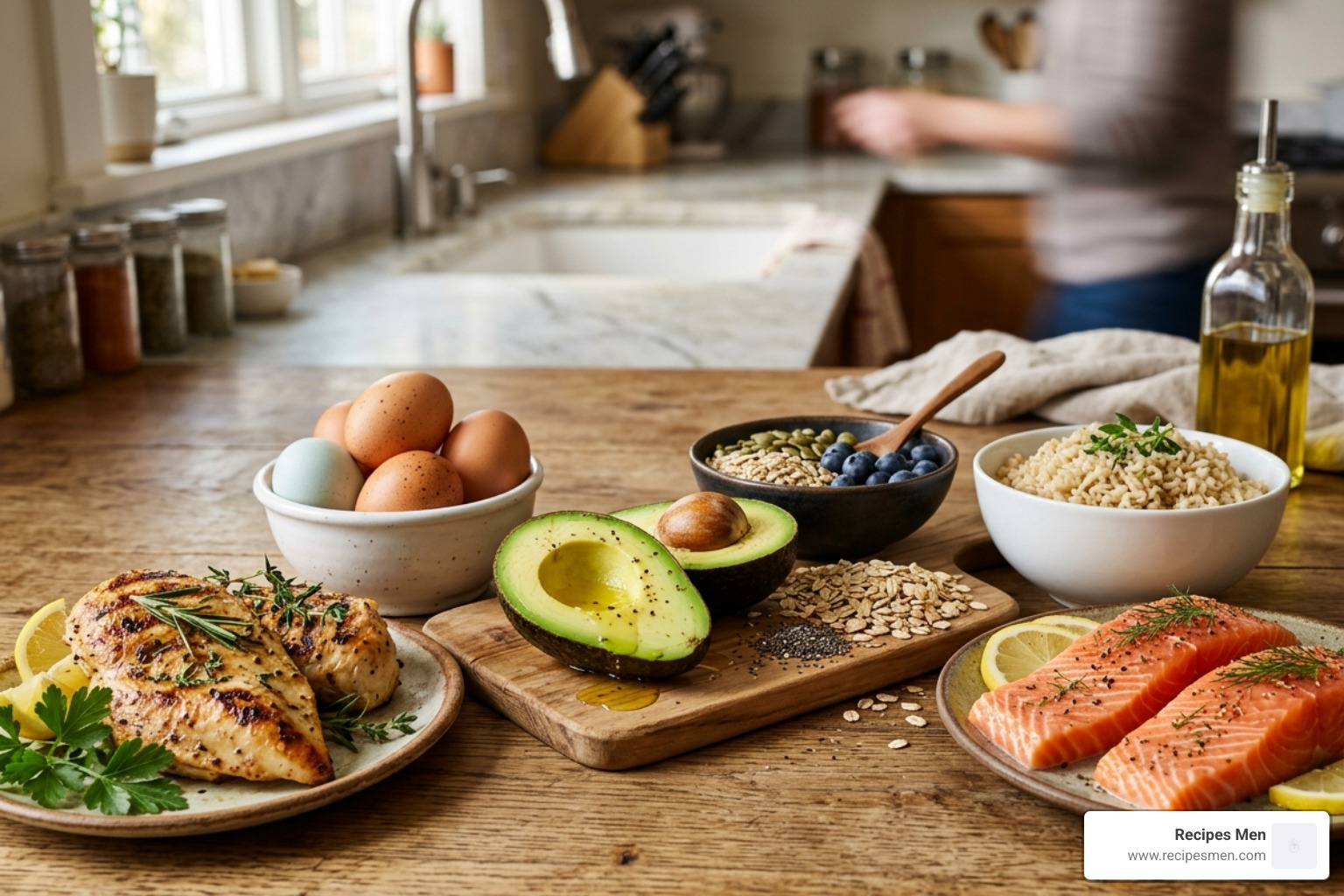
Prioritize these staples:
- Lean Poultry: Chicken breast and turkey provide high protein with low saturated fat.
- Wild-Caught Salmon: Offers a double whammy of protein and omega-3 fatty acids to fight inflammation.
- Greek Yogurt: Contains nearly double the protein of regular yogurt and provides slow-digesting casein protein.
- Complex Carbs: Oats, brown rice, quinoa, and sweet potatoes provide sustained energy.
- Nitrate-Rich Greens: Spinach and kale have been linked to improved muscle strength.
If you’re worried about the cost of all this meat, don’t sweat it. We’ve put together The Broke Athletes Guide To Budget Protein Foods to help you hit your targets without emptying your bank account.
High-Protein Staples and Plant-Based Swaps
You don’t have to be a carnivore to get big. While animal proteins are “complete” (meaning they have all nine essential amino acids), you can achieve the same results with plant-based options by combining sources.
Top 10 Muscle-Building Foods:
- Whole Eggs (The gold standard for protein quality)
- Chicken Breast
- Greek Yogurt
- Lean Beef
- Salmon
- Tofu/Tempeh (Excellent plant-based complete proteins)
- Cottage Cheese (High in slow-digesting casein)
- Lentils and Beans
- Quinoa
- Whey Protein Isolate
Foods to Limit for Clean Gains
To keep your gains “clean,” you need to avoid “empty calories” that provide energy without nutrition.
- Refined Sugars: Soda and candy cause insulin spikes that can lead to fat storage.
- Processed Meats: High sodium and nitrates can impact heart health.
- Alcohol: It interferes with protein synthesis and dehydrates your muscles.
- Fried Foods: Trans fats increase inflammation, slowing down your recovery.
How to Master Meal Prep for Consistent Gains
The biggest reason most diets fail isn’t a lack of willpower; it’s decision fatigue. When you come home at 7:00 PM after a long day, you don’t want to calculate macros; you want to eat. Meal prep removes the choice.
At Recipes Men, we advocate for the “Food Matrix Method.” Instead of cooking 10 identical meals of “chicken, broccoli, and rice,” you batch-cook components.
- Prep 2-3 Proteins: Grilled chicken, lean ground beef, and boiled eggs.
- Prep 2 Carbs: A big pot of brown rice and roasted sweet potatoes.
- Chop Veggies: Keep fresh greens and peppers ready to go.
This allows for “flavor rotation.” Use different spice profiles (Mexican, Mediterranean, Asian) to keep your meals interesting so you don’t grow to hate your food. For those heavy training days, check out The Best Leg Day Meal Prep Strategies For Serious Gains.
Timing Your Nutrients for Performance
While total daily intake is most important, timing can give you a 10% edge.
- Pre-Workout: Eat complex carbs and moderate protein 90 minutes before training to “load the gun.”
- Post-Workout: Consume 20–40g of fast-digesting protein and carbs within 90 minutes of your last rep to “pull the trigger” on growth.
- Before Bed: A serving of cottage cheese or casein protein provides a slow release of amino acids while you sleep.
- Hydration: Muscles are about 75% water. Aim for 3–4 liters a day, and don’t forget electrolytes if you’re sweating heavily.
7-Day Simple Diet for Muscle Gain Sample Menu
Following a simple diet for muscle gain shouldn’t feel like a chore. This sample menu for April 2026 focuses on high-protein, flavorful meals that are easy to assemble. For more inspiration, you can always look at A Weekly Meal Plan for Muscle Gain.
High-Protein Breakfast and Lunch Ideas
Start your day strong. If you’re in a rush, How To Make High Protein Overnight Oats For Muscle Growth is a lifesaver.
- Breakfast: Loaded omelet muffins with spinach and turkey sausage, or Greek yogurt parfaits with berries and hemp seeds.
- Lunch: Turkey BLT wraps using whole-wheat tortillas, or Quinoa power bowls with chickpeas, cucumbers, and a lemon-tahini dressing.
- Snacks: Cottage cheese with pineapple, or a handful of almonds and a protein shake.
7-Day Simple Diet for Muscle Gain Sample Dinner Plan
These dinners are the cornerstone of your success. If you need more variety, check out these Stop Being Small With These Simple Bulking Recipes.
- Monday: Garlicky Shrimp and Brown Rice with steamed broccoli.
- Tuesday: Pesto Salmon Pasta using whole-grain noodles and cherry tomatoes.
- Wednesday: Lemon Chicken Orzo Soup with kale and a side of sourdough.
- Thursday: Stuffed Cabbage Soup with lean ground beef and rice.
- Friday: Baked Cod and Sweet Potatoes with roasted asparagus.
- Saturday: Steak and Asparagus (The classic “muscle meal”).
- Sunday: Tofu Stir-fry with snap peas, carrots, and ginger-soy sauce.
Troubleshooting and Tracking Your Progress
You can’t manage what you don’t measure. To ensure your simple diet for muscle gain is working, you need to track your weight and your lifts.
A healthy weight gain rate is 0.5–1% of your body weight per week. For a 200-pound man, that’s 1–2 pounds a month. If you’re gaining faster, you might be adding too much fat. If you’re not gaining at all, it’s time to add another 200 calories to your daily total. This is part of the “Lean Bulking” philosophy found in The Broke Mans Guide To Clean Bulking.
Don’t forget progressive overload. If you are eating more but lifting the same weights you did three months ago, those extra calories have nowhere to go but your waistline. Your diet provides the energy; your training provides the reason for your muscles to grow.
The Role of Supplements for Beginners
Supplements are exactly that—supplements to a solid diet. They are not magic pills.
- Creatine Monohydrate: The most researched supplement in history. 3–5 grams daily increases strength and muscle volume.
- Whey Protein Isolate: A convenient way to hit your protein targets, especially post-workout.
- Vitamin D & Omega-3s: Essential for general health and reducing muscle soreness.
- Magnesium & Iron: Support muscle contraction and oxygen transport.
Frequently Asked Questions about Muscle Building Diets
How much protein do I need per meal?
Aim for 25–40 grams of protein per meal. This amount is usually enough to hit the leucine threshold required to trigger muscle protein synthesis. Spreading this out across 4–5 sittings ensures your body has a steady supply of amino acids for repair throughout the day.
Can I build muscle and lose fat at the same time?
Yes, this is called “body recomposition.” It is most common in beginners or those returning to the gym after a long break. To achieve this, you should eat at “maintenance calories” (the amount needed to stay the same weight) while keeping your protein intake very high (around 1 gram per pound of body weight).
Are supplements necessary for muscle gain?
No, they are not strictly necessary. You can get everything you need from whole foods. However, supplements like whey protein and creatine are highly convenient and cost-effective ways to ensure you hit your nutritional goals, especially on busy days in April 2026.
Conclusion
At Recipes Men, we believe that building a stronger body shouldn’t be a source of stress. A simple diet for muscle gain is built on the foundation of sustainable habits, not perfection. If you miss a meal or have a “cheat day,” don’t sweat it—just get back on track with your next plate.
Focus on the long-term strength and health of your body. By mastering these simple recipes and prep strategies, you’re not just building muscle for today; you’re building a lifestyle that will serve you for years to come. For more recipes and tips, visit us at https://www.recipesmen.com/. Let’s get to work!

