
Pack Your Pantry with Foods Rich in Protein for Muscle Building
Why Protein Is the Foundation of Every Muscle-Building Diet
foods rich in protein for muscle building are the single most important thing to get right in your diet if you want to gain lean muscle.
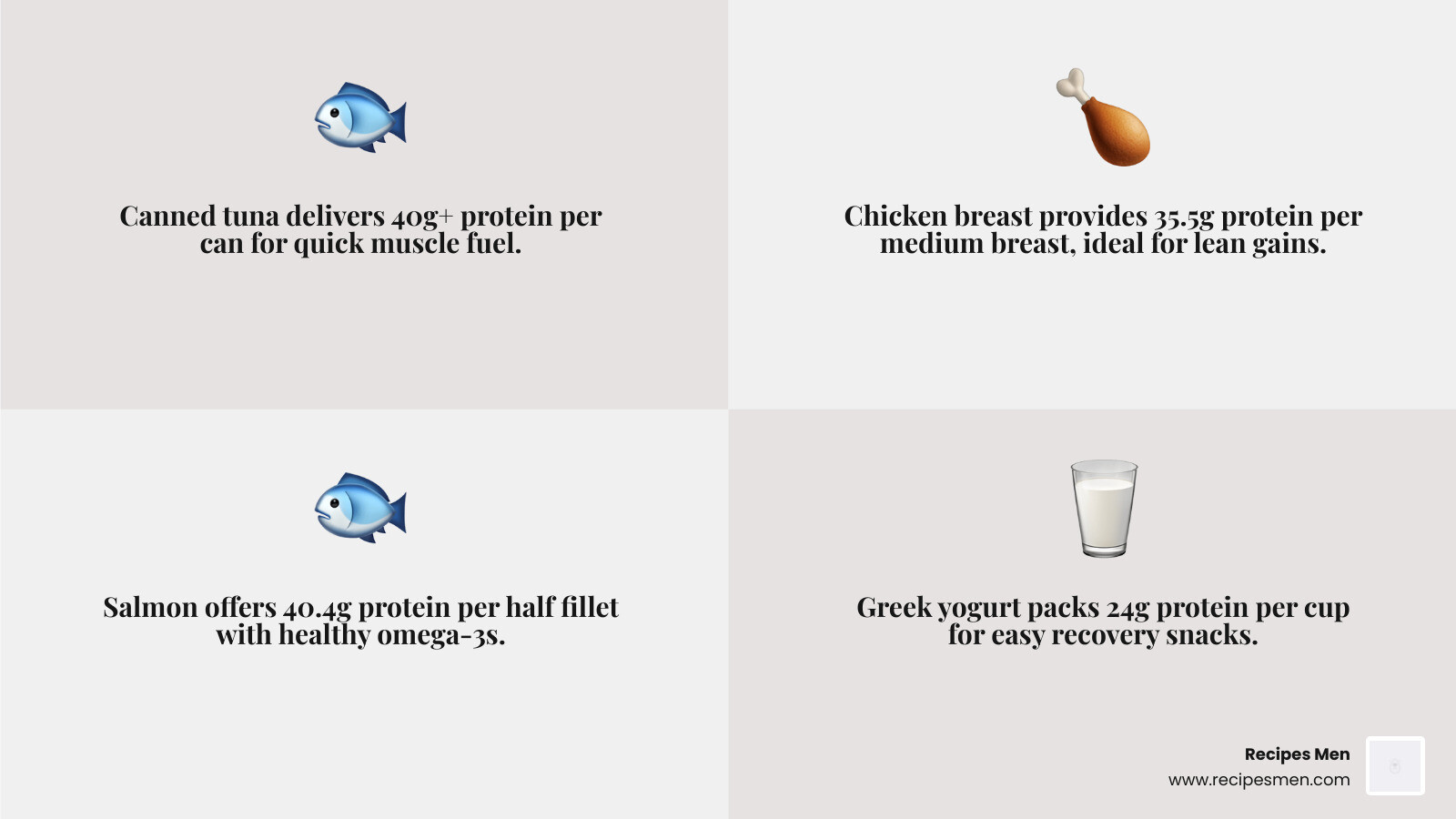
Here are the top high-protein foods to stock up on:
| Food | Protein Per Serving |
|---|---|
| Canned tuna | 40g+ per can |
| Chicken breast | 35.5g per medium breast |
| Salmon | 40.4g per half fillet |
| Cottage cheese | 28g per cup |
| Greek yogurt | 24g per cup |
| Peanuts | 41g per cup |
| Almonds | 30g per cup |
| Edamame | 18g per cup |
| Lentils | 17.9g per cup |
| Eggs | 6.3g per large egg |
Protein gives your body the amino acids it needs to repair and grow muscle tissue. Without enough of it, your workouts go to waste — your muscles simply can’t rebuild properly.
The good news? You don’t need a complicated plan. You just need the right foods in your pantry.
Experts recommend consuming 0.5 to 0.8 grams of protein per pound of body weight each day to build muscle. For a 180-pound guy, that’s roughly 90 to 145 grams daily.
Both animal and plant-based foods can get you there. Below, you’ll find the best options — with exact protein counts and simple ways to use them.
How Much Protein Do You Actually Need?
It’s the age-old question in the gym locker room: “How much protein should I be eating?” As we head into April 2026, the science remains clear but nuanced.
The Recommended Daily Allowance (RDA) for a sedentary person is a modest 0.8 grams of protein per kilogram of body weight (about 0.36 grams per pound). However, if you’re reading this, you probably aren’t just sitting around. For those of us hitting the weights, that number needs to climb.
Research suggests that to maximize muscle building, we should aim for 1.4 to 2 grams of protein per kilogram of body weight per day. If you prefer pounds, the American College of Sports Medicine suggests active adults target 0.5 to 0.8 grams per pound.
Does it vary? Absolutely.
- Body Weight: A 220-pound linebacker needs significantly more than a 150-pound marathon runner.
- Activity Level: The harder you train, the more “micro-tears” you create in your muscle fibers, requiring more protein for repair.
- Goals: If you are in a “bulking” phase, you might lean toward the higher end of the spectrum. If you’re maintaining, the lower end suffices.
We often recommend starting with the 0.8g per pound rule of thumb. It’s easy to calculate and ensures you aren’t leaving any “gains” on the table. If you’re looking for ways to hit these numbers without breaking the bank, check out The Broke Athletes Guide To Budget Protein Foods.
Top High-Protein Foods for Muscle Building
To build a physique that looks like it was carved from granite, we need a diverse roster of foods rich in protein for muscle building. We can’t just live on shakes alone! Our bodies crave the micronutrients found in whole foods.
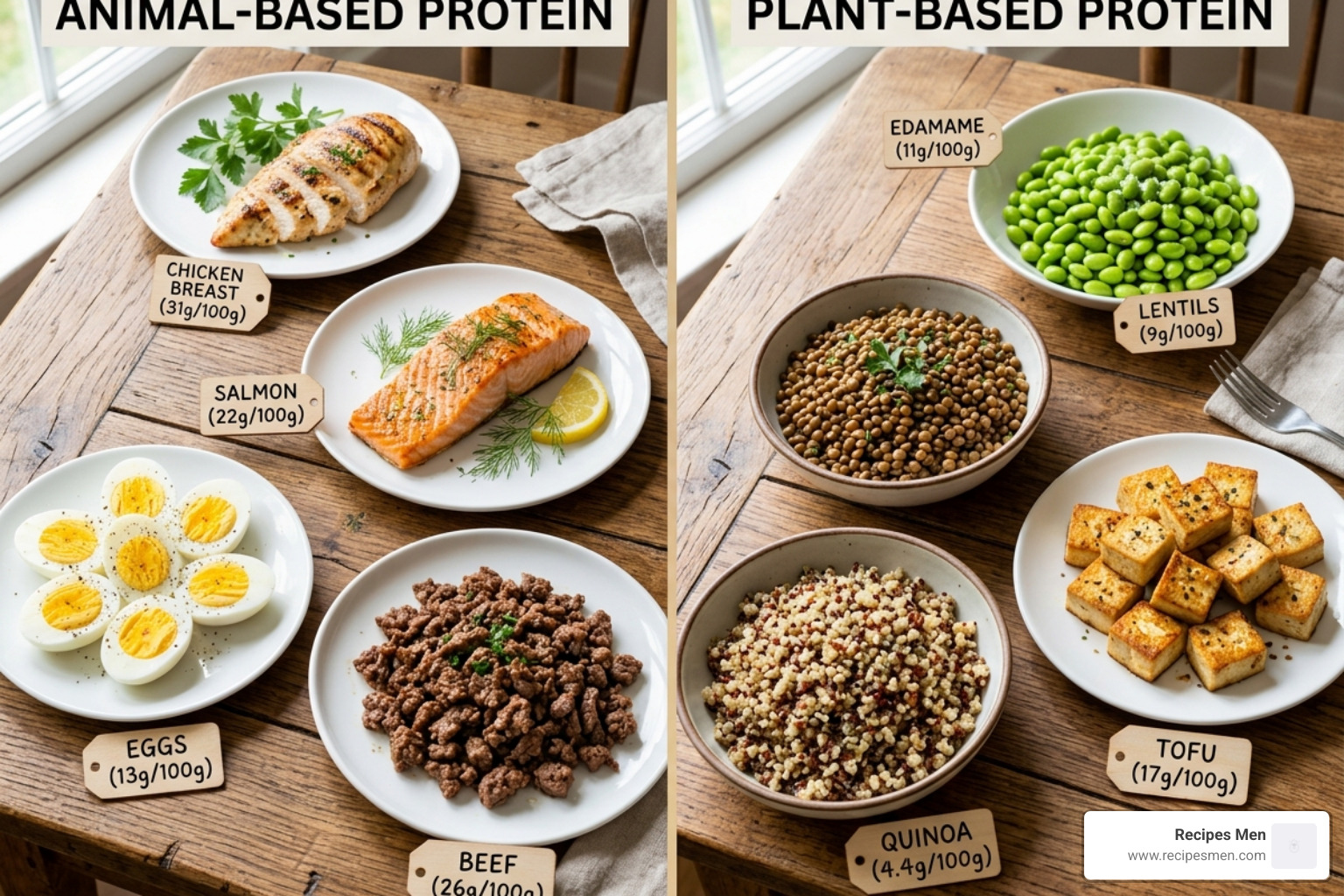
Animal-Based Powerhouses
Animal proteins are often called “complete” proteins because they contain all nine essential amino acids our bodies can’t make on their own.
- Chicken Breast: The gold standard. A 100g serving provides 27g of protein. It’s lean, versatile, and easy to meal prep. If you’re tired of dry, rubbery meat, see our guide on how to Stop Winging It And Start Prepping Chicken Breast For Weight Loss.
- Salmon: A half-fillet packs a massive 40.4g of protein. Plus, it’s loaded with Omega-3 fatty acids which help reduce muscle inflammation.
- Canned Tuna: This is the ultimate “emergency” protein. One can offers over 40g of protein. Just be mindful of mercury levels and try to stick to “light” tuna.
- Lean Beef: A 3.5 oz serving of 90% lean ground beef provides about 18.2g of protein. It’s also a top source of creatine and iron.
- Greek Yogurt: This is a secret weapon. One cup of plain Greek yogurt has about 24g of protein—double what you find in regular yogurt.
- Eggs: One large hard-boiled egg contains 6.3g of protein. While people used to fear the yolk, we know now that the whole egg is superior for muscle protein synthesis.
- Cottage Cheese: One cup of low-fat cottage cheese delivers 28g of protein. It’s rich in casein, a slow-digesting protein perfect for bedtime. We truly believe Why Cottage Cheese Is The Secret Protein Weapon You Need.
- Turkey Breast: Very similar to chicken but often even leaner. A 3-ounce serving has about 26g of protein.
- Bison: A great alternative to beef. It’s leaner and provides about 22g of protein per 3-ounce serving, with less risk of heart disease markers.
Plant-Based Muscle Builders
Gone are the days when people thought you couldn’t build muscle on a plant-heavy diet. You just need to be a bit more strategic.
- Edamame: One cup provides 18g of protein. It’s one of the rare plant sources that is a complete protein.
- Lentils: A cup of cooked lentils offers 17.9g of protein and a healthy dose of fiber.
- Tofu & Tempeh: Soy-based proteins are fantastic. Tofu has about 10g per half-cup, while tempeh is even denser at 18g per 3-ounce serving.
- Quinoa: A cooked cup provides 8g of protein. It’s a complete protein and a great complex carb for glycogen replenishment.
- Peanuts & Almonds: Peanuts offer 7g per ounce, and almonds provide 6g. They are calorie-dense, so watch the portions!
- Seitan: Often called “wheat meat,” it packs a staggering 75g of protein per 100g, making it one of the densest plant sources available.
Understanding Protein Quality: Complete vs. Incomplete
Not all protein is created equal. Proteins are made of amino acids—the “building blocks” of muscle. There are 20 amino acids in total, but 9 are “essential,” meaning we have to eat them because our bodies can’t manufacture them.
- Complete Proteins: These contain all 9 essential amino acids in the right proportions. Most animal products (meat, dairy, eggs) and a few plant sources (soy, quinoa, buckwheat, edamame) are complete.
- Incomplete Proteins: Most plant-based foods (beans, nuts, grains) lack one or more essential amino acids.
Does this mean plant proteins are useless? Not at all! We just need to practice “protein pairing.” If you eat rice (low in lysine) with beans (high in lysine), you’ve created a complete protein profile. As long as you eat a variety of plant foods throughout the day, your body will have all the tools it needs to build muscle.
One specific amino acid to watch is Leucine. It acts as the “on switch” for muscle protein synthesis. Eggs, dairy, and soy are particularly high in Leucine, which is why they are so effective for growth.
Beyond Protein: The Supporting Cast
While we are focusing on foods rich in protein for muscle building, we can’t ignore the rest of the plate. Muscle growth is a team effort.
- Carbohydrates: These are your body’s primary fuel source. They replenish muscle glycogen, which is the energy stored in your muscles. Without enough carbs, your body might actually start breaking down muscle tissue for energy. Think oats, brown rice, and sweet potatoes.
- Healthy Fats: Omega-3s (found in salmon and walnuts) are anti-inflammatory. They help your muscles recover faster after a brutal leg day. Fats also support hormone production, including testosterone.
- Magnesium and Zinc: Magnesium helps with muscle contraction and sleep, while Zinc is vital for protein synthesis and immune function. You’ll find these in hemp seeds, pumpkin seeds, and shellfish.
- Iron: Essential for delivering oxygen to your hard-working muscles. Lean beef and spinach are your friends here.
For a deeper dive into balancing these, check out our guide: Stop Overcomplicating Your Gains The Ultimate Simple Diet Guide.
How to Incorporate High-Protein Foods into Your Routine
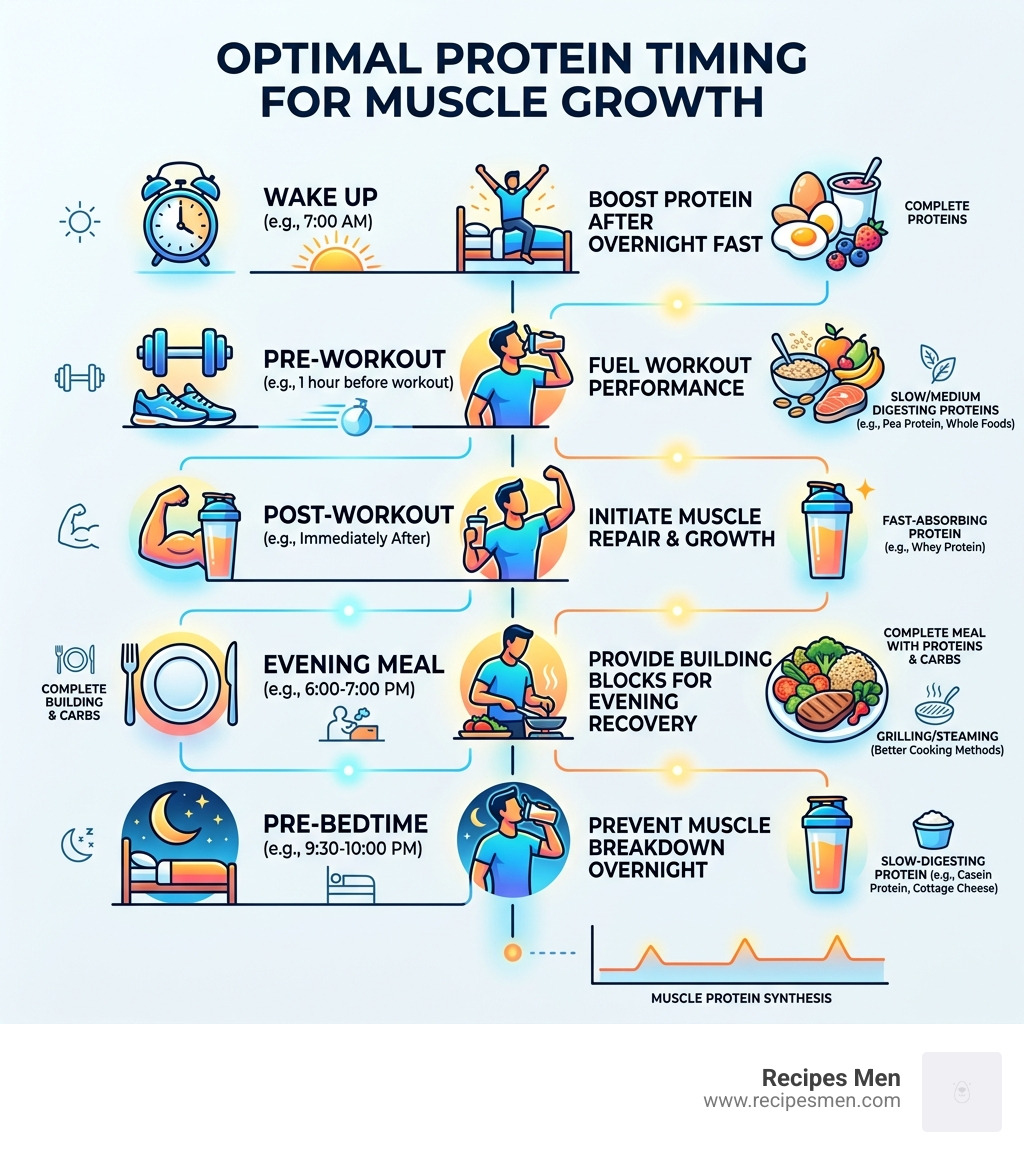
Knowing what to eat is half the battle; actually eating it is the other half. We’ve found that the “20-gram rule” works best: aim for at least 20-30 grams of protein at every meal and snack.
- Breakfast: Swap sugary cereal for eggs or Greek yogurt parfaits. If you’re in a rush, How To Make High Protein Overnight Oats For Muscle Growth is a life-saver.
- Snacks: Keep jerky, almonds, or hard-boiled eggs in your bag. You can find more ideas here: 10 Awesome Quick High Protein Snacks To Try Today.
- Lunch/Dinner: Always start your meal planning with the protein source (chicken, salmon, tofu) and build the rest of the meal around it. If you’re watching calories, try these Healthy Dinners High In Protein No Carbs No Problem.
- Post-Workout: This is the “anabolic window.” While it’s not as tiny as people used to think, consuming protein within 30-60 minutes of training helps jump-start recovery.
The Role of Supplements: When to Shake It Up
We always prefer whole foods, but supplements have their place—especially for convenience.
- Whey Protein: The most studied supplement. It’s a complete protein and is absorbed very quickly, making it ideal for right after a workout.
- Casein Protein: The “slow” protein. It thickens in the stomach and releases amino acids over several hours. It’s perfect for a pre-bedtime shake to prevent muscle breakdown overnight.
- Soy and Pea Protein: Great plant-based alternatives that have been shown to be nearly as effective as whey for building mass.
- Creatine: One of the few supplements with mountains of evidence. It helps your muscles produce more energy during heavy lifting, leading to better gains over time.
A word of caution: In the U.S., supplements aren’t strictly regulated by the FDA. Always look for third-party testing (like NSF or Informed-Choice) to ensure you aren’t consuming banned substances or heavy metals.
Habits and Foods to Avoid
You can’t out-eat a bad lifestyle. If you’re serious about your gains, you need to limit these “muscle killers”:
- Added Sugars & Refined Carbs: Soda and pastries cause insulin spikes that can lead to fat gain rather than muscle gain.
- Alcohol: It’s a double whammy. It provides empty calories and can actually inhibit muscle protein synthesis and lower testosterone levels.
- Processed Meats: Bacon and deli meats are often high in sodium and saturated fats, which can negatively impact heart health.
- Inadequate Calories: You can’t build a house without enough bricks. If you aren’t in a slight calorie surplus (350-500 calories above maintenance), your body won’t have the energy to build new tissue. If you’re struggling to eat enough, try these Stop Being Small With These Simple Bulking Recipes.
Cooking and Timing for Optimal Growth
How you cook your foods rich in protein for muscle building matters. Frying chicken in a vat of oil adds unnecessary saturated fats and can degrade the quality of the protein.
- Best Methods: Grilling, steaming, poaching, or air-frying. These preserve the nutrients without adding junk.
- The Crockpot: For busy guys, the slow cooker is a godsend. You can throw in lean meats and veggies in the morning and have a protein feast ready by dinner. Check out Low Calorie Muscle Meals You Can Make In A Crockpot for inspiration.
Timing Strategy: Our bodies can only process about 20 to 40 grams of protein at a time for muscle building. This is why we recommend spreading your intake throughout the day. Eating 150g of protein in one sitting won’t work as well as five 30g servings.
Bedtime Protein: Consuming a slow-digesting protein like cottage cheese or a casein shake before bed helps your body repair muscle while you sleep.
Maximizing Your Gains: Training and Recovery
Diet is about 70% of the battle, but the other 30% happens in the gym and in bed.
- Strength Training: You must give your muscles a reason to grow. Focus on compound movements like squats, deadlifts, presses, and pull-ups. These recruit the most muscle fibers and trigger the greatest hormonal response.
- Rest: Muscles don’t grow in the gym; they grow while you sleep. Aim for 7-9 hours of quality shut-eye.
- The 48-Hour Rule: Avoid training the same muscle group two days in a row. Give each muscle at least 48 hours to recover. For example, if you did a massive leg workout, use our The Best Leg Day Meal Prep Strategies For Serious Gains to recover before hitting them again.
Building muscle is a marathon, not a sprint. By stocking your pantry with these foods rich in protein for muscle building and staying consistent with your training, you’ll be well on your way to the physique you want by the time April 2026 rolls around.
For more expert advice and simple, muscle-building recipes, check out the rest of our guides at RecipesMen.com.
External Resources for Further Reading:
- 7 Foods High in Protein – WebMD
- High-protein foods: The best protein sources – Harvard Health
- 28 High Protein Foods to Help Build Lean Muscle – Verywell Health
- 21 High Protein Foods – Cleveland Clinic
- 10 High-Protein Foods That Help Support Muscle Growth – Health.com
- 25 Healthy High-Protein Foods for Muscle Gain – Good Housekeeping

