
Why Your Daily Diet for Men Actually Matters
A daily diet for men is the single biggest lever you can pull for energy, disease prevention, and long-term fitness — and most guys are leaving it on the table.
Here is a quick snapshot of what a healthy daily diet for men looks like:
| Category | Daily Target |
|---|---|
| Calories | 2,200–2,800 (moderately active) |
| Protein | ~0.84g per kg of body weight |
| Fiber | 25–34g (under 50); 28g (over 50) |
| Fruits | At least 2 cups |
| Vegetables | At least 2.5 cups |
| Fish | 2–3 servings per week |
| Potassium | 3,400mg |
| Fluids | 3.7 liters (~16 cups) |
Food is more than fuel. The right eating pattern can lower your risk of heart disease (the leading cause of death for men in the US), protect against prostate cancer, support muscle mass, and keep your energy steady all day.
The problem? Only one in three men hits the minimum daily target for fruit and vegetables. Most guys know what to eat — they just struggle with doing it consistently, especially with a packed schedule, work stress, and competing priorities.
This guide cuts through the noise. No complicated rules. No extreme diets. Just a clear, practical breakdown of what your plate should look like every single day.
Understanding the Daily Diet for Men: Calories and Macros

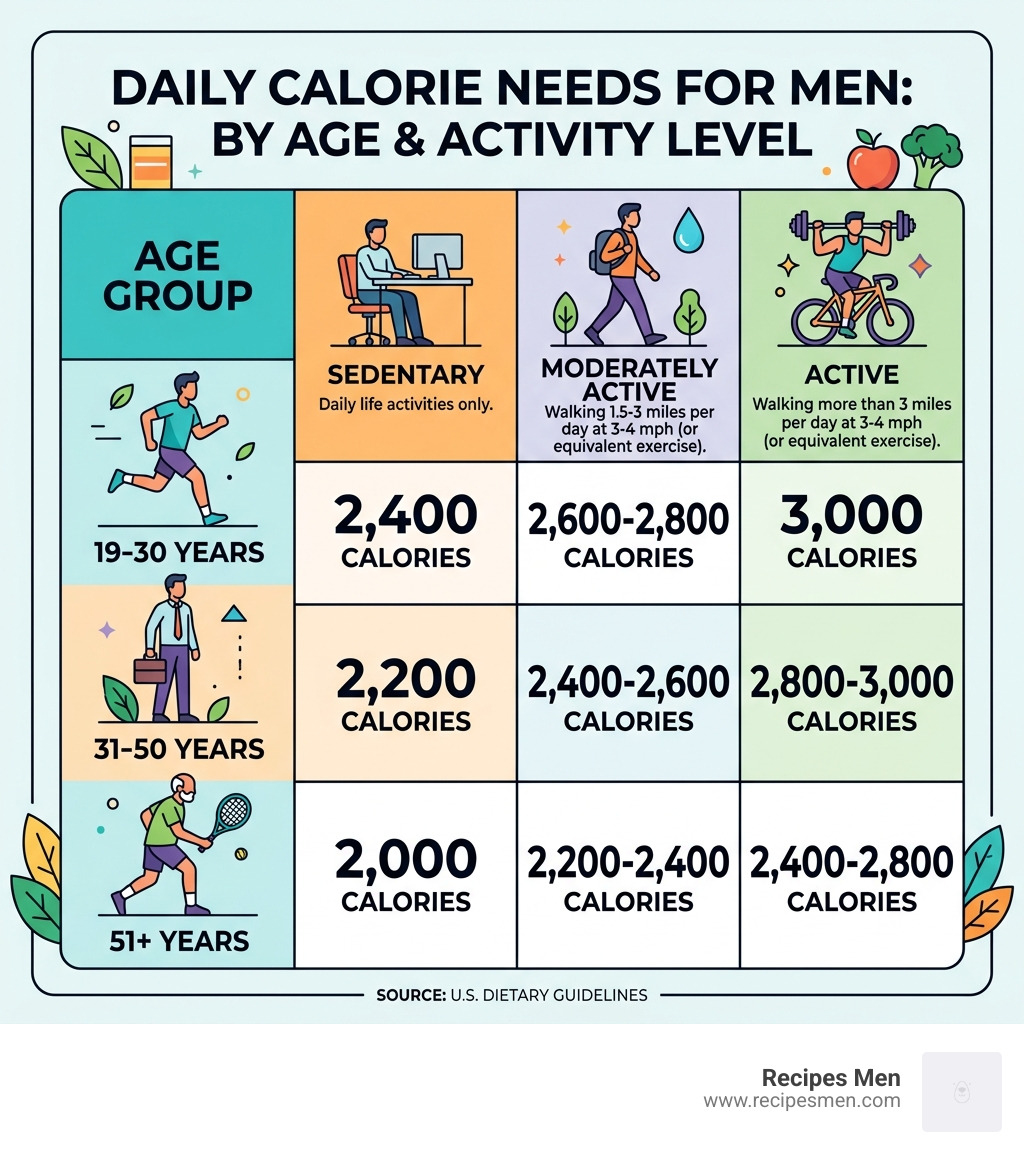
When we talk about a daily diet for men, we have to start with the foundation: energy. Men generally require more calories than women because we typically have higher muscle mass and larger body sizes. For a moderately active man in April 2026, the sweet spot for weight maintenance usually falls between 2,200 and 2,800 calories per day.
However, “calories” is just a fancy word for energy. How you distribute that energy across your macronutrients—protein, carbohydrates, and fats—determines how you feel and perform.
The Power of Protein
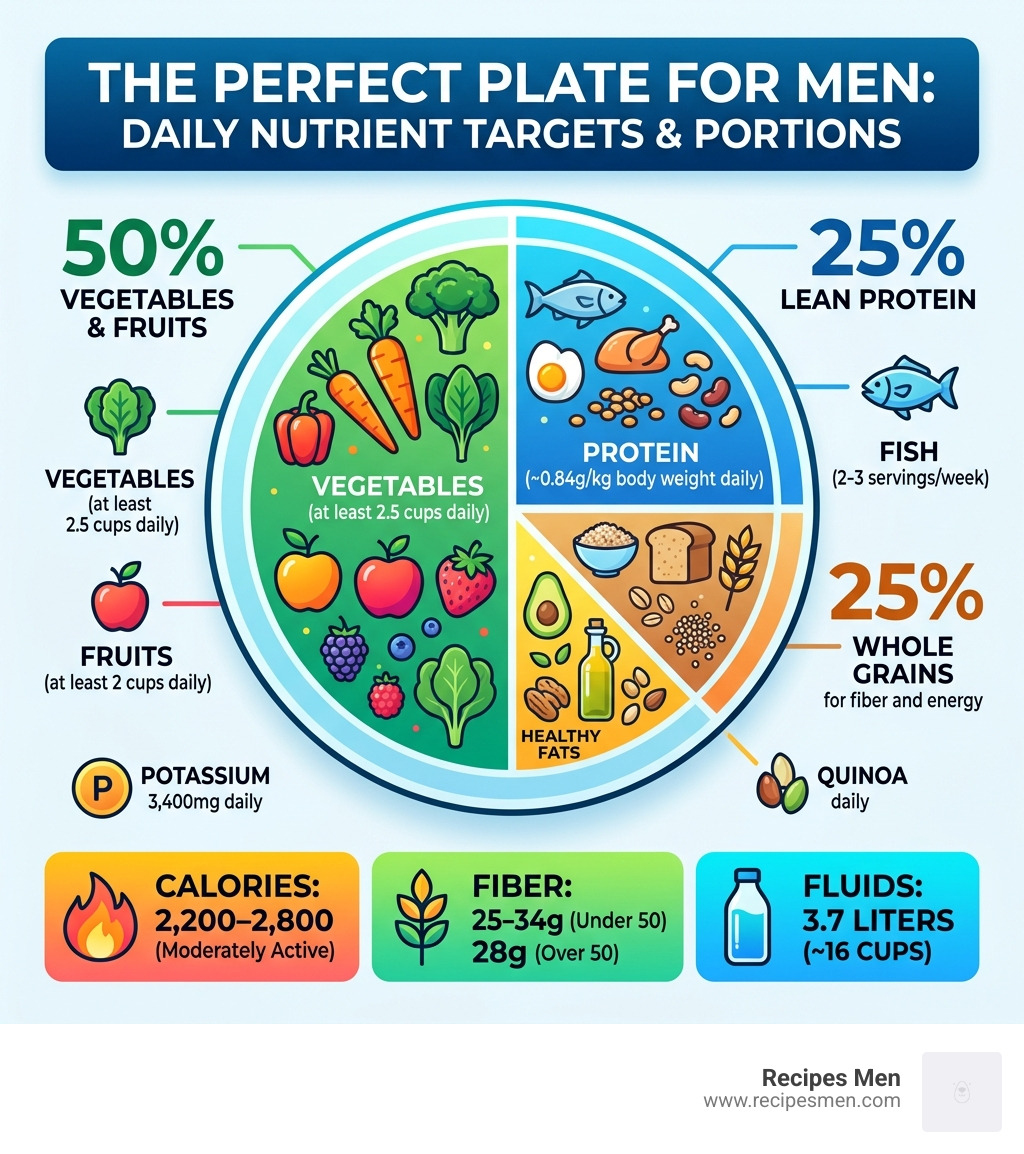
Protein is the building block of muscle repair and growth. For a man weighing 80kg (about 176 lbs), the baseline requirement is roughly 60–67 grams per day (0.84g per kg). If you are hitting the gym hard or trying to stop overcomplicating your gains, you might lean toward the higher end of the 10–35% protein range.
Carbohydrates and Healthy Fats
Carbs are your primary fuel source, especially for brain function and high-intensity workouts. Aim for 45–65% of your calories from complex sources like whole grains. Meanwhile, fats are often misunderstood. They are critical for hormone health, including testosterone production. Focus on unsaturated fats from avocados, nuts, and olive oil, which support heart health rather than clogging your arteries.
Building Your Plate: Essential Nutrients and Portions
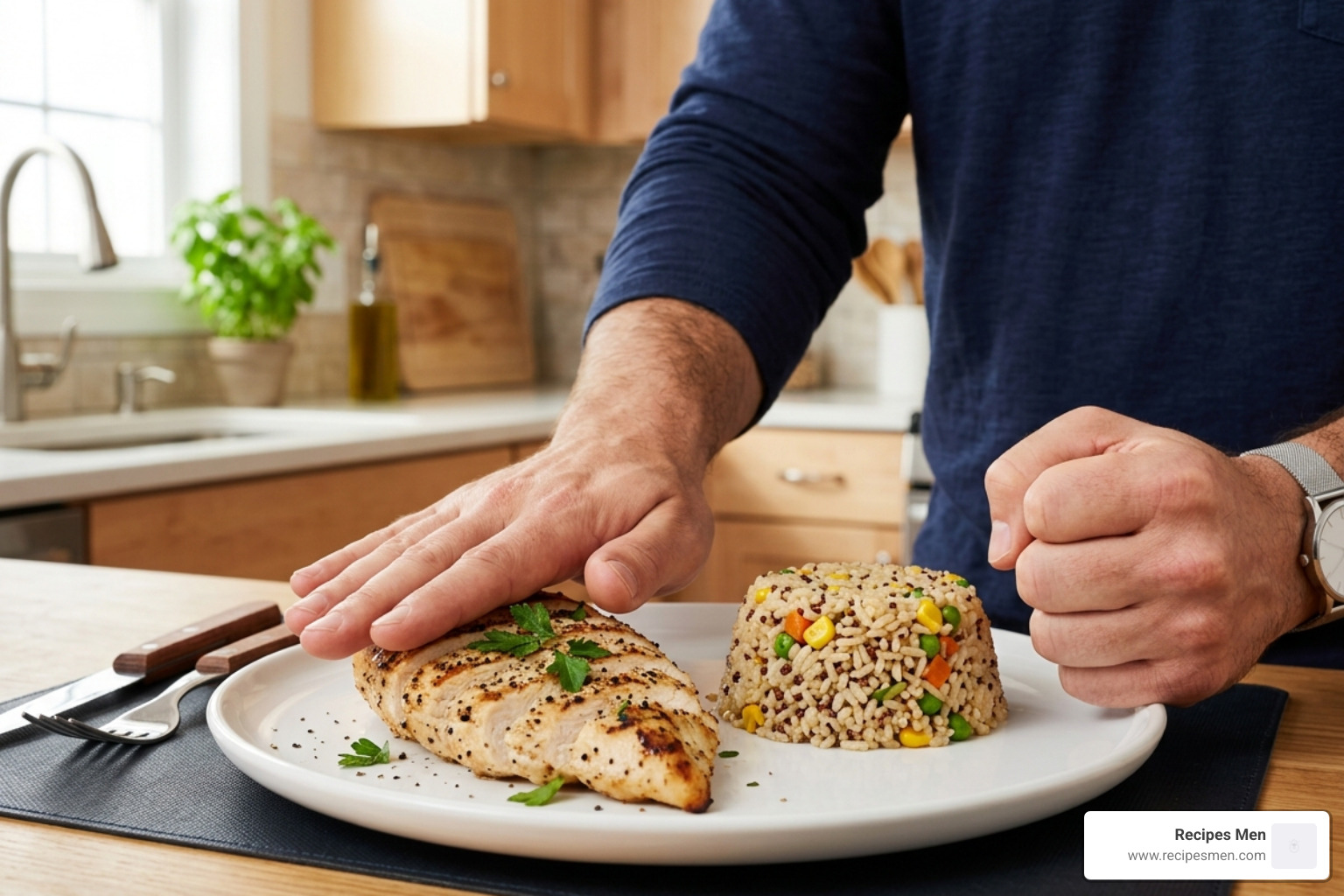
We like to use the “Perfect Plate” method because nobody wants to carry a scale to a restaurant. Imagine your plate is divided: half should be colorful vegetables and fruits, one-quarter lean protein, and one-quarter fiber-rich whole grains.
Fiber and Potassium: The Unsung Heroes
Most men are significantly deficient in fiber. We need 25–34 grams daily (dropping slightly to 28g after age 50). Fiber isn’t just for digestion; it manages hunger and helps fend off prostate and colon cancers. Potassium is another heavy hitter, with a target of 3,400mg daily to manage blood pressure. You can find it in fish, dairy, and of course, the classic banana.
Eating for Longevity
To protect your heart and prostate, we recommend including cruciferous vegetables like broccoli and kale, along with 2–3 servings of oily fish per week. These foods contain specific phytochemicals and omega-3s that act like an internal insurance policy. For more on how to eat well without the stress, check out our guide on how to eat like a king and lose weight. For a deeper dive into specific diet types, you can explore what are some of the best diets for men?.
Micronutrients in a Daily Diet for Men
While macros provide the energy, micronutrients keep the machinery running. Men often miss out on several key players:
- Vitamin D: Essential for bone density and immune function. Since it’s hard to get from food alone, saltwater fish and fortified dairy are your best bets.
- Magnesium: Involved in over 300 biochemical reactions, including muscle and nerve function. Most men only get about 80% of what they need.
- Zinc and Selenium: These are the “manly” minerals, crucial for testosterone support and fertility.
- Vitamin B12: Vital for energy metabolism and brain health, especially as we age.
If you’re looking to hit all these targets while training, our simple 7 day workout meal plan can help you structure your intake.
Hydration and Alcohol in a Daily Diet for Men
Hydration is the most overlooked part of a daily diet for men. We should aim for about 3.7 liters (16 cups) of total fluid daily. Even mild dehydration can tank your focus and physical performance.
When it comes to alcohol, moderation is the name of the game. While a celebratory drink is fine, excess alcohol can disrupt metabolic health, lower testosterone, and add “empty” calories that lead to weight gain. Swap the sugary sodas for water, coffee, or tea to keep your metabolism humming.
Top Dietary Patterns for Longevity and Performance
If you want a structured plan, several evidence-based patterns stand out for men:
- The Mediterranean Diet: Often cited as the “Gold Standard,” it emphasizes healthy fats, lean protein, and plenty of plants. It’s fantastic for heart health and reducing inflammation.
- The DASH Diet: Specifically designed to stop hypertension, this is the go-to if you’re watching your blood pressure.
- Paleo: Focuses on whole foods like meat, fish, and veggies. It’s popular for muscle growth but requires careful planning to ensure you get enough fiber.
- Flexitarianism: A “meat once a day” approach that gives you the benefits of plant-based eating without giving up the Sunday steak.
To see how these fit into a weight-loss journey, read the daily eating plan to lose weight without losing your mind.
Age-Specific Nutrition Needs in a Daily Diet for Men
Our needs don’t stay the same as the years roll by.
- Ages 19–50: Focus on energy balance and building peak bone mass. This is the time to establish high-fiber habits.
- Ages 50–70: Muscle preservation becomes a priority. You might need slightly fewer calories but more nutrient density to prevent sarcopenia (muscle loss).
- Ages 70+: Calcium and Vitamin D needs increase to protect thinning bones, and protein remains vital for mobility.
Practical Meal Planning and Consistency Strategies
Knowing what to eat is 20% of the battle; the other 80% is the system you build. Most of us fail because we try to be perfect. Instead, aim for consistency.
- Batch Cooking: Spend a Sunday afternoon grilling chicken or roasting a tray of sweet potatoes. Having “staples” ready to go prevents the 6:00 PM takeout temptation.
- Meal Rotation: You don’t need 50 different recipes. Find 5 meals you love and rotate them.
- The Grocery List: Never shop hungry. Use a list based on your plan to avoid impulse buys.
- Mindful Eating: Slow down. It takes about 20 minutes for your brain to realize your stomach is full.
For those who find the kitchen intimidating, we’ve put together simple effective diet plans for people who hate cooking. And if you’re embarking on a specific challenge, learn how to survive and thrive during your 30 day fitness meal plan.
Frequently Asked Questions about Men’s Nutrition
How many calories should a man eat daily?
Moderately active men generally need 2,200 to 2,800 calories. However, if you are sedentary, you may need closer to 2,000, while highly active athletes might require 3,000+.
What are the best foods for prostate health?
Cruciferous vegetables (broccoli, cauliflower), berries, cooked tomatoes (rich in lycopene), and fatty fish (salmon, mackerel) are all scientifically linked to better prostate health.
How much protein do I need for muscle growth?
While the baseline is 0.84g per kg, men looking to build significant muscle often aim for 1.2g to 1.7g of protein per kilogram of body weight, spread throughout the day.
Conclusion
At Recipes Men, we believe that a daily diet for men shouldn’t feel like a second job. It’s about making straightforward, flavorful choices that support your vitality and mental health. Whether you’re looking to drop a few pounds, gain muscle, or just wake up feeling less like a zombie, the “Perfect Plate” is your roadmap.
Consistency will always beat intensity. Start with one small change—maybe it’s adding a cup of spinach to your eggs or swapping your afternoon soda for water. Your future self in 2030 will thank you.
For more tips on living your healthiest life, visit us at https://www.recipesmen.com/.

