
How to Keep Your Cool When Life Gets Hot
When Anxiety Hits Hard, Here’s How to Come Back to Earth
Grounding techniques anxiety relief is one of the most searched topics in mental health — and for good reason. When your chest tightens and your thoughts start racing, you need something that works right now.
Here are the most effective grounding techniques for fast anxiety relief:
- 5-4-3-2-1 method – Name 5 things you see, 4 you can touch, 3 you hear, 2 you smell, 1 you taste
- Box breathing – Inhale 4 seconds, hold 4, exhale 4, hold 4
- Hold ice – Grip an ice cube to shock your senses back to the present
- Backward counting – Count down from 100 by sevens to engage your rational brain
- Body scan – Slowly move attention from head to toe, noticing physical sensations
- Anchoring statement – Say out loud: “I am [name]. I am in [place]. I am safe.”
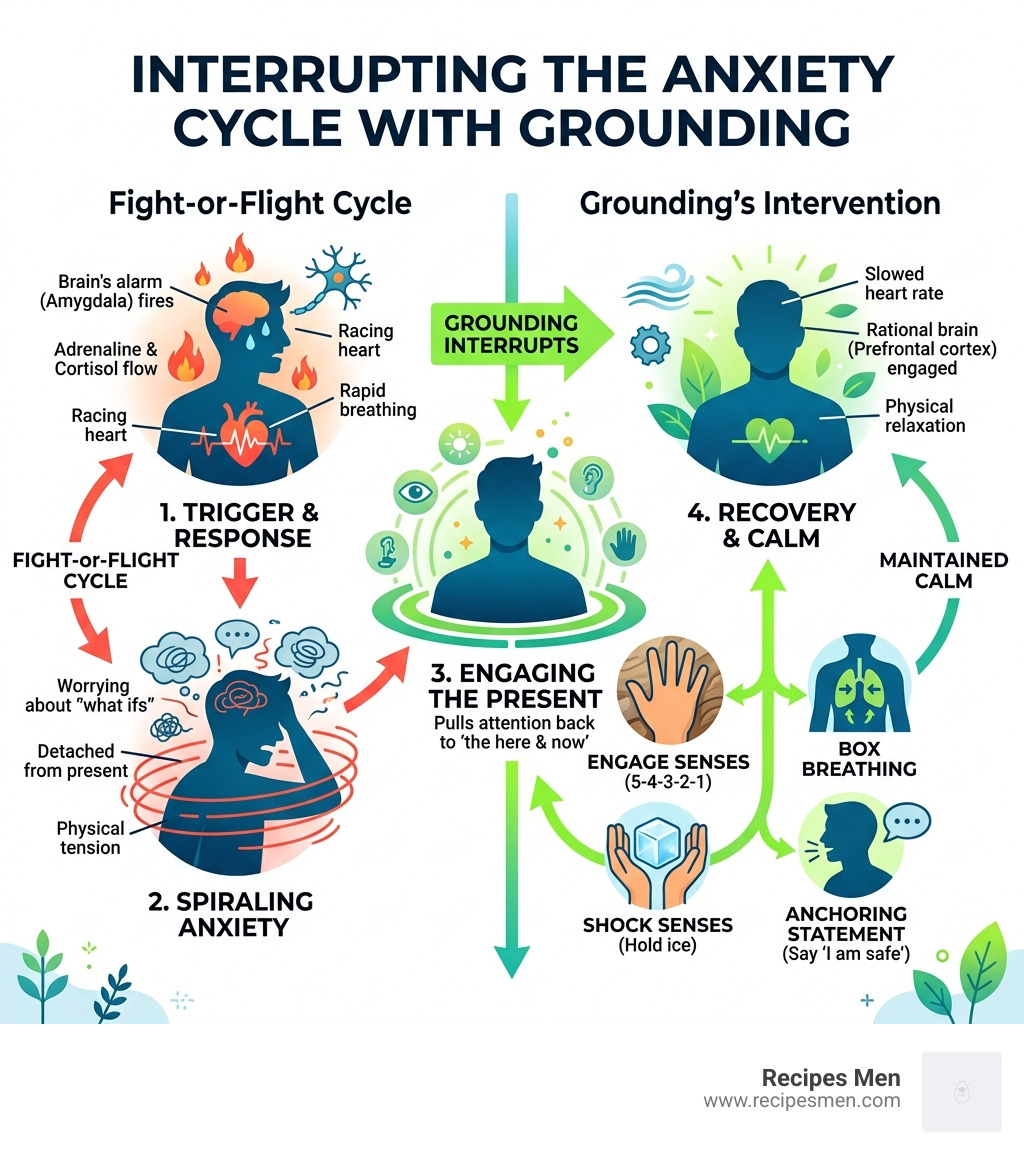
Most men push through anxiety and hope it passes. But stress doesn’t just live in your head — it lives in your body too. When something triggers your fight-or-flight response, your brain’s alarm system (the amygdala) fires up, flooding your body with adrenaline and cortisol.
Grounding techniques work by doing one simple thing: pulling your attention back to the present moment. That interrupts the stress cycle before it spirals out of control.
No equipment. No cost. No special training required.
Whether you’re dealing with everyday work stress, anxiety attacks, or something deeper like trauma or PTSD, these techniques give you something to grab onto when the storm hits.
Understanding Grounding Techniques for Anxiety Relief
At its core, grounding is a set of strategies designed to detach you from emotional pain, intrusive thoughts, or a racing heart. It is a way of “anchoring” yourself to the here and now. When we experience anxiety, our minds are often living in the future (worrying about “what ifs”) or the past (ruminating on mistakes). Grounding acts as a circuit breaker for this mental time travel.
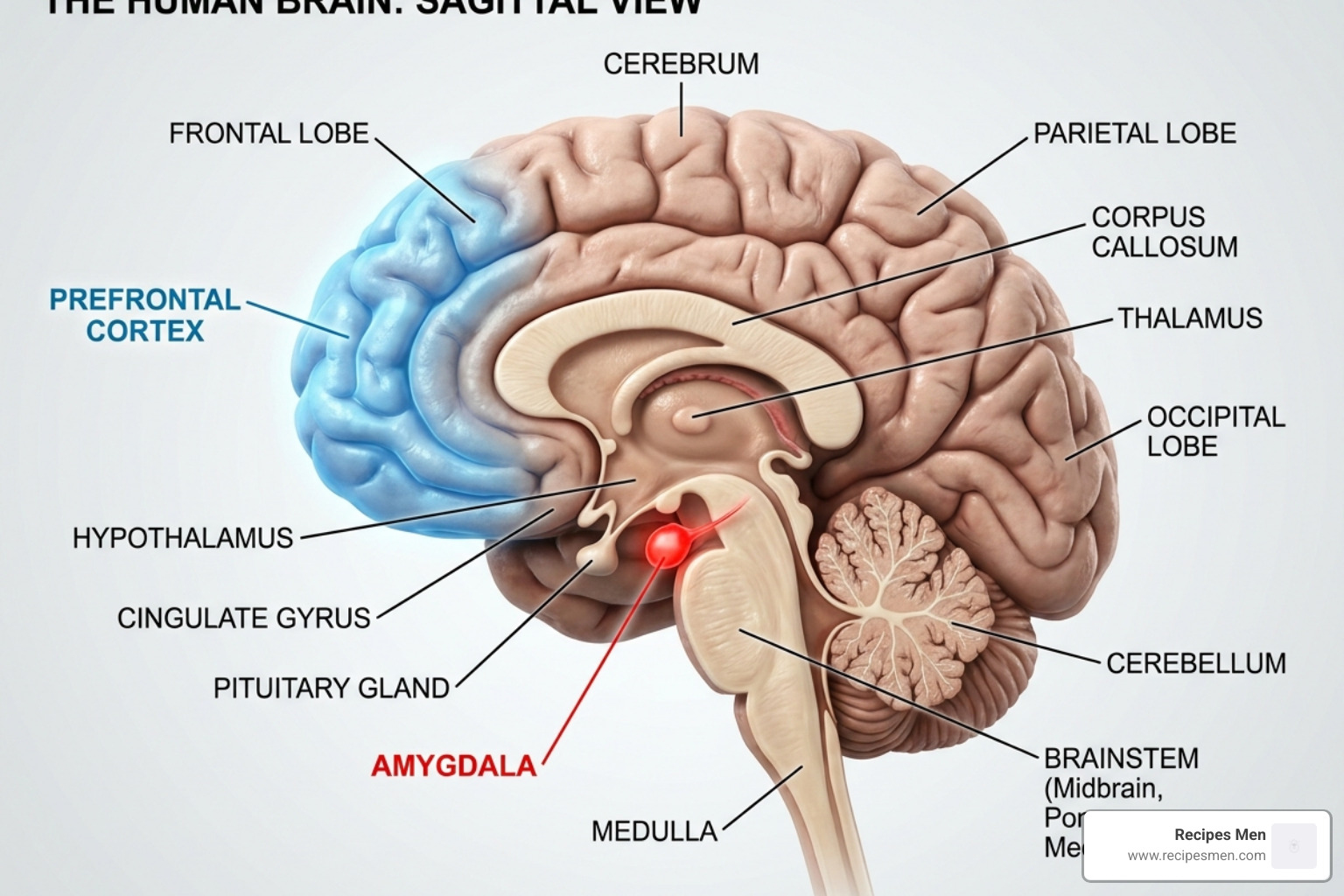
When your brain perceives a threat—even if that threat is just a stressful email or a crowded room—it activates the fight-or-flight response. The amygdala (your brain’s alarm center) signals the release of stress hormones like cortisol and adrenaline. This leads to physical symptoms: a pounding heart, shallow breathing, and sweating.
For some of us, this goes beyond simple stress. Grounding is a standard tool in trauma therapy used to manage PTSD flashbacks, dissociation, and panic attacks. By refocusing on external sensory data, you send a signal to your nervous system that you are currently safe. If you want to dive deeper into general wellness, check out our guide on How To Improve Your Mental Health Without Losing Your Mind.
According to research, Grounding Techniques: Exercises for Anxiety, PTSD, and More are effective because they provide a healthy distraction that shifts your brain’s resources away from the emotional centers and back toward the analytical ones.
Who Can Benefit from Grounding?
The short answer? Everyone. While these tools are essential for those navigating PTSD or trauma recovery, they are equally powerful for managing chronic stress or the occasional bout of “Sunday Scaries.”
If you find yourself feeling “checked out” (dissociation) or “wound up” (anxiety), grounding can help you regain your footing. We believe that mental fitness is just as important as physical fitness, which is why we cover these topics extensively in our Category/Saude Menta section.
Grounding vs. Mindfulness and Medication
It’s common to confuse grounding with mindfulness. While they are related, they have different goals:
- Mindfulness is about non-judgmental awareness of your internal state. It’s great for long-term health.
- Grounding is about active distraction from an overwhelming internal state. It’s the “emergency brake” you pull when you’re spiraling.
Unlike medication, which can take weeks to work or minutes to kick in, grounding offers immediate relief with zero side effects. It’s about attentional control—choosing where your focus goes rather than letting your anxiety drive the bus. For a holistic view, explore The Best Ways To Stay Mentally Healthy And Happy.
The Science of Staying Present in April 2026
As we move through 2026, the scientific community has become even more focused on the vagus nerve—the main component of the parasympathetic nervous system. Grounding techniques, especially those involving temperature or breathing, stimulate this nerve to lower your heart rate.
By engaging the prefrontal cortex (the rational part of your brain) through counting or naming objects, you exert “top-down” regulation over the amygdala. As noted in 10 Grounding Techniques for Instant Anxiety Relief, this biological “reset” is what allows you to move from a state of panic to a state of calm.
Sensory and Physical Grounding Techniques for Anxiety Relief

Physical grounding is often the fastest way to stop a panic attack in its tracks. It uses the body as an anchor to the physical world. When your mind is screaming, your body can speak louder through sensory awareness.
The 5-4-3-2-1 Grounding Method for Anxiety Relief
This is the “Gold Standard” of grounding techniques anxiety relief. It forces your brain to process external data through all five senses.
How to practice the 5-4-3-2-1 method:
- 5 things you see: Look for small details, like a pattern on the rug or a reflection on a window.
- 4 things you can touch: Notice the texture of your shirt, the coldness of a desk, or the weight of your shoes.
- 3 things you hear: Listen for distant traffic, the hum of a refrigerator, or your own breathing.
- 2 things you smell: Can you smell coffee? Your laundry detergent? The air outside?
- 1 thing you can taste: Notice the lingering taste of your last meal or simply the inside of your mouth.
This sensory countdown is incredibly effective because it’s impossible to be fully focused on a “what if” scenario while you are actively hunting for three distinct sounds. For more sensory-based tools, see 13 Grounding Techniques To Help Calm Anxiety.
Step-by-Step Physical Exercises
Sometimes you need a more vigorous “jolt” to the system. Here are three powerful physical grounding exercises:
- Holding Ice: This is a favorite for intense panic. Grip an ice cube in your hand. The intense temperature change creates a strong sensory signal that the brain cannot ignore, pulling you out of a mental spiral instantly.
- Diaphragmatic Breathing: Also known as belly breathing. Place one hand on your chest and the other on your belly. Inhale through your nose so your belly pushes your hand out. Exhale slowly. This activates the vagus nerve.
- Box Breathing: Inhale for 4, hold for 4, exhale for 4, hold for 4. Repeat.
- Stomping Your Feet: Feel the vibration of your feet hitting the floor. It reminds your brain exactly where your body is in space.
If you’re looking to release physical tension after a long day, we highly recommend Mastering The Art Of Progressive Muscle Relaxation or trying our Evening Stretch Routines Knot Your Average Bedtime Ritual.
Physical Grounding Techniques for Anxiety Relief in Public
One of the biggest hurdles is feeling anxious in a meeting or a grocery store. You can’t exactly start stomping your feet or holding ice in the middle of a presentation. For these moments, use discreet movements:
- Clenching Fists: Squeeze your fists tight for five seconds and release. Notice the contrast between tension and relaxation.
- Pressing Palms: Press your hands together as hard as you can. Feel the muscles in your arms engage.
- Wiggling Toes: Focus entirely on the sensation of your toes moving inside your socks.
These are effective Grounding Techniques to Help Control Anxiety because they can be done anywhere without anyone noticing.
Mental and Soothing Grounding Techniques for Anxiety Relief
While physical grounding targets the body, mental grounding targets the “spinning” thoughts. These are cognitive distractions that give your brain a job to do so it doesn’t have the “bandwidth” to worry.
Mental Exercises to Distract from Anxious Thoughts
When your thoughts are racing, you need to engage your “working memory.” This is the part of your brain that handles tasks like math and logic.
- Category Games: Pick a category (like “Types of Dogs” or “NFL Teams”) and name as many as you can.
- Backward Counting: Count down from 100 by 7s (100, 93, 86…). It’s just hard enough to require full concentration.
- Anchoring Statements: Repeat facts. “My name is Mike. I am 34. I am sitting in my office in Chicago. It is Tuesday.”
- Visualizing a Task: Mentally walk through a familiar task, like making a cup of coffee or changing a tire, step-by-step.
These mental games are among the 12 Grounding Techniques to Quiet Anxiety and Intrusive Thoughts – GoodRx that therapists recommend most often. To keep your mental edge sharp, check out The Best Products And Ways To Keep Mentally Healthy.
Soothing Grounding Techniques for Anxiety Relief at Home
Soothing techniques are about creating a sense of safety and comfort.
- Petting Animals: Studies show that petting a dog or cat decreases cortisol and increases oxytocin.
- Listening to Music: Create an “Emergency Playlist” of songs that make you feel supported. Music can shift you out of a fight-or-flight state.
- Visualization: Close your eyes and imagine your “safe place.” Engage all senses. What does the air feel like? Is there a specific smell?
- Positive Affirmations: Use phrases like “This is uncomfortable, but I am safe,” or “I have survived this before, and I will survive it now.”
For more ways to nurture your wellbeing, see Ten Simple Steps To Improve Your Emotional Health And Wellbeing. We also find that nutrition plays a huge role; when you’re well-fed, your brain is more resilient. Try A Simple Depression Meal Plan For When Life Feels Heavy for easy-to-prep, mood-boosting food.
Best Practices and Common Mistakes to Avoid
Grounding is a skill. You wouldn’t expect to bench press 225 lbs on your first day at the gym, so don’t expect grounding to work perfectly the first time you try it during a panic attack.
| Effective Habit | Ineffective Habit |
|---|---|
| Practice when calm to build muscle memory. | Waiting until a crisis to try it for the first time. |
| Early intervention: Start at the first sign of stress. | Waiting until you are at a “10” on the stress scale. |
| Non-judgmental observation: “The wall is blue.” | Judging your surroundings: “I hate this wallpaper.” |
| Combine techniques: Use 5-4-3-2-1 plus breathing. | Giving up if the first technique doesn’t work instantly. |
Common Mistakes to Avoid:
- Assigning Values: During sensory work, don’t think “That noise is annoying.” Just note “I hear a noise.”
- Avoidance: Grounding isn’t about ignoring your problems; it’s about stabilizing yourself so you can solve them later.
- Overthinking: Don’t worry if you can’t find two smells. Move on to the next sense.
Frequently Asked Questions about Grounding
What is the 5-4-3-2-1 grounding method and how do you practice it?
It is a sensory awareness exercise. You name 5 things you see, 4 you can touch, 3 you can hear, 2 you can smell, and 1 you can taste. It works by forcing the brain to switch from internal “threat monitoring” to external “environment scanning.”
How do grounding techniques work to reduce anxiety symptoms like panic attacks?
They “short-circuit” the stress response. By focusing on the present, you signal to the amygdala that there is no immediate physical danger. This allows the parasympathetic nervous system to take over, lowering your heart rate and slowing your breathing.
When should someone seek professional help if grounding isn’t enough?
Grounding is a coping tool, not a cure. If your anxiety is interfering with your ability to work, sleep, or maintain relationships, it’s time to talk to a professional. If you feel like you are grounding yourself multiple times a day just to get by, a therapist can help you address the root causes.
Conclusion
At RecipesMen, we believe that “keeping your cool” is a lifestyle. It’s not just about what you do when the heat is on; it’s about how you build your foundation through nutrition, workouts, and mental wellness.
Grounding techniques anxiety relief are powerful tools to have in your back pocket. By practicing these exercises—whether it’s the 5-4-3-2-1 method or a quick splash of cold water—you’re taking control of your nervous system.
Anxiety is a normal human emotion, but it doesn’t have to run your life. Use these techniques to find your center, then fuel your body with a great meal and keep moving forward. For more resources on staying healthy and happy, visit RecipesMen.

